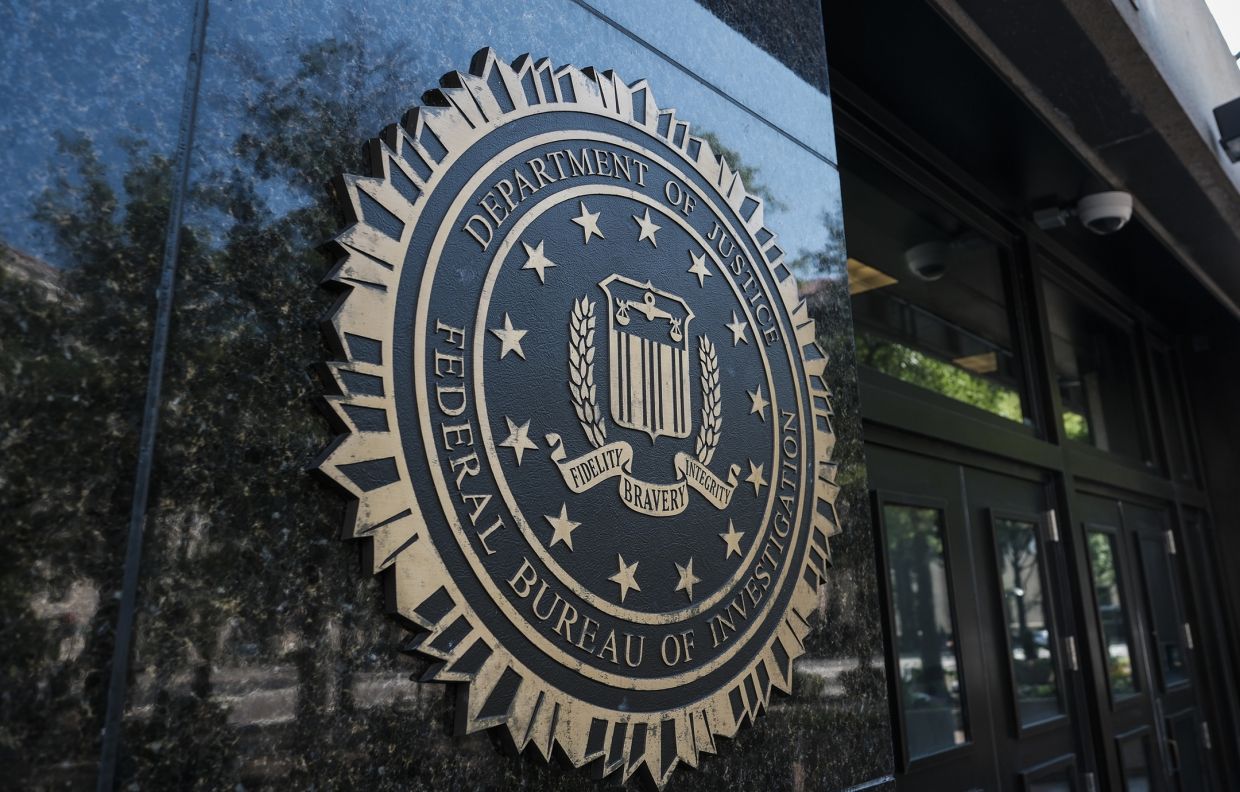
Patrick Yaroch, a supervisory special agent stationed in Washington, has been arrested on theft charges after confessing to taking cryptocurrency that the Federal Bureau of Investigation had seized as evidence in an ongoing investigation. The disclosure came when Yaroch approached a Justice Department employee to reveal what he had done, driven by what court documents describe as an overwhelming sense of guilt that he could no longer contain.
The circumstances surrounding Yaroch's decision to come forward paint a picture of personal turmoil within the federal law enforcement establishment. According to an affidavit filed in the case, Yaroch felt compelled to unburden himself because the theft was "eating him up inside." Rather than continue in silence, he sought out a Justice Department colleague to confess, indicating that his conscience had finally overwhelmed whatever initial justification he may have constructed for his actions.
When questioned about the scale of his theft, Yaroch expressed uncertainty regarding the precise amount he had taken, attributing this ambiguity to the fact that the stolen funds had been commingled with his personal cryptocurrency holdings. However, he estimated the amount at less than US$1 million (approximately RM4.09 million). This self-assessment proved notably inaccurate when investigators subsequently examined Yaroch's digital wallet and discovered approximately one million dollars in cryptocurrency deposits, suggesting either deliberate understatement or genuine miscalculation on his part.
The temporal framework of Yaroch's criminal conduct spans several months, beginning in late 2024 or early 2025. During this period, court documents indicate that Yaroch executed between 10 and 12 separate withdrawal transactions. His ability to carry out these transfers derived from his access to a security passphrase belonging to the individual under investigation—a passphrase that the FBI had obtained through its lawful investigative process. This detail is particularly significant for Malaysian readers and regional observers, as it demonstrates how law enforcement access to digital assets can itself become a vulnerability within institutional systems, raising questions about internal controls and oversight mechanisms that prevent misuse of such sensitive information.
Yaroch's apparent motivation for the thefts emerges from frustration with institutional limitations. According to charging documents, the agent told colleagues that he had been "spinning out of control" and expressed irritation that the FBI "could not or would not act against adversarial cryptocurrency accounts." This rationale suggests that Yaroch may have viewed his actions not merely as personal enrichment but as some form of justified response to what he perceived as institutional failure or unwillingness to pursue certain investigative angles. The mentality reflected here—wherein a law enforcement officer takes matters into his own hands when official channels seem inadequate—represents a concerning breach of the hierarchical authority structures that democratic governments depend upon to maintain public trust and institutional integrity.
The trajectory of Yaroch's unraveling and subsequent exposure occurred with remarkable speed once he made his initial confession. He contacted investigators and indicated his willingness to continue cooperating with them following a consultation with legal counsel, which was scheduled for August 3. However, FBI leadership made the strategic decision to conduct a search of his residence and execute an arrest over the weekend, effectively preempting any further discussions and demonstrating that the Bureau prioritized swift action over the cooperative approach Yaroch appeared to be offering.
Notably, the charging documents reveal that Yaroch has not yet been formally charged with the actual theft of the cryptocurrency itself. This prosecutorial approach likely reflects the rapid pace of the investigation and the urgency with which federal officials moved to apprehend him. By focusing initially on the more straightforward charge of possession of stolen property, prosecutors have secured Yaroch's detention while the broader investigation continues. Court filings do not yet identify any attorney representing Yaroch, suggesting his case remains in its earliest phases.
Additional details uncovered through examination of Yaroch's digital activity provide further insight into his frame of mind and possible aspirations. Internet search records from May reveal that Yaroch had queried ChatGPT about investment strategies for one million dollars, with explicit mention of retirement planning and lifestyle goals. His searches referenced a desire to potentially retire by age 40 and eventually establish a vineyard or agricultural operation in regions such as Italy's Cilento or Portugal's Dao region. These digital breadcrumbs suggest that Yaroch may have viewed the stolen cryptocurrency as a pathway to achieving these personal ambitions, providing a window into how seemingly ambitious yet attainable lifestyle dreams can motivate individuals to rationalize serious criminal conduct.
For Malaysian readers and Southeast Asian observers, this case illuminates several critical governance and institutional challenges. The incident underscores vulnerabilities in how governments manage access to digital assets obtained through investigation, the psychological pressures that can build within law enforcement hierarchies when agents perceive institutional constraints on their work, and the complex motivations that can lead individuals in positions of public trust to betray that trust. The cryptocurrency context also highlights how the relative novelty and opacity of digital asset management has not yet been matched by equally robust oversight and accountability mechanisms in many jurisdictions, including within highly developed law enforcement agencies. As cryptocurrency adoption expands throughout Southeast Asia and Malaysia implements its own regulatory frameworks, policymakers should draw lessons from incidents such as this regarding the need for compartmentalization, audit trails, and institutional checks on access to seized digital assets.

