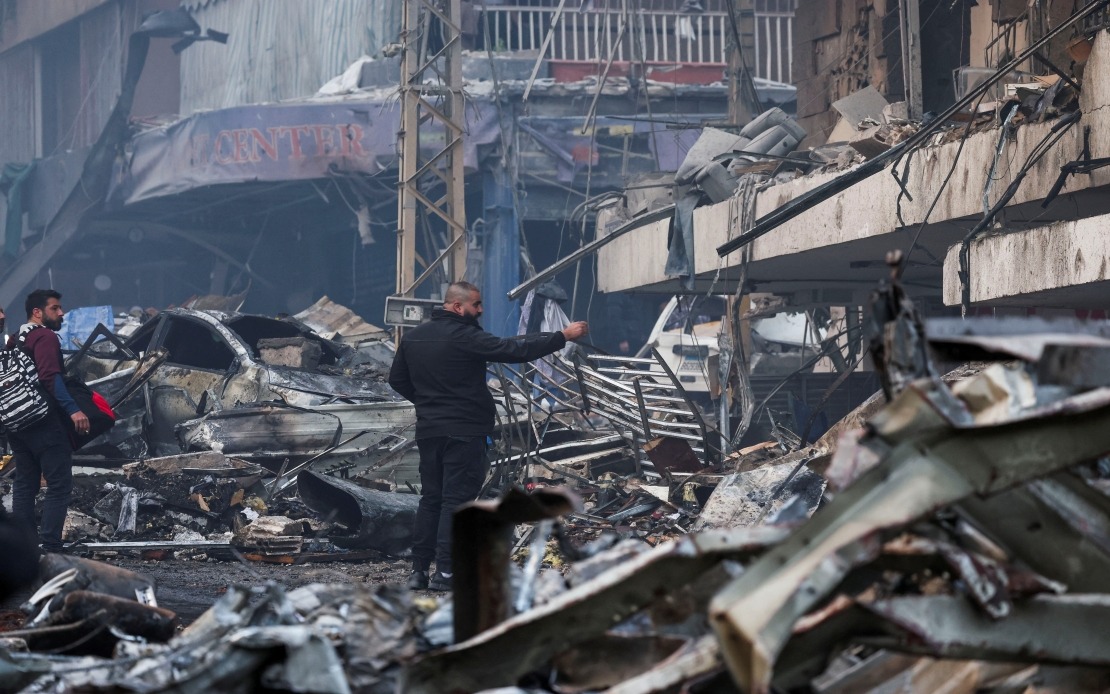
The United States has activated a real-time monitoring capability through its military's Central Command to observe the conflict between Israel and Hezbollah operating in Lebanon, marking a significant step in American mediation efforts to stabilise the volatile region. The initiative, announced by a US official on Monday, represents Washington's commitment to tracking compliance with any ceasefire arrangements while creating conditions for diplomatic progress between the two parties.
The monitoring mechanism emerged directly from high-level diplomatic engagement over the weekend, when US Secretary of State Marco Rubio conducted separate telephone conversations with Israeli Prime Minister Benjamin Netanyahu and Lebanese President Joseph Aoun. These communications focused on reinforcing existing ceasefire terms and charting a course toward broader negotiations that would encompass both peace and security arrangements acceptable to both governments.
For Malaysia and other Southeast Asian nations closely watching Middle Eastern stability, this American intervention carries several implications. The involvement of CENTCOM signals that Washington views the Lebanon conflict as interconnected with broader regional security architecture, affecting international trade routes, investment climates, and the geopolitical balance in a zone already destabilised by competing power interests. Any escalation or breakdown in negotiations could reverberate through supply chains and diplomatic relationships that Malaysian businesses and policymakers depend upon.
The US statement emphasised that the overarching objective is breaking a cycle of violence that has plagued Lebanon and Israel for decades, with particular urgency following recent Hezbollah-Israel hostilities. By positioning itself as an honest broker and enabling direct negotiations between the two sides, Washington aims to construct what officials describe as a comprehensive peace and security arrangement rather than merely papering over temporary ceasefires.
The timing of the announcement proved significant because Israeli and Lebanese delegations were simultaneously planning to travel to Washington from June 23 to 25 for direct talks mediated by American officials. This schedule underscores the confidence that mediators place in their monitoring mechanisms to prevent violations or misunderstandings that might derail negotiations while senior officials are engaged in substantive discussions.
Parallel diplomatic efforts involving Qatar and Pakistan have added another layer to international engagement. These two countries jointly issued a statement following the conclusion of US-Iran talks held at the Burgenstock resort in Switzerland, announcing agreement to establish what they termed a de-confliction cell. This mechanism would incorporate representatives from the United States, Iran, and Lebanon, with Qatar and Pakistan facilitating communication to ensure all parties adhere to the cessation of military operations codified in the Islamabad Memorandum of Understanding.
The broader context involves a recent US-Iran memorandum of understanding signed remotely last week, which opened a 60-day window for negotiations addressing multiple contentious issues between Washington and Tehran. The 14-point document spans military, economic, and nuclear dimensions, calling for an immediate and permanent halt to military operations across all fronts, including Lebanon, while addressing the American naval blockade on Iran and guaranteeing safe commercial passage through the Strait of Hormuz.
For Malaysian observers, this interconnected diplomacy reveals how Lebanon's conflict cannot be understood in isolation. Iran's involvement as a Hezbollah patron and its nuclear programme negotiations with the United States mean that resolution in Lebanon depends partly on broader US-Iran relations. Should the 60-day negotiating window produce breakthroughs, confidence might build for restraint in Lebanon. Conversely, failure would likely intensify proxy conflicts in the region.
The de-confliction cell represents an innovative approach to managing a complex military situation where multiple state and non-state actors maintain interests in Lebanese territory and politics. By establishing dedicated channels for communication and dispute resolution outside formal conflict settings, mediators hope to prevent misunderstandings from escalating into renewed hostilities. This mechanism acknowledges that Middle Eastern conflicts rarely involve only two parties, but rather layered regional interests requiring coordinated diplomatic architecture.
The US commitment to providing real-time monitoring through CENTCOM also addresses concerns about enforcement and compliance. Without verification mechanisms, ceasefire agreements often collapse when one party accuses another of violations. Military monitoring provides documentary evidence that can either validate concerns or refute spurious claims, thereby maintaining trust in the negotiation process. This transparency approach contrasts with decades of failed agreements lacking such oversight.
Malaysian policymakers should recognise that American mediation efforts in Lebanon reflect broader American strategy to prevent regional conflicts from metastasising into larger wars. By containing Israeli-Hezbollah hostilities and connecting them to US-Iran diplomacy, Washington seeks to create diplomatic openings rather than allowing tit-for-tat escalation. This approach potentially affects whether the Middle East becomes a flashpoint for great power competition or stabilises sufficiently for regional economic development.
The success of these mechanisms remains uncertain. Previous ceasefire agreements between Israel and Hezbollah have frequently broken down, and the underlying political and religious differences between the parties run deep. However, the combination of CENTCOM monitoring, de-confliction cells, and high-level diplomatic engagement represents the most comprehensive international effort in recent years to address this particular conflict. Whether these mechanisms prove sufficient will become apparent as the June 23-25 Washington talks progress and the 60-day US-Iran negotiating window unfolds.