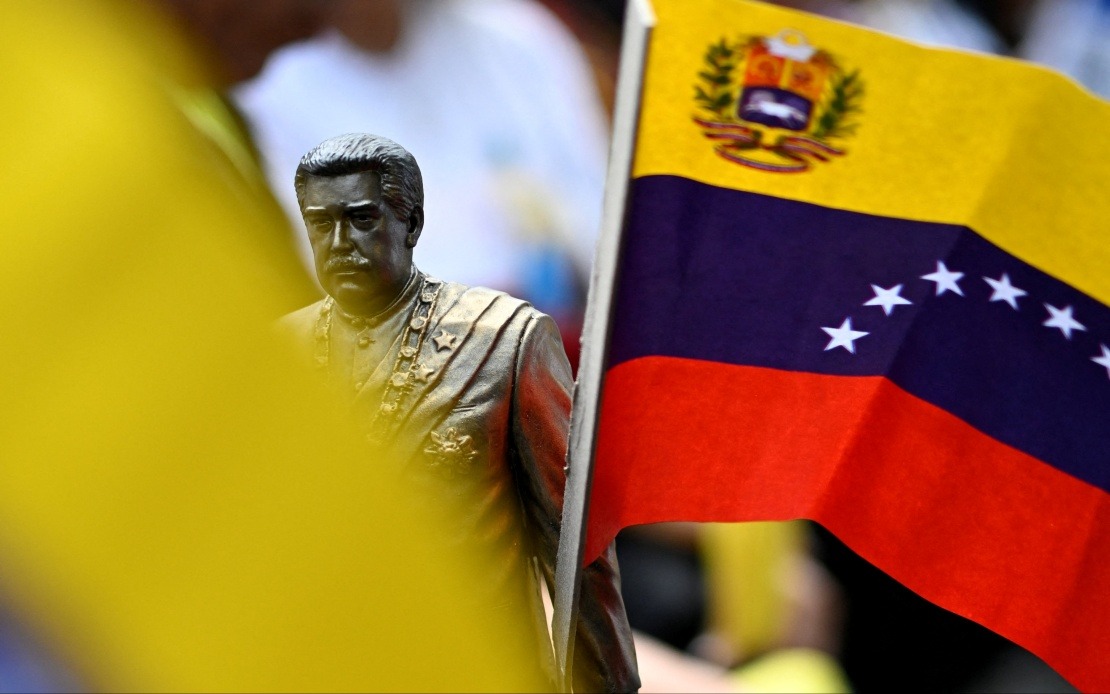
A United States federal judge has scheduled trial proceedings for Venezuelan President Nicolas Maduro and his wife Cilia Flores to begin on June 1, 2027, marking a significant milestone in one of the most contentious international legal proceedings in recent memory. The decision, handed down by Judge Alvin Hellerstein during a brief 15-minute hearing in a New York courtroom on Wednesday, came after both the prosecution and defence requested the trial date be established during the couple's third appearance before the court.
The couple, who have maintained their not guilty pleas to charges of drug trafficking and firearms possession, were forcibly apprehended during an extraordinary military operation in early January when United States Armed Forces conducted a large-scale raid into Venezuelan territory. Following their seizure in Caracas, Maduro and Flores were transported to New York, where they have remained detained at the Metropolitan Detention Centre in Brooklyn since their initial January 5 arraignment. This unprecedented action—the forcible capture of a sitting national leader by foreign military forces—has reverberated through diplomatic channels worldwide, generating substantial international condemnation and raising fundamental questions about state sovereignty and the boundaries of military intervention.
Maduro's legal defence team, led by attorney Barry Pollack, has already signalled its intention to challenge the government's case on fundamental constitutional grounds. Specifically, Pollack indicated that the defence will move to dismiss the indictment based on principles of sovereign immunity, arguing that sitting heads of state enjoy protection from foreign prosecution under customary international law. Should this motion succeed, it would eliminate the necessity for continued litigation and potentially invalidate the entire prosecution. This legal strategy reflects a broader challenge to the legitimacy of the proceedings themselves, not merely a contest over the specific charges involved.
The charges themselves represent a serious escalation in US-Venezuela tensions. Beyond the drug trafficking allegations that have long been directed at Maduro's government, the firearms charges add additional complexity to the prosecution's case. The indictment encompasses conduct that US authorities allege extends across multiple years, framing Maduro not simply as a politician whose administration failed to prevent trafficking, but as an individual personally culpable for orchestrating illegal activities. However, from the perspective of critics worldwide, the legal framework itself appears fundamentally compromised by the manner in which the defendants were obtained.
Outside the Manhattan courthouse on Wednesday, demonstrators gathered in substantial numbers to voice their opposition to both the trial and the military intervention that preceded it. The protests reflected deep anxiety across multiple constituencies regarding American military actions conducted beyond traditional international frameworks. Allison Gunderson, a protester who travelled from Minneapolis to participate in the demonstrations, articulated a perspective increasingly common among international law observers: that the entire proceeding represents fundamentally unlawful activity, as it stems from what she characterised as an illegal kidnapping conducted under colour of military authority.
Tom Burke, representing the Anti-War Action Network's steering committee, provided perhaps the most pointed critique of the legal and political framework underlying the prosecution. Burke contended that the abduction, detention, and trial collectively violate established principles of international law, with the defense team promising sustained opposition throughout every phase of the proceedings. In particularly striking language, Burke likened the military operation to armed robbery conducted on a state level, suggesting that the seizure of a nation's elected leader operates as a fundamental violation of international norms. His observation that global observers are watching closely and increasingly distrusting American governmental actions reflects a sentiment that extends well beyond activist circles into diplomatic and academic spheres.
Sara Flounders, a political analyst and writer, emphasised the symbolic weight of the moment by noting that Wednesday marked exactly 200 days since Maduro's apprehension in Caracas. This precise counting underscores how protest movements and international solidarity networks view the detention as an ongoing violation requiring constant attention and resistance. Flounders drew explicit connections between the Venezuelan situation and American military and political interventions in other nations, specifically referencing parallel US policy disputes with Iran and Cuba. This broader framing suggests that many observers view the Maduro case not as an isolated legal matter but as part of a longstanding pattern of American intervention in Latin American affairs.
For Southeast Asian observers and policymakers, the Maduro case presents significant implications regarding international law, state sovereignty, and the changing nature of geopolitical competition. The precedent of unilaterally seizing a foreign nation's leader through military force, regardless of the justifications offered, potentially normalises extraordinary extraterritorial action in ways that could affect any nation in the region. Malaysia and other ASEAN members have historically emphasised respect for sovereignty and non-interference as core principles, and this case fundamentally tests those commitments on the global stage.
The four-year gap between the indictment and scheduled trial date reflects the complexity of the legal and diplomatic landscape surrounding the case. That timeframe allows for extensive pre-trial motions, including the sovereign immunity challenge that Pollack has identified as the defence's primary objective. However, it also prolongs the detention of both Maduro and Flores, extending what critics characterise as arbitrary imprisonment conducted without adherence to international legal norms. The extended timeline suggests that American authorities anticipate protracted legal battles before the trial can proceed to substantive examination of the underlying charges.
The broader international response to this case has been remarkably muted from official government channels, with many nations adopting cautious diplomatic positions rather than openly condemning or supporting American actions. This silence itself carries significance, suggesting that nations worldwide remain uncertain how to calibrate their responses to what many legal scholars have characterised as a watershed moment in international law. The question of whether forcible apprehension of foreign leaders can be squared with the international legal system remains fundamentally unresolved, leaving the Maduro case suspended between established law and emerging precedent.

