The US State Department has formally notified Congress of funding for the International Stabilisation Force (ISF) planned for Gaza, signalling American commitment to President Donald Trump's broader Middle East peace strategy. The notification, issued on July 30, represents an opening move in what Washington describes as a historic diplomatic effort to stabilise the embattled territory. State Department spokesperson Tommy Pigott characterised the funding as foundational to implementing what the administration calls the President's "historic 21-point peace plan," of which the ISF constitutes a critical operational pillar.
The specifics of the funding allocation remain undisclosed, with State Department officials confirming only that the amount represents an initial commitment rather than the complete financial package required for full ISF deployment. This measured disclosure reflects the delicate diplomatic environment surrounding the Gaza initiative, where transparency about international involvement can prove politically sensitive. Officials emphasised that Washington will continue supporting what they term the Board of Peace, a multilateral coordination mechanism established to oversee implementation of the broader settlement framework.
Trump's peace framework, announced on July 31, charts an ambitious course for Gaza's future governance and security architecture. The plan envisions complete disarmament of Hamas and other armed factions operating in the territory, coupled with a phased withdrawal of Israeli military forces. Critically, the framework proposes the ISF would operate in tandem with a reconstituted Palestinian police force, creating a shared security paradigm intended to prevent both militant activity and unilateral Israeli military operations. This hybrid security model seeks to address longstanding concerns about governance vacuums and the resumption of violence that has historically plagued the territory.
However, the diplomatic landscape has grown increasingly fractious since the plan's announcement. Israeli Prime Minister Benjamin Netanyahu rejected the framework this month during a cabinet session, declaring unequivocally that Israeli forces will maintain their presence in Gaza indefinitely until Hamas is completely dismantled. Netanyahu's categorical opposition challenges a foundational assumption of the Trump plan: that Israeli withdrawal could proceed on a timetable agreed by the parties. This stance effectively raises the bar for what constitutes "complete disarmament," potentially extending the timeline for any Israeli military reduction beyond what Palestinian negotiators or the Board of Peace envisioned.
By contrast, Hamas has publicly reaffirmed its commitment to the broader roadmap, suggesting the Palestinian militant faction views the framework as preferable to continued conflict. This divergence between Israeli and Hamas positions places significant pressure on American mediators and the Board of Peace mechanism to navigate fundamental disagreements about sequencing, verification, and the security arrangements that would follow any weapons surrender. The gap between Netanyahu's maximalist security demands and the collaborative security model embedded in Trump's plan represents perhaps the most substantial obstacle to implementation.
The diplomatic engagement intensified this week when senior White House advisor Jared Kushner travelled to the region to advance negotiations. His itinerary included meetings with Hamas representatives in Egypt before proceeding to Israel, where he met with Netanyahu alongside Board of Peace envoy Nikolay Mladenov. According to media accounts, these discussions proved contentious, particularly regarding the pace and scope of Israeli military operations in Gaza. Kushner reportedly opposed Netanyahu's insistence on continuing Israeli strikes, while the Israeli prime minister remained resolute that security operations would continue regardless of diplomatic progress. These disagreements expose fundamental strategic differences about how intensified military pressure should factor into negotiation dynamics.
The humanitarian backdrop to these negotiations remains stark and deteriorating. A ceasefire agreement purportedly took effect on October 10, 2025, yet Israeli military operations have persisted throughout the intervening period. According to figures from Gaza's Health Ministry, Israeli strikes since the ceasefire commenced have killed 1,283 Palestinians and wounded 4,248 others. These casualties underscore how fragile the supposed truce remains and how difficult verification and compliance mechanisms have proven. The deaths and injuries inflicted during an ostensibly active ceasefire period highlight the challenges facing any international stabilisation force attempting to enforce security arrangements where fundamental disagreements persist about what constitutes permissible military activity.
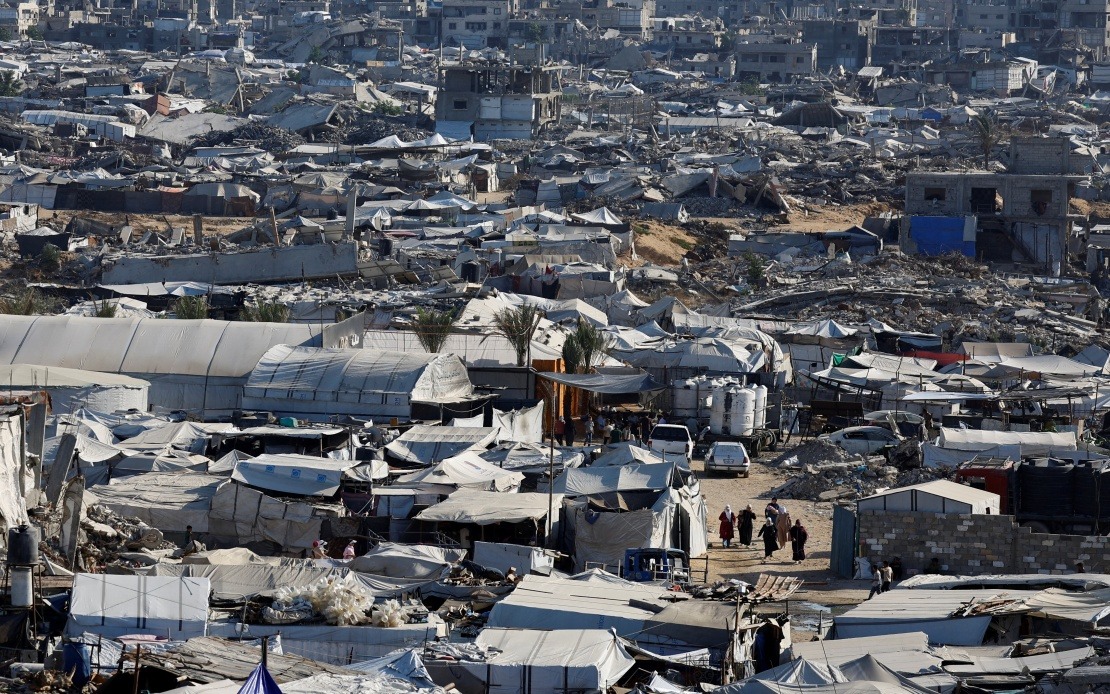
The scale of destruction across Gaza contextualises the urgency surrounding stabilisation efforts. Since Israel's military campaign commenced on October 8, 2023, more than 73,000 Palestinians have been killed and 174,000 wounded, according to Gaza health authorities. Infrastructure destruction has been wholesale, with approximately 90 per cent of the territory's physical infrastructure damaged or destroyed. Such devastation creates enormous logistical challenges for any international stabilisation operation, as the ISF would need to operate amid fractured governance systems, compromised utilities, and severely disrupted civilian life. The reconstruction requirements alone far exceed what traditional peacekeeping operations typically manage, suggesting the Board of Peace framework may be attempting something without adequate precedent.
For Malaysia and Southeast Asian nations with growing Middle East interests, these developments carry several implications. The Trump administration's willingness to fund international stabilisation mechanisms in Gaza signals broader American commitment to direct Middle East engagement, potentially reshaping regional geopolitics. The plan's success or failure will influence perceptions of American credibility among both state and non-state actors across the region. Additionally, if the ISF framework does eventually deploy, it may establish precedents for international military cooperation that could be referenced in future regional disputes or humanitarian crises where Southeast Asian nations might be invited to contribute personnel or resources.
The current diplomatic impasse also reflects deeper structural challenges in Israeli-Palestinian negotiations that previous international efforts have consistently failed to resolve. The Trump administration's approach of funding operational mechanisms like the ISF while simultaneously advancing negotiations represents a bet that creating institutional facts on the ground can overcome principled disagreements. Yet Netanyahu's categorical rejection of the framework suggests Israeli security establishment thinking may resist such mechanisms if perceived as constraining future military operations. The coming weeks will determine whether Kushner's shuttle diplomacy can bridge these fundamental positions or whether the funding announcement represents merely the opening gesture in a protracted bargaining process with uncertain outcomes.

