The United States and Jamaica have formally inked a defence accord aimed at deepening military cooperation in their joint campaign against narco-terrorism across the Western Hemisphere. The agreement represents a significant escalation in security collaboration between Washington and Kingston, with officials from both nations emphasizing the strategic importance of coordinated action against transnational criminal networks that have destabilized the region.
US Southern Command (SOUTHCOM), which oversees American military operations throughout Central and South America and the Caribbean, announced the pact through its leadership. Commander General Francis L. Donovan characterized the arrangement as a natural extension of the two countries' longstanding security relationship, noting that the partnership capitalizes on institutional knowledge and operational experience accumulated over several decades. The commander framed the initiative as essential to confronting what Washington views as an existential threat posed by drug trafficking organizations operating across maritime and terrestrial boundaries.
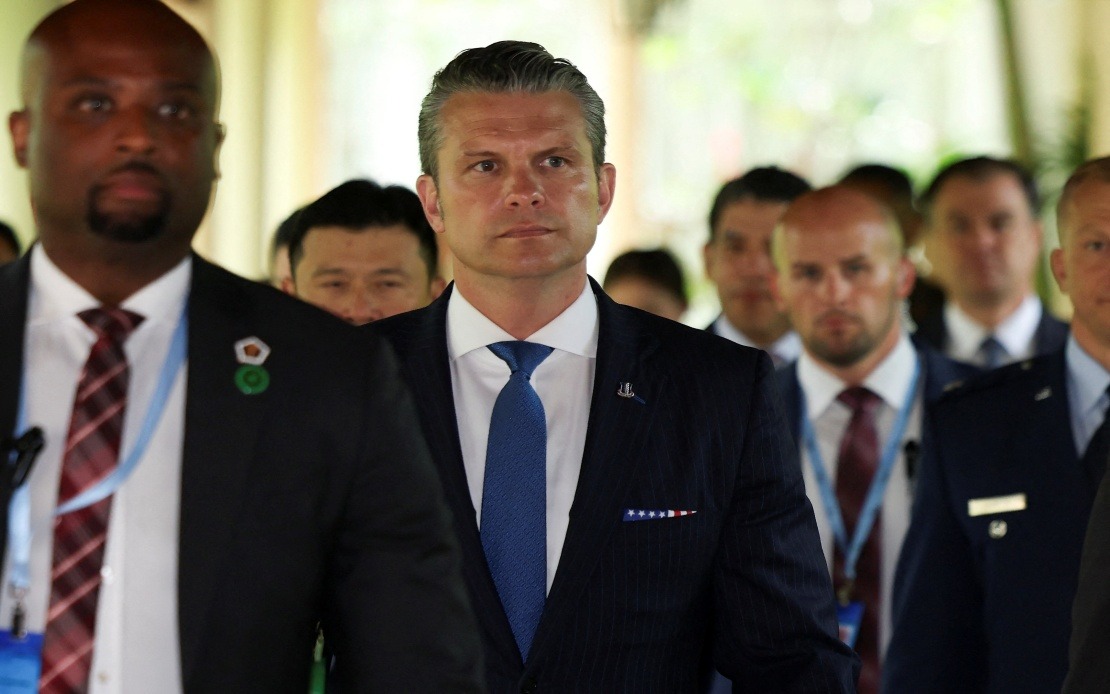
The formal agreement follows preliminary discussions held in August at the A3C anti-cartel forum in Panama, where US Defence Secretary Pete Hegseth and Jamaica's Deputy Prime Minister and Minister of National Security Horace Chang agreed to expand bilateral security measures. These high-level conversations laid the groundwork for the more comprehensive military framework now being implemented, suggesting that both governments view narco-terrorism as a priority requiring sustained diplomatic and operational investment.
Operationalizing this commitment is Operation Southern Spear, an aggressive military initiative that Defence Secretary Hegseth unveiled in November 2025. The operation specifically targets major drug trafficking organizations across Latin America and the Caribbean, reflecting a hardened approach to countering what the Pentagon characterizes as threats to hemispheric stability. The operation demonstrates a willingness to deploy significant military assets in pursuit of disrupting cartel supply chains and dismantling criminal logistics networks.
The scale of military engagement under this framework has been substantial. Since September 2025, US military forces have conducted at least 67 strikes against suspected drug smuggling vessels operating in the Caribbean Sea and Pacific Ocean. These operations have resulted in significant casualties, with SOUTHCOM reporting 221 deaths from the strikes. The intensity of operations underscores Washington's commitment to an enforcement-heavy approach, though the tactics raise important questions about escalation, collateral damage, and the long-term efficacy of kinetic operations against decentralized criminal networks.
For Jamaica, this deepened security partnership carries particular significance given the island nation's acute vulnerability to drug trafficking. Jamaica sits at a critical geographic nexus in transnational smuggling routes, with criminal organizations using the country as both a transshipment point and a source of homegrown trafficking activity. The country has experienced significant violence linked to drug trafficking, with gangs competing for control of distribution networks and retailing operations. By formalizing cooperation with the world's most powerful military, Jamaica's government is signaling its commitment to combating these challenges, though critics raise questions about sovereignty and the appropriateness of foreign military involvement in domestic security matters.
The broader context of US involvement in Latin American drug enforcement reflects longstanding American strategic interests in regional stability. The drug trade has been a consistent flashpoint in US-Latin American relations, with Washington alternately pursuing interdiction, eradication, and demand-reduction approaches. The current emphasis on military operations represents a return to enforcement-centric strategies reminiscent of Cold War-era counter-narcotics efforts, albeit framed through contemporary security terminology emphasizing counter-terrorism rather than traditional drug enforcement.
For Southeast Asian observers, the US-Jamaica agreement offers important insights into how Washington approaches regional security challenges beyond its traditional sphere of influence. The deployment of significant military resources to interdict drug trafficking, the emphasis on bilateral security partnerships, and the willingness to conduct sustained operations in third-party territories establish patterns that potentially carry implications for Asian maritime security arrangements. Several Southeast Asian nations have increasingly looked to Washington for security partnerships, and the Jamaica model suggests that the United States is willing to commit substantial resources to countries facing transnational criminal threats.
The operation also illuminates broader questions about the relationship between military power and drug trafficking reduction. While interdiction operations can disrupt specific trafficking networks and impose costs on criminal organizations, experts debate whether such approaches address underlying supply and demand dynamics. The fact that the US has conducted 67 major strikes yet trafficking continues suggests that degrading criminal capabilities requires parallel efforts addressing root causes of drug production, consumption patterns, and the economic incentives that sustain smuggling operations.
Jamaica's participation in this framework also reflects the Caribbean region's strategic importance to American interests. The Caribbean serves as a crucial maritime zone through which significant quantities of drugs transit toward North American markets, making it a natural focus for US counter-narcotics efforts. By strengthening ties with Jamaica, Washington is positioning itself to extend operational reach throughout the region while simultaneously enhancing its influence over Caribbean security policy.
Moving forward, the sustainability of this partnership depends on several factors: the willingness of both governments to maintain political commitment despite potential domestic criticism, the actual effectiveness of military operations in reducing drug trafficking, and the capacity of Jamaica's institutions to absorb and operationalize security assistance effectively. The agreement represents an important statement of intent, but translating diplomatic commitments into measurable reductions in trafficking flows and associated violence will require sustained effort and genuine coordination.

