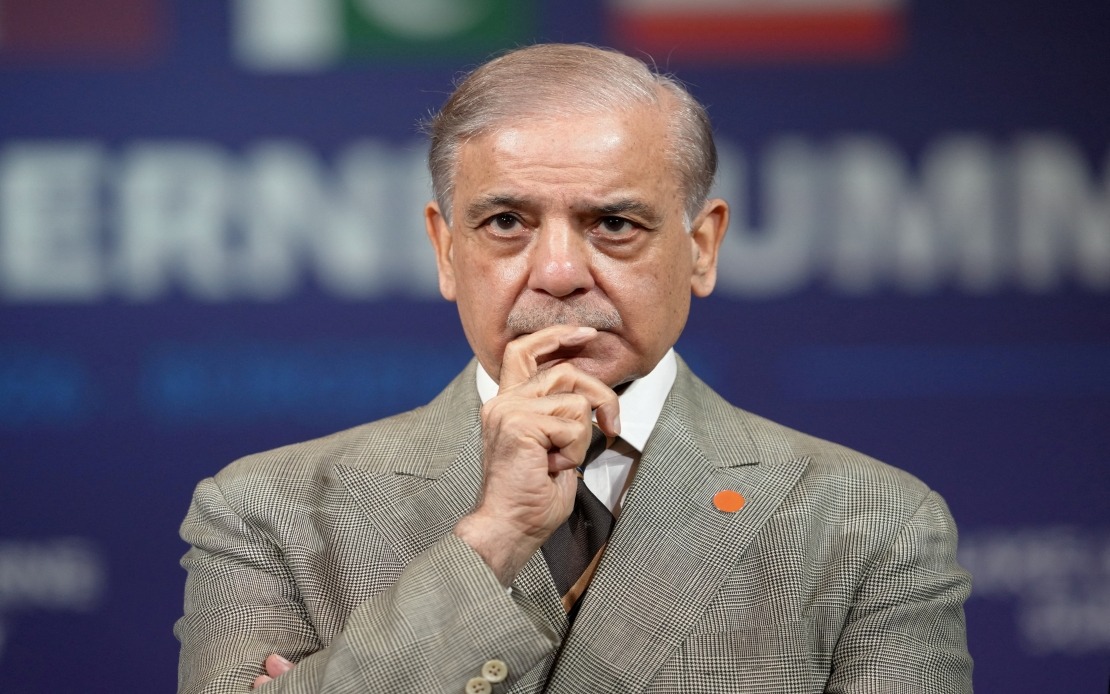
Pakistan's Prime Minister Shehbaz Sharif has disclosed that the United States and Iran are poised to commence formal technical discussions within the next 60 days to address longstanding disputes over nuclear capabilities, ballistic missile programmes, and billions in frozen Iranian assets. Speaking before lawmakers in the National Assembly on Tuesday, Sharif framed the upcoming negotiations as a critical extension of what both nations have characterized as constructive engagement, following recent high-level talks in Switzerland that concluded on Monday.
The announcement marks a significant diplomatic development in a region where Malaysian policymakers maintain keen interest given ASEAN's commitment to stability and non-interference in major power conflicts. The forthcoming discussions are anchored by the Islamabad Memorandum of Understanding, a tripartite accord signed on June 17 by the United States, Iran, and Pakistan acting as mediator. This positioning elevates Pakistan's role beyond observer status to active facilitator in one of the world's most delicate geopolitical disputes.
Shahif expressed optimism that intensive technical-level engagement would transform the initial memorandum into a durable, long-term agreement capable of resolving decades of mutual suspicion and sanctions regimes. The 60-day timeline represents a compressed negotiating window, suggesting both parties perceive genuine momentum despite historical patterns of failed talks. The three-pronged agenda encompasses the contentious nuclear programme that Western powers have sought to constrain since Iran's 1979 revolution, the separate question of ballistic missile development that poses regional security implications, and the intricate matter of asset freezes imposed through international sanctions.
Yet even as Sharif highlighted progress, Iran's Foreign Ministry issued a sharp clarification that exposed continued disagreements on negotiating boundaries. Esmaeil Baghaei, Tehran's spokesperson, explicitly stated that missile capabilities have not formed part of previous discussions with Washington and that Iran possesses no intention to permit International Atomic Energy Agency inspectors access to nuclear facilities damaged during military operations. This stance suggests Tehran views its ballistic arsenal as non-negotiable and remains wary of inspection protocols that might facilitate additional military strikes.
The Swiss venue hosted talks mediated jointly by Pakistan and Qatar, underscoring the critical role smaller regional powers play in bridging seemingly irreconcilable positions. For Malaysian observers, the involvement of Qatar in mediation illustrates how Gulf states strategically position themselves as honest brokers between adversaries, a model with potential relevance to ASEAN's own regional diplomacy challenges. The mechanics that enabled substantive progress in Burgenstock remain opaque, though multiple agreements on procedural mechanisms suggest negotiators have identified concrete pathways forward rather than merely rehearsing familiar grievances.
The nuclear dimension remains the most technically complex element. Iran's civilian nuclear programme, developed ostensibly for energy generation, has been scrutinized for potential weaponization pathways by international monitors and Western intelligence services. Constraining uranium enrichment levels, implementing inspection regimes, and establishing verification mechanisms that satisfy Iranian sovereignty concerns while addressing Western security anxieties represents the enduring puzzle that previous diplomatic efforts have failed to solve comprehensively.
Ballistic missile capabilities occupy a distinct though interconnected category. These delivery systems inherently generate regional anxiety across the Middle East, as neighbouring states including Saudi Arabia, United Arab Emirates, and Israel perceive them as weapons of potential aggression. Iran's insistence on excluding missiles from negotiation perimeters reflects its perception that this capability constitutes a legitimate national defence requirement rather than an aggressive posture warranting international constraint. This philosophical divide complicates achieving genuine comprehensive settlements.
The frozen assets question introduces additional complexity rooted in sanctions architecture. American restrictions have immobilized substantial Iranian government resources held in international financial systems, effectively weaponizing banking infrastructure. Unfreezing these resources demands corresponding concessions on nuclear matters from the Iranian perspective, yet Western governments worry that released capital might finance regional proxy forces or weapons programmes. Finding mutual satisfaction requires unprecedented trust-building among parties with minimal history of honouring commitments.
For Southeast Asia broadly, the outcome of these 60-day negotiations carries indirect but meaningful implications. A stabilized Iran-US relationship could reduce military tensions that occasionally draw regional powers into competing alignments. Conversely, negotiation failure might accelerate arms escalation and proxy conflicts that destabilize global energy markets and maritime security corridors crucial to ASEAN commerce. Malaysia's economic interests in stable oil pricing and unobstructed shipping lanes through Middle Eastern waters depend partially on maintaining equilibrium between regional heavyweights.
The Islamabad MoU framework itself reflects evolving patterns of South Asian mediation in global disputes. Pakistan's elevation as formal mediator alongside Qatar demonstrates how traditional Cold War alignments have fractured, permitting non-aligned nations greater leverage in facilitating great power negotiations. However, Pakistan's historic alignment with US security interests complicates its credibility as neutral arbiter, potentially limiting its effectiveness when Iranian negotiators suspect American preferences shape Pakistani positions.
Successful conclusion of the 60-day technical discussions would require unprecedented flexibility from both sides. The United States would need to accept some Iranian nuclear capacity and ballistic development in exchange for verifiable constraints and transparency. Iran would require relief from debilitating sanctions and international legitimacy restored through normalized relations. Intermediate compromise positions exist, yet historical negotiations have foundered on precisely these types of give-and-take demanding leaders to justify concessions to domestic constituencies.
The coming months will reveal whether Sharif's characterization of "historic progress" reflects genuine transformation or diplomatic theatre masking fundamental incompatibilities. Initial agreements on procedural mechanisms provide necessary infrastructure, yet substantive breakthroughs on the three core issues represent the true measure of success. Malaysia and other Southeast Asian nations will monitor developments carefully, aware that Middle Eastern stability directly influences regional prosperity and security.