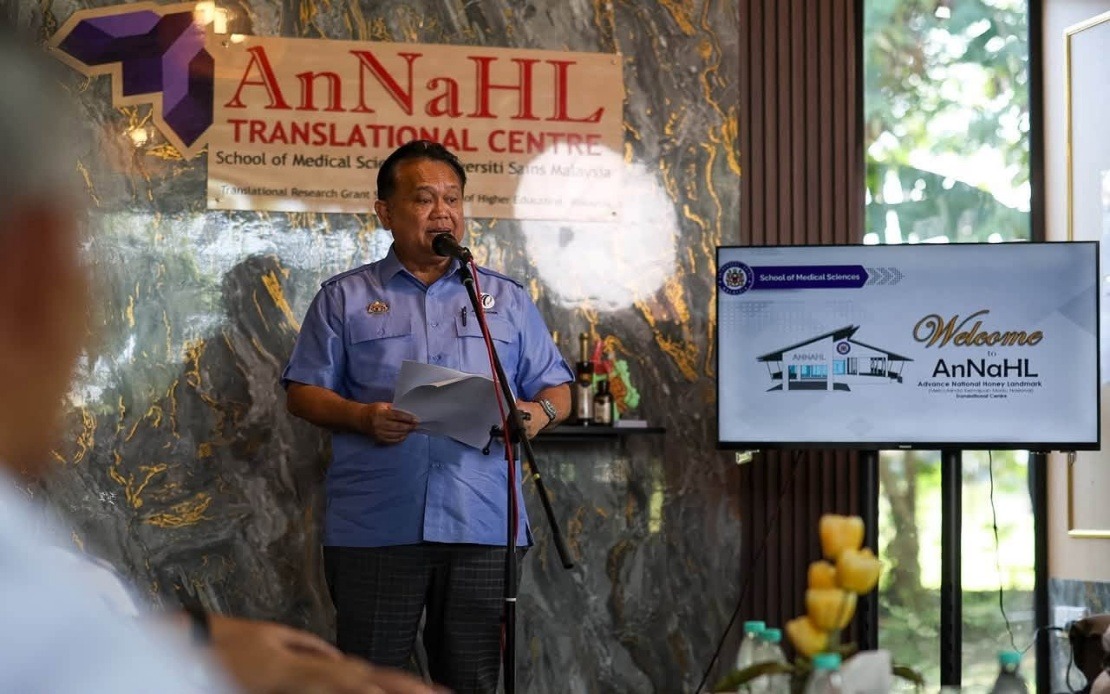
The Upper Rajang Development Agency (URDA) is positioning itself to catalyse a fundamental shift in how Sarawak's interior communities generate income, moving beyond traditional commodity production towards knowledge-intensive sectors that can sustain long-term economic growth. Speaking in Sibu, the agency's chairman Datuk Seri Alexander Nanta Linggi outlined plans to deepen partnerships with tertiary institutions, regional development authorities, and grassroots stakeholders to establish an innovation ecosystem across the Upper Rajang region.
This strategic pivot reflects broader recognition across the Malaysian development sector that rural prosperity cannot hinge indefinitely on the extraction and export of raw materials. Instead, forward-thinking agencies are recognising that communities require access to research capabilities, modern business practices, and market intelligence to escape commodity price volatility. URDA's approach aligns with national ambitions to upgrade Malaysia's rural value chains and reduce regional development disparities.
Evidence supporting this reorientation comes from URDA's experience with the High Impact Community Projects (HICP), which have delivered measurable income gains to participating households. According to Nanta, beneficiaries have experienced average income increases exceeding 25 per cent, a testament to the multiplier effects that arise when targeted investments in capacity-building and technology transfer reach community level. These outcomes suggest that rural development strategies anchored in knowledge and skills acquisition can produce faster and more durable improvements than conventional infrastructure-heavy approaches.
Nanta, who also serves as Member of Parliament for Kapit and Minister of Works, articulated a vision wherein universities transcend their conventional role as research institutions isolated from economic realities. Instead, he framed tertiary education facilities as strategic economic partners capable of translating academic knowledge into commercially viable solutions for rural communities. This conceptualisation is gaining traction across Southeast Asia, where several countries are experimenting with university-led development models that link campus research to local entrepreneurship and production systems.
The delegation's visit to the Advanced National Honey Landmark (AnNaHL) Translational Centre at Universiti Sains Malaysia's Health Campus in Kubang Kerian, Kelantan, served as a practical illustration of this partnership model. The centre functions as a nexus for research, product development, training, and market access for the stingless bee value chain—a sector with significant potential across Malaysia's interior regions. Stingless bee farming represents precisely the kind of high-value, knowledge-dependent agricultural activity that can generate sustainable livelihoods whilst preserving forest ecosystems and biodiversity.
For the Kapit parliamentary constituency, where URDA has identified multiple locations suitable for community projects, the stingless bee initiative represents a concrete opportunity to diversify income sources beyond timber and plantation agriculture. The sector demands minimal land use, aligns with conservation objectives, and commands premium market prices both domestically and internationally. Training delivered through institutional partnerships ensures that participating farmers adopt best practices in hive management, honey processing, quality certification, and brand development from inception.
The AnNaHL centre's operational model—encompassing processing facilities, marketing support, workforce development, and product innovation—demonstrates how translational centres can systematically bridge the gap between laboratory discovery and commercial application. By co-locating these functions within a single institution, the centre removes friction points that typically prevent rural producers from accessing advanced technology or sophisticated distribution networks. Similar institutional arrangements could be replicated across other high-potential sectors within the Upper Rajang region.
Market access represents perhaps the most critical bottleneck constraining rural economic diversification in Malaysian Borneo. Communities may possess entrepreneurial capacity and access to production technology, yet lack connections to wholesale buyers, export intermediaries, or consumer brands willing to pay premium prices. URDA's partnership strategy explicitly addresses this constraint by linking community producers to institutional buyers and e-commerce platforms through the research and business development infrastructure embedded within universities and development authorities.
The emphasis on knowledge transfer and community capacity-building reflects mature thinking about development sustainability. Top-down delivery of external solutions typically generates dependency and stalls once external subsidies or technical support cease. Conversely, interventions that embed knowledge and skills within local institutions create self-reinforcing ecosystems wherein community members become problem-solvers capable of adapting to market shifts, adopting new technologies, and coaching subsequent cohorts of producers. This endogenous growth model proves particularly valuable in geographically dispersed regions where government capacity for continuous supervision is limited.
For Malaysia's broader rural development agenda, URDA's approach offers a replicable template that other regions and agencies could adopt. The emphasis on university partnerships is particularly significant given Malaysia's substantial investment in higher education infrastructure, much of which currently operates with limited direct economic engagement with surrounding rural communities. By positioning universities as development partners rather than isolated academic institutions, the model unlocks existing public assets whilst strengthening connections between urban and rural economies.
The collaboration between URDA and the Regional Corridor Development Authority (RECODA) further signals institutional alignment around this innovation-driven development paradigm. Historically, Malaysian development authorities operated in relative isolation, with limited cross-referencing of lessons learned or best practices. Deeper coordination between agencies managing overlapping geographies or sectors allows for more coherent policy frameworks and reduces wasteful duplication of effort.
Looking forward, the success of this strategic reorientation will depend on sustained institutional commitment, adequate funding for capacity-building programmes, and willingness to measure progress against genuine livelihood outcomes rather than merely activity metrics. The 25 per cent income increase recorded through HICP suggests that the model works in practice, but scaling it across the Upper Rajang region and beyond will require patience and long-term institutional support. For Malaysian policymakers and regional leaders, URDA's experience demonstrates that bridging rural-urban development gaps remains achievable through strategic partnerships that leverage academic expertise, government resources, and local knowledge.

