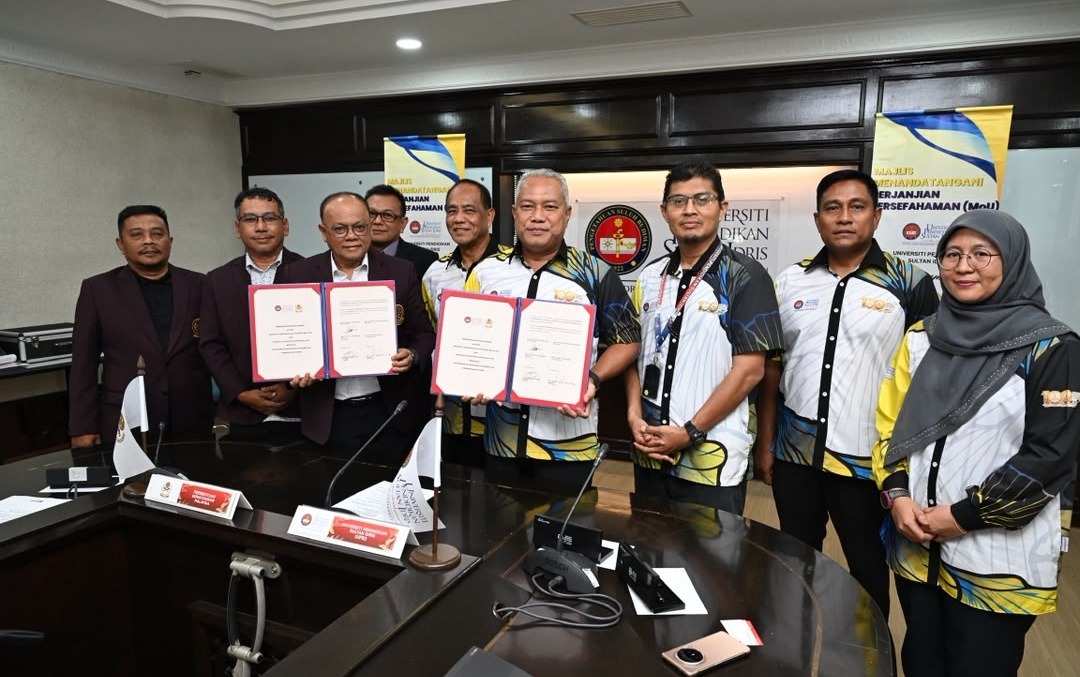
Universiti Pendidikan Sultan Idris (UPSI) has entered into a strategic partnership with the Malaysian Sepaktakraw Federation (PSM) through a formal Memorandum of Understanding designed to advance the sport's development across Malaysia. The agreement, inked at the Chancellery Building in Tanjong Malim, represents a significant step toward creating institutional pathways that marry academic achievement with sporting excellence—a model increasingly vital as Malaysian sports seek sustainable talent pipelines.
The collaboration addresses a persistent challenge facing Malaysian athletes: balancing rigorous training schedules with meaningful educational credentials. Under the MoU, UPSI commits to enrolling national and state-level sepak takraw athletes from the university's intake to postgraduate level, provided candidates meet academic entry requirements. Critically, the institution will offer customised schedules that accommodate athletes' tournament participation and training camps, removing the false choice between sport and study that has historically limited career options for retiring competitors.
UPSI Vice-Chancellor Prof Datuk Dr Md Amin Md Taff framed the initiative as extending beyond ceremonial gesture-making. He emphasised that concrete operational frameworks would follow, translating policy into measurable outcomes for both institutions. The partnership's three-year initial term may be renewed through mutual agreement, allowing both parties to assess effectiveness before committing further. This structured approach suggests realistic expectations and staged implementation rather than ambitious rhetoric unsupported by resources.
The university's technical contributions form a crucial pillar of the arrangement. UPSI will deploy its sports science expertise, including coaching methodologies, officiating standards, and sports technology applications, to elevate national competitive standards. This knowledge transfer proves particularly valuable given Malaysia's ambitions in regional and international sepak takraw circuits. By embedding scientific analysis alongside traditional coaching wisdom, the partnership seeks to modernise the sport's technical development trajectory.
Facility sharing and resource allocation constitute another substantive element. UPSI will provide training infrastructure, laboratory capabilities for sports science analysis, and material resources necessary for sustained programme implementation and monitoring. This commitment requires genuine budgetary allocation rather than notional support, suggesting institutional leadership views the partnership as strategically important rather than peripheral.
The federation's perspective, articulated by PSM Vice-President Tengku Zaihan Che Ku Abdul Rahman, emphasises creating formal educational security for athletes at all tiers—from Malaysian Sports Schools and State Sports Schools through to national representatives. This tiered approach recognises that talent development begins early and requires continuous support as players progress. By establishing institutional pathways from secondary through tertiary education, the MoU addresses a critical gap in Malaysia's athlete development ecosystem.
The planned establishment of a national sepak takraw training centre represents perhaps the most ambitious component of the collaboration. Such a facility would centralise coaching expertise, scientific support, and competitive infrastructure, creating efficiency gains and reducing the logistical burden athletes face when distributed across multiple training sites. For Southeast Asian context, this mirrors successful models in Thailand and Indonesia, where centralised national training systems have yielded consistent medal returns.
For Malaysian higher education more broadly, this partnership may serve as a replicable template. Tengku Zaihan explicitly noted hopes that the UPSI-PSM model would inspire similar collaborations between other national sports bodies and universities. Given Malaysia's diverse sports portfolio and numerous tertiary institutions, systematic integration of athletic pathways with academic programmes could strengthen both sectors simultaneously, benefiting thousands of competitors currently navigating unsupported transitions.
The sepak takraw sport itself carries particular significance within Malaysian sporting culture and regional identity. As a Southeast Asian discipline in which Malaysia competes credibly internationally, investment in systematic development generates both competitive returns and cultural resonance. Enhanced athlete education and professional coaching standards position Malaysia competitively against established sepak takraw nations while demonstrating institutional commitment to indigenous sporting traditions.
Implementation success will depend substantially on sustained funding, administrative cooperation, and genuine institutional buy-in beyond signatories. Both UPSI and PSM must allocate dedicated personnel, budget lines, and operational priority to realise the MoU's potential. Quarterly reviews and transparent progress reporting will indicate whether the partnership functions as intended or devolves into bureaucratic documentation.
The three-year timeline allows reasonable opportunity to demonstrate tangible outcomes—athlete graduation numbers, tournament performance improvements, coaching certification completions—that justify renewal. Success metrics should be established early and regularly communicated to stakeholders including athletes, parents, employers, and funding agencies. This transparency builds confidence that institutional resources genuinely serve development objectives rather than administrative convenience.
Looking forward, the partnership's success could catalyse broader ecosystem improvements. Enhanced athlete support might encourage young talent to commit seriously to sepak takraw, knowing educational pathways remain secure. Improved coaching standards through UPSI collaboration could elevate overall competitive quality across Malaysian clubs and institutions. Collectively, these incremental gains compound into sustained competitive advantages and deeper sporting culture integration within Malaysian society.

