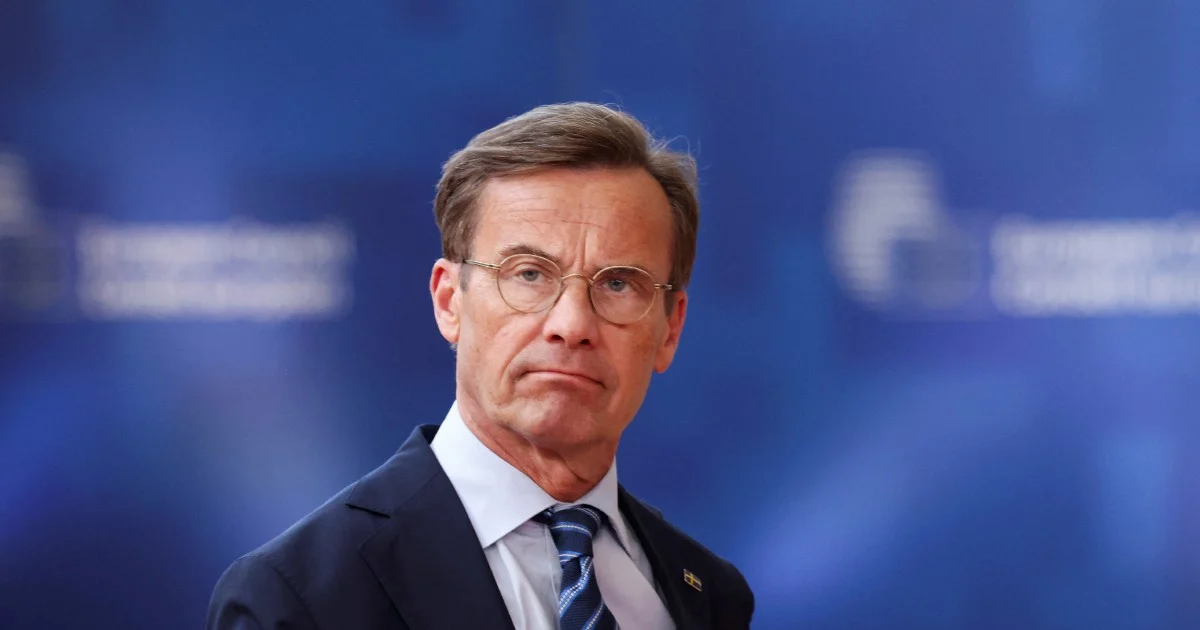
Swedish Prime Minister Ulf Kristersson's political career has proven remarkably resilient in the face of relentless scandal, demonstrating an almost preternatural ability to evade serious consequences from a succession of damaging allegations. As his government heads toward legislative elections scheduled just three months ahead, a new round of corruption charges threatens to test the limits of his political durability once again. The pattern that has defined his premiership—controversy followed by escape—now faces its most critical test as voters prepare to render their verdict on his stewardship of the Nordic nation.
Throughout his four-year tenure in office, Kristersson has confronted an unusual variety of controversies that would have toppled many political leaders in other democratic systems. Rather than facing sustained political pressure or meaningful institutional consequences, he has repeatedly managed to deflect criticism and move past each crisis with minimal damage to his authority or standing. This capacity to weather storms reflects either exceptional political skill, a fractured opposition unable to coordinate sustained pressure, or perhaps a Swedish electorate and political establishment more forgiving of executive missteps than their counterparts elsewhere. Understanding how Kristersson has maintained his position despite persistent allegations provides insight into contemporary Swedish politics and governance standards.
The timing of these latest corruption allegations proves particularly consequential given the proximity of the electoral cycle. In democracies worldwide, campaign periods intensify scrutiny of leaders' conduct and ethical standards. For Malaysian and Southeast Asian observers, the Swedish case offers an intriguing contrast to political dynamics in the region, where similar allegations might generate vastly different institutional and public responses. The emergence of fresh charges just months before voters determine the government's future suggests that Kristersson's previous escapes may not extend indefinitely. Whether Swedish voters will demonstrate the same tolerance for controversy that has characterised the previous four years remains an open question with implications for how Nordic democracies hold executives accountable.
The specific nature and scope of previous controversies that Kristersson has navigated remain central to assessing his current predicament. Each episode, though distinct in character, appears to have followed a consistent trajectory from initial revelation through public discourse to eventual diminishment without substantial accountability mechanisms being activated. This pattern—often characterised colloquially as difficulties simply bouncing off—suggests either that Swedish institutions lack adequate enforcement mechanisms for political misconduct, or that Kristersson possesses exceptional political capital and coalition management skills that insulate him from normal consequences. For regional observers accustomed to different political cultures, this Swedish approach raises questions about democratic accountability standards and whether similar behaviours would face comparable outcomes elsewhere.
The political environment surrounding Kristersson's administration adds critical context to his persistent scandals. Swedish coalition dynamics, parliamentary procedures, and the distribution of opposition strength all shape the consequences any single leader can face for alleged misconduct. Unlike systems with more personalised executive power or stronger mechanisms for removing leaders between elections, Sweden's parliamentary framework may simply provide more structural obstacles to translating public disapproval into institutional action. This institutional reality helps explain why persistent allegations have not triggered resignation demands or formal investigations with teeth. Understanding these systemic factors proves essential for international audiences seeking to comprehend how different democracies address executive accountability.
For Malaysian readers, Kristersson's experience offers instructive parallels and stark contrasts. Malaysia's own history with political scandals, institutional accountability, and the consequences facing leadership figures involves different legal frameworks, constitutional provisions, and political cultures. Where Kristersson has apparently benefited from Swedish tolerance and institutional separation, Malaysian leaders have faced varying degrees of accountability through multiple mechanisms. The comparative study of how different nations address political misconduct illuminates the strengths and weaknesses of various institutional designs. Both the Swedish and Malaysian contexts reveal that scandal management depends partly on formal rules and partly on informal political dynamics that shape whether allegations translate into real consequences.
The upcoming elections serve as the ultimate mechanism through which Swedish voters may register their assessment of Kristersson's conduct in office. Democratic systems ultimately rely on electoral accountability as a backstop when institutional mechanisms prove insufficient for addressing leadership misconduct. If previous scandals have failed to generate formal consequences, voters possess the fundamental authority to render judgment through the ballot box. Whether the fresh corruption allegations will shift electoral calculations remains uncertain, but the timing ensures that these charges will feature prominently in campaign discourse. For leaders throughout the democratic world, this reality underscores that even when institutions fail to provide immediate accountability, electoral competition periodically forces comprehensive reassessment.
The international dimension of Kristersson's political standing also warrants consideration. Sweden's reputation as a stable, transparent, well-governed Nordic nation creates expectations about leadership standards that may differ from those applying to leaders in nations with weaker institutional traditions. International observers might judge Kristersson's survival of multiple scandals as reflecting either Swedish democratic maturity that distinguishes between serious offences and manageable controversies, or conversely, as evidence that even advanced democracies struggle with adequate accountability mechanisms. This perception gap between how Swedes and international observers evaluate Kristersson's tenure reflects broader questions about governance expectations in different political contexts.
The broader implications for democratic governance extend beyond Sweden specifically. Kristersson's trajectory demonstrates that political resilience in the face of scandal depends on multiple variables: institutional design, opposition effectiveness, media dynamics, public tolerance, and coalition management. Leaders facing similar allegations in other democracies experience vastly different outcomes depending on these contextual factors. For Southeast Asian political analysts, the Swedish case provides valuable perspective on how different democratic systems process and adjudicate executive misconduct. The contrast between Swedish outcomes and those typical in other regions highlights that democracy itself remains compatible with widely varying standards of accountability and tolerance for leadership failings.
As election day approaches, Kristersson confronts his most significant challenge since assuming office. Previous scandals emerged during parliamentary terms when electoral judgment remained distant and diffuse; fresh corruption allegations now surface when voter attention concentrates on evaluating leadership performance. Whether the pattern of escaped consequences extends through this final electoral test or breaks for the first time will determine both his political future and provide Swedish voters with an opportunity to register whether they share his apparent imperviousness to scandal. For regional observers, the election outcome will offer crucial data about whether Kristersson's demonstrated ability to navigate controversy represents sustainable political positioning or merely postponed accountability.