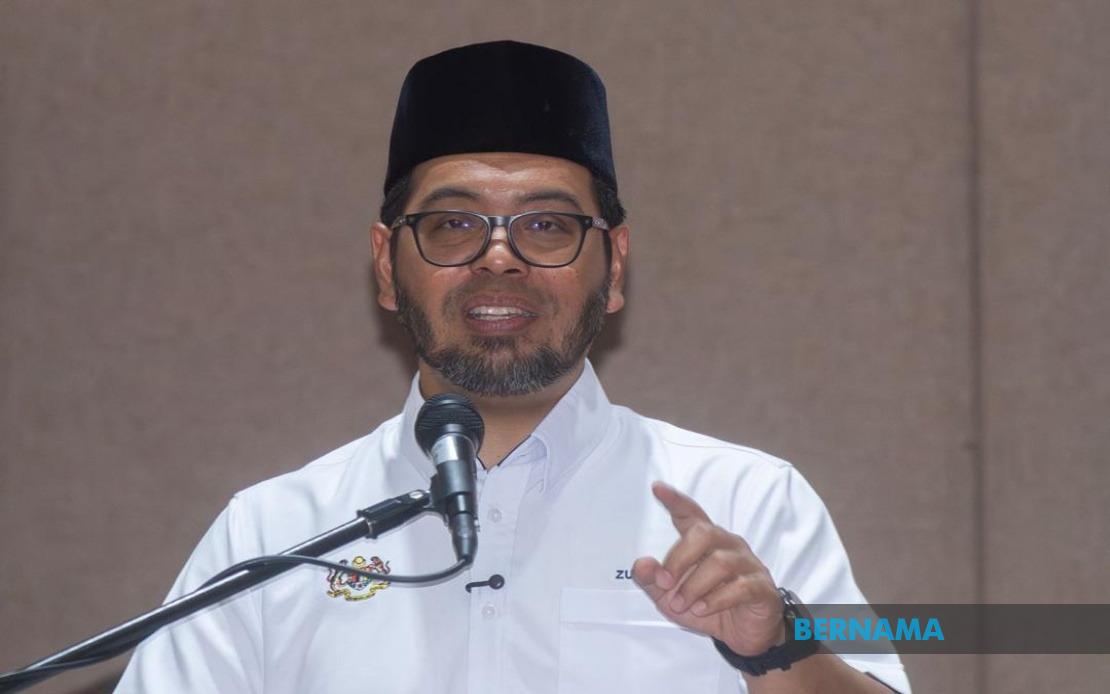
Unregistered marriages present a serious threat to children's welfare and family stability, with consequences extending from citizenship and education to inheritance disputes, Religious Affairs Minister Dr Zulkifli Hasan warned on Friday at the launch of a nationwide literacy initiative in Labuan. The minister drew attention to a persistent problem affecting families across the Federal Territories, where couples continue living as spouses without formally registering their unions or, in some cases, have married through unauthorised registrars who circumvent the procedures mandated by the Islamic Family Law (Federal Territories) Act 1984.
The ramifications of deferred or failed marriage registration extend far beyond administrative inconvenience. Children born to unregistered unions face concrete obstacles when attempting to secure birth certificates, a fundamental document required to enrol in schools and access public healthcare services. Beyond these immediate hurdles, the absence of formal registration creates ambiguity surrounding a child's legal status, lineage recognition, and citizenship entitlements—consequences that can reverberate throughout their entire lives. In Malaysia's federal system, where citizenship and educational access depend on clear documentation, such gaps expose vulnerable populations to systemic exclusion.
The complications intensify when family structures become fractured through separation or death. Wives in unregistered marriages encounter significant difficulties claiming maintenance payments or 'mutaah', leaving them economically vulnerable without recourse to formal legal protections. When disputes arise over inheritance and 'faraid' distribution following a death, the absence of official marriage registration transforms a traumatic period into protracted legal uncertainty. These situations frequently trigger family conflicts that could have been prevented through straightforward compliance with established registration frameworks.
Dr Zulkifli emphasised that the ministry's approach prioritises remediation rather than punishment, working collaboratively with religious authorities and community organisations to address outstanding registration backlogs. This cooperative strategy acknowledges that many families face registration challenges due to circumstance, distance, or lack of awareness rather than deliberate non-compliance. The ministry has positioned interactive assistance counters during community outreach programmes specifically to help individuals clarify their obligations and navigate the registration process without fear of sanctions.
The 2026 Federal Territories Syariah Law Literacy Programme represents a coordinated response involving multiple stakeholders, from the Federal Territories Syariah Court and the Islamic Religious Department to the Legal Aid Department and Tabung Haji. This multi-agency structure demonstrates recognition that marriage registration issues intersect with citizenship, education, healthcare, and economic welfare—domains requiring integrated solutions rather than isolated administrative responses. By bringing various service providers to community venues, the programme removes geographical and procedural barriers that have historically prevented families from regularising their status.
The underlying concern driving this initiative reflects broader anxieties about informal family arrangements in Malaysian society. Decades-long unions existing outside the formal legal system represent not merely statistical anomalies but indicators of structural gaps in how communities access religious and civil services. Some couples may have married across state boundaries under different regulatory frameworks, creating confusion about which authorities hold jurisdiction. Others may harbour misconceptions about registration requirements or face language barriers when engaging with official channels.
From a Southeast Asian perspective, Malaysia's emphasis on marriage registration aligns with regional efforts to strengthen family law protections and ensure equitable access to rights and services. Countries throughout the region have recognised that informal unions, while culturally accommodated in some contexts, create cascading disadvantages for dependent children who cannot access documentation-dependent services. Malaysia's approach of combining legal literacy with administrative assistance offers a model that addresses both knowledge deficits and logistical obstacles simultaneously.
The minister's framing of compliance as protection rather than burden represents a significant rhetorical shift. Rather than emphasising regulatory obligation, Dr Zulkifli positioned marriage registration as a safeguard mechanism that prevents disputes and secures family futures. This reframing addresses potential resistance from communities sceptical of formal legal interventions by emphasising tangible benefits: clarity around spousal rights, certainty regarding children's legal status, and streamlined inheritance processes. When families understand registration as serving their interests rather than government interests, participation rates typically increase.
For Malaysian families already navigating an increasingly complex regulatory environment, the consequences of unregistered status extend into contemporary domains beyond traditional welfare concerns. Children lacking birth certificates encounter difficulties obtaining identification documents necessary for digital financial services, educational loans, and employment verification. As Malaysia progresses toward greater reliance on digital identity systems and online service delivery, the vulnerability of undocumented individuals intensifies. Early registration thus becomes not merely a religious or legal formality but a practical requirement for full participation in modernising society.
The initiative also reflects evolving understanding of children's rights in Islamic jurisprudence. Contemporary interpretations emphasise that securing children's welfare through documented family relationships represents a religious obligation, not optional formalism. By situating marriage registration within a framework of parental responsibility and child protection, religious authorities mobilise Islamic values to encourage compliance rather than positioning the requirement as external imposition. This values-based approach resonates more powerfully in religious communities than administrative mandates alone.
Looking forward, the success of this literacy programme will depend on sustained follow-up mechanisms and institutional capacity to process backlogged registration cases efficiently. Families that identify outstanding issues through interactive counters require clear pathways toward resolution, with expedited procedures for cases involving dependent children. Without adequate institutional response capacity, the awareness-raising efforts may generate frustration if families encounter bureaucratic obstacles when attempting to regularise their status.
The broader policy challenge extends beyond individual case resolution toward preventing future non-registration through improved information accessibility and service proximity. As Malaysia's population becomes increasingly urban and mobile, traditional assumptions about marriage registration accessibility require reassessment. Couples marrying in one location but establishing residence elsewhere may struggle to navigate administrative procedures designed around geographical stability. Forward-looking policy must anticipate these patterns through digital service options and harmonised interstate procedures.

