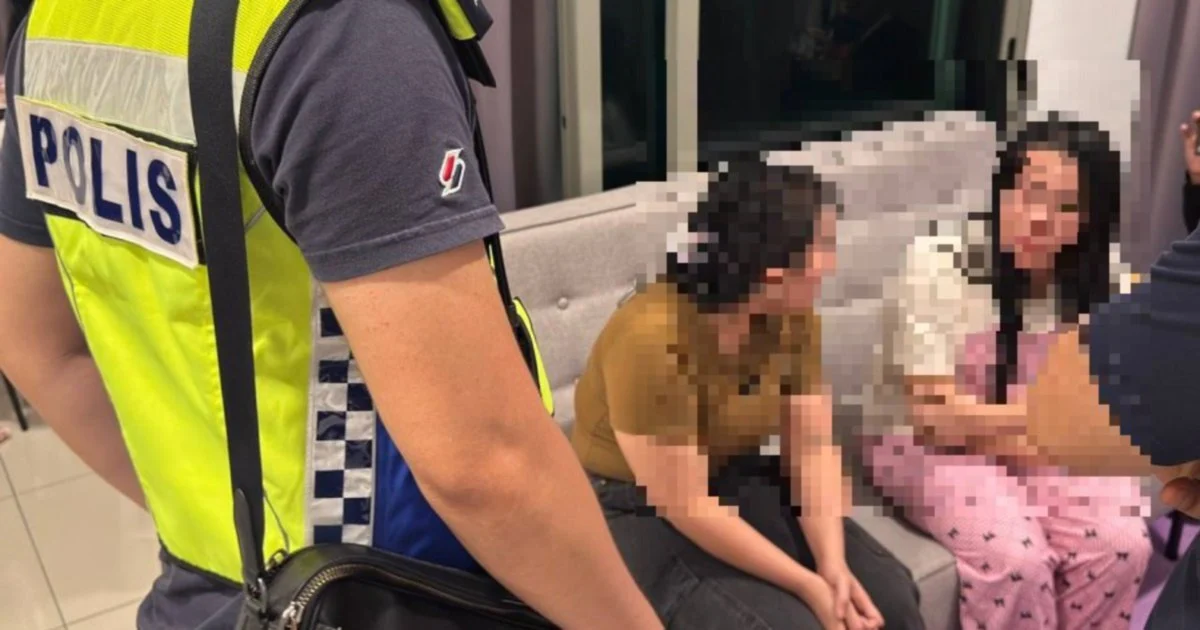
A tertiary education student's plan to supplement her finances during the semester recess took a dramatic turn when she was apprehended following a police operation targeting suspected prostitution activities at a residential unit in Cyberjaya yesterday. The raid, conducted by authorities investigating illicit commercial sexual services, resulted in the detention of the young woman who was allegedly running the operation from the apartment premises. The incident underscores the growing trend of students resorting to sex work as a means of covering educational and living expenses, a phenomenon that has become increasingly visible across Malaysia's major urban centres in recent years.
The operation highlights the persistent challenges faced by law enforcement in combating underground prostitution networks that have migrated to residential areas and apartment complexes, particularly in developed townships such as Cyberjaya. Unlike traditional red-light districts, these modern prostitution operations are considerably more difficult to detect and monitor, operating discreetly within ordinary residential buildings where neighbours may remain unaware of illicit activities. The use of digital platforms and encrypted communication channels by operators has further complicated enforcement efforts, allowing such services to function with minimal visibility to authorities. Police units in the Cyberjaya precinct have increasingly focused resources on identifying and disrupting such operations, recognising that residential-based prostitution creates community safety concerns alongside public health and labour exploitation issues.
The arrest of the student in question reflects broader societal anxieties about the financial pressures confronting Malaysian university students. Faced with escalating tuition fees, accommodation costs, and living expenses in urban areas, an increasing number of tertiary students have turned to unconventional income-generation methods during academic breaks. While some engage in legitimate gig economy work or freelancing, others have crossed into legally problematic territory. The decision to involve oneself in sex work, whether through independent operation or as part of an organised network, exposes individuals to substantial legal liability, health risks, exploitation, and long-term consequences for future employment and social standing.
The circumstances surrounding this particular case reveal how financial desperation, combined with perceived anonymity offered by urban apartment living, can lead young people towards decisions with serious ramifications. The student's apparent attempt to establish an independent operation suggests either a lack of awareness regarding legal consequences or a calculation that the financial returns justified the risks involved. Malaysian law treats prostitution-related offences seriously, with penalties including fines and potential imprisonment depending on the specific charges and circumstances involved. For university students, a criminal conviction in this domain would inevitably derail academic progress, eliminate future employment opportunities in regulated professions, and create lasting social stigma.
The broader context of student financial insecurity deserves examination alongside enforcement considerations. Malaysian universities increasingly struggle to provide adequate financial support mechanisms for students facing genuine hardship, creating situations where young people perceive limited legitimate alternatives. Scholarship and loan programmes, while available, often prove insufficient for covering all educational and living expenses, particularly for students from lower-income backgrounds pursuing studies at private institutions or in expensive urban centres like the Klang Valley. Some student welfare advocates argue that addressing the root causes of student poverty would prove more effective than enforcement-focused approaches, though such arguments remain contentious within policy circles.
The Cyberjaya raid also illustrates law enforcement's evolving strategies in addressing prostitution in technologically mediated contexts. Police investigations into suspected illegal sexual services increasingly involve digital forensics, online undercover operations, and surveillance of communication platforms where such services are advertised and negotiated. The transition from street-based to digitally-organised prostitution has necessitated corresponding tactical adjustments by authorities, requiring specialised training and resources that many enforcement agencies are still developing. Cyberjaya, as a planned township with significant residential and commercial density, presents particular enforcement challenges where multiple apartment complexes provide numerous potential operational locations for illicit services.
The case carries implications for student support services and university pastoral care systems. Educational institutions in Malaysia have historically maintained limited resources for identifying students facing financial crises that might push them towards risky behaviour. Counselling services, emergency financial assistance programmes, and connections to legitimate employment opportunities remain inadequate at many universities. Some institutions have begun expanding student wellness initiatives, recognising that early intervention and support can prevent individuals from making potentially life-altering poor decisions during moments of economic desperation.
For the student involved, the consequences extend beyond immediate legal proceedings. A conviction would create barriers to professional licensing, visa applications for further studies abroad, and future employment in numerous sectors that conduct background checks. The reputational impact would also be profound, affecting social relationships and family connections. Recovery and rehabilitation pathways following prostitution involvement remain underdeveloped in Malaysia, with limited specialised support services available to help affected individuals reintegrate into education and employment.
The incident also raises questions about apartment security and community awareness. Residents in residential complexes where such activities occur may be entirely unaware of the nature of activities transpiring in neighbouring units, though some may notice unusual visitor patterns or activity timing. Building management companies and security personnel occupy complex positions regarding suspected illicit activities, navigating tensions between privacy concerns and community safety responsibilities.
Moving forward, this case exemplifies ongoing challenges at the intersection of law enforcement, student welfare, housing policy, and criminal justice. While police continue appropriate enforcement operations against prostitution networks, complementary approaches addressing student financial insecurity, expanding legitimate employment opportunities, and improving support systems for vulnerable individuals remain underexplored policy priorities. The arrested student now faces legal processes that will determine applicable penalties, while simultaneously illustrating systemic gaps that continue enabling such situations.

