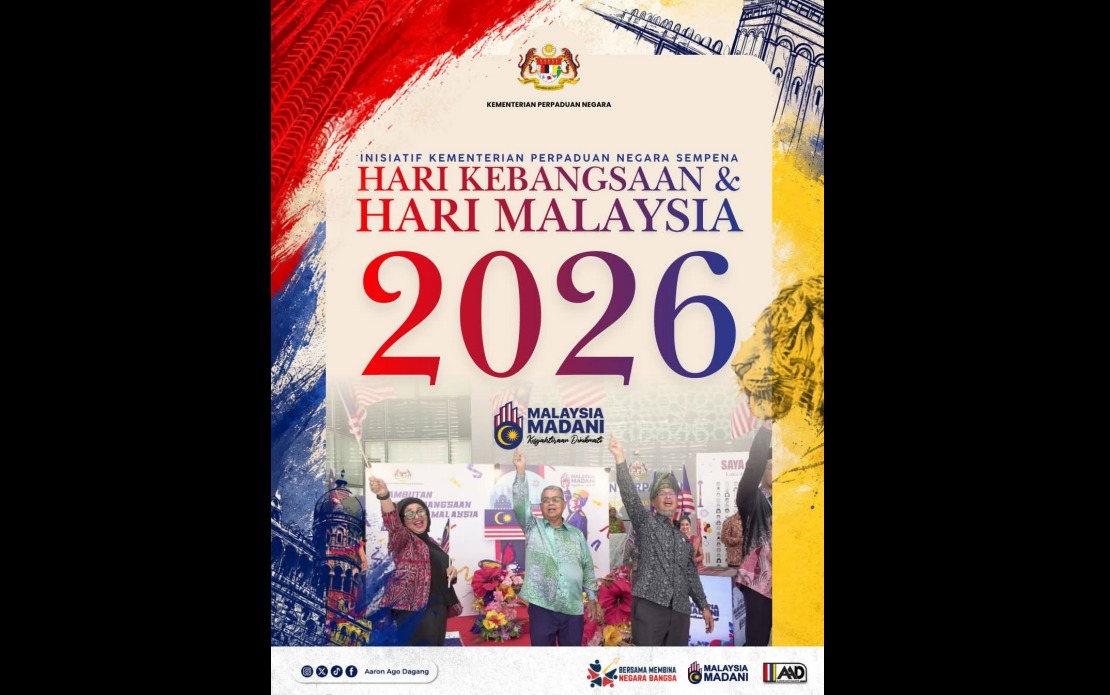
The National Unity Ministry will launch an ambitious slate of cultural, educational and commemorative programmes spanning 2026 to mark the nation's independence anniversaries and strengthen bonds of national belonging. Minister Datuk Aaron Ago Dagang outlined the comprehensive portfolio, which encompasses activities designed to reinforce Malaysia's foundational principles while honouring its multicultural fabric. The initiatives represent a strategic government effort to make patriotism and historical awareness tangible for citizens across demographic lines, moving beyond ceremonial observance into sustained community engagement.
The 11 programmes reflect a layered approach to nation-building that targets different audiences and learning styles. The 2026 National Unity Integration Movement serves as an overarching framework, while Malaysia's Merdeka Children Celebration specifically engages younger generations in participatory activities tied to independence. An Exhibition on Independence will provide historical context and educational value, anchoring celebrations in documented narrative. These elements work in concert to create multiple entry points for citizen participation, acknowledging that patriotism and unity gain strength when communities experience them actively rather than passively.
Complementing the historical and educational components are cultural celebrations and commemorative events. The Pesta Bola Merdeka Exhibition leverages sport as a unifying force, tapping into football's cross-communal appeal in Malaysia. A programme dedicated to Tun Abdul Razak, Malaysia's first Prime Minister, provides an opportunity to reflect on the nation's founding vision and the leadership principles that shaped early nation-building. Night at the Museum transforms institutional spaces into venues for evening engagement, potentially attracting families and casual visitors who might not attend traditional daytime exhibitions. Each programme targets specific emotional and intellectual connections to national identity.
The Rukun Negara Oratory Competition directly engages with Malaysia's constitutional foundation, the five principles that anchor the federation's social contract. By encouraging public speaking around these principles, the ministry creates platforms for citizens to articulate and defend shared values. Oratory competitions have historically served as vehicles for developing civic engagement and confidence in expressing patriotic sentiment. This particular initiative suggests the ministry recognises that young Malaysians need opportunities to voice and debate national ideals in structured, public forums.
The strategic timing of these initiatives around 2026 carries specific significance. Malaysia Day on September 16 marks the formation of the Malaysian federation in 1963, incorporating Sabah and Sarawak into the nation-state. National Day on August 31 commemorates independence from British rule in 1957. Clustering major initiatives around both dates allows the ministry to address the complete historical arc of Malaysian statehood while emphasising the geographic and constitutional inclusivity that defines modern Malaysia. For Sabahans and Sarawakians in particular, Malaysia Day programming demonstrates federal acknowledgment of their distinct entry into the federation and their continuing role in national identity.
Minister Ago Dagang's emphasis on embracing Malaysia's diversity within these celebrations reflects contemporary nation-building philosophy. Rather than presenting unity as homogeneity, the ministry's framing celebrates Malaysia's plural character as a source of strength. This approach acknowledges that patriotism in a multicultural democracy must accommodate difference rather than suppress it. The explicit mention of embracing diverse ethnicities, religions, cultures and regions signals that national identity programmes will not impose a singular vision but instead create spaces where different communities recognise themselves in the broader Malaysian narrative.
The ministry's focus on the Rukun Negara underscores its conviction that constitutional principles provide the philosophical glue for a diverse nation. The five pillars—belief in God, loyalty to King and country, upholding the Constitution, rule of law, and good behaviour and morality—offer values transcending religious and ethnic divides. By positioning the Rukun Negara centrally in 2026 celebrations, the ministry makes clear that shared institutional commitment matters as much as cultural celebration. This represents a deliberate effort to ground patriotism in legal and moral frameworks rather than ethnic or religious identity.
The variety of formats—exhibitions, competitions, children's programmes, sporting events and museum activities—reflects understanding that different Malaysians engage with patriotism through different mediums. Urban professionals may engage through exhibitions and evening museum visits; families through children's celebrations; youth through sporting events and oratory competitions; students and intellectuals through historical programming. This portfolio approach maximises potential reach and acknowledges that a unifying national narrative must speak in multiple registers simultaneously. No single event can meaningfully engage an entire nation; instead, the ministry creates a constellation of entry points.
Implementation and resourcing of these 11 initiatives will test the ministry's capacity and commitment. The scale of programming—spanning exhibitions, competitions, movement campaigns and special events—requires coordination across multiple stakeholders, potentially including state governments, educational institutions, cultural organisations and media partners. Budget allocation, timeline management and ensuring quality execution across diverse formats present administrative challenges. The success of these initiatives depends not merely on their conception but on their realisation in ways that genuinely engage communities rather than delivering hollow ceremonial experiences.
For Malaysian and Southeast Asian observers, these initiatives offer insight into how federal governments frame and promote national unity in plural societies. Malaysia's experience differs significantly from more ethnically homogeneous neighbours, requiring distinct approaches to patriotism and belonging. The 2026 programme suggests Malaysia continues treating national identity as something requiring active cultivation through repeated engagement, historical education and institutional reinforcement. This stands in contrast to nations where national identity feels more naturalised or taken-for-granted. The comprehensive nature of these plans reveals ongoing government concern about national cohesion and a belief that intentional programming can strengthen bonds across diverse communities.
The ministry's commitment to positioning these celebrations around substantive nation-building themes rather than military parades or purely ceremonial events reflects contemporary priorities in Southeast Asia. While many regional nations maintain traditional military components in independence celebrations, Malaysia's emphasis on unity programming, historical understanding and civic engagement signals confidence in addressing social cohesion through cultural and intellectual channels. Whether these initiatives achieve their ambitious aims of deepening patriotism and strengthening national identity across Malaysia's diverse population will depend on execution quality and genuine community participation rather than official sanction alone.

