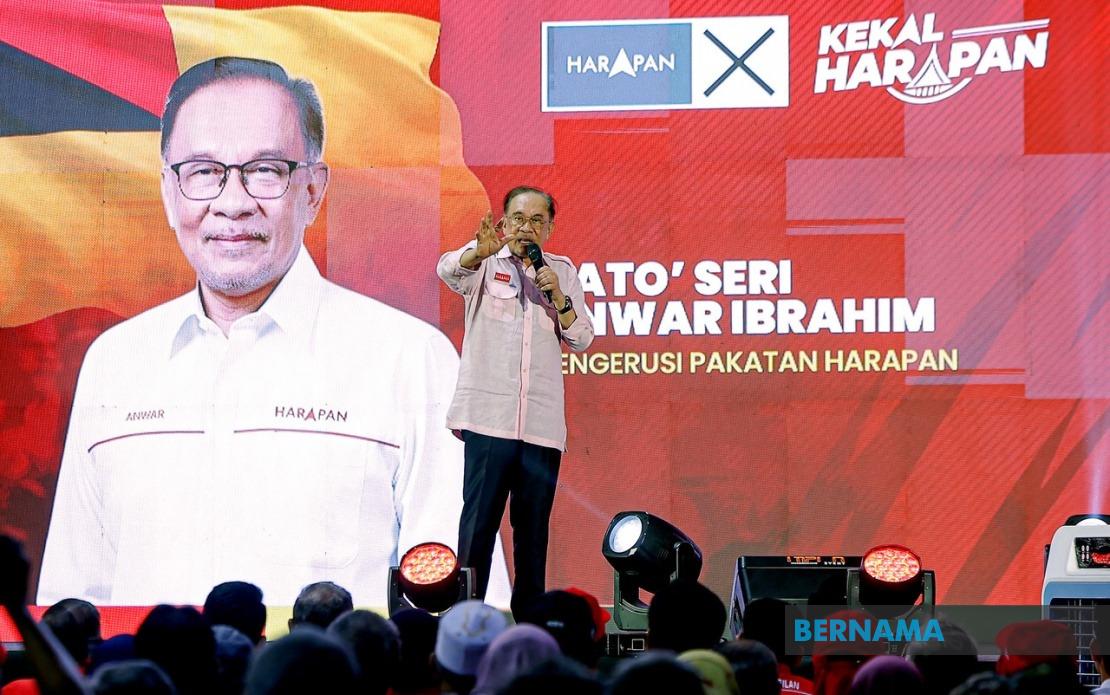
Prime Minister Datuk Seri Anwar Ibrahim has moved to reassure the nation that the federal Unity Government continues to function with stability and strength, stepping up efforts to maintain the confidence of both domestic and international investors as the administration pursues its economic agenda. Speaking in Seremban on July 22, the Prime Minister emphasised that despite electoral competition playing out across state assemblies, the foundational alliance at the centre remains cohesive and focused on delivering for Malaysians.
The coordination among coalition partners in the federal government is working as intended, Anwar noted, pointing to the regular rhythm of Cabinet meetings as tangible evidence of functional unity. Rather than treating cross-party ministerial gatherings as mechanical exercises, these sessions reflect genuine dialogue and decision-making among leaders from different political traditions working toward shared national objectives. The fact that such meetings continue without disruption or discord suggests that the mechanisms binding the coalition remain effective.
Anwar's comments arrive at a moment when Malaysian politics navigates inherent tensions between federal and state-level dynamics. While parties within the Unity Government compete against one another in state elections and local contests, they maintain collective responsibility for national governance. This distinction matters considerably for Malaysia's economic trajectory. When investors assess country risk, they prioritise stability at the centre of power, and the Prime Minister appears intent on communicating that such stability is firmly in place.
The specific ministers cited—including Deputy Prime Minister Datuk Seri Dr Ahmad Zahid Hamidi, Transport Minister Anthony Loke, and Agriculture and Food Security Minister Datuk Seri Mohamad Sabu—represent different political traditions within the coalition. Their collaborative functioning in Cabinet underscores how Malaysia's multiethnic and multiparty landscape can operate through structured cooperation. The appointment of leaders from various backgrounds to senior ministerial portfolios reflects the power-sharing arrangements that underpin the current federal administration.
Economic considerations frame much of the Prime Minister's messaging. Malaysia's economy faces headwinds from global factors including trade tensions, supply chain adjustments, and shifting investment patterns across Southeast Asia. Sustained foreign direct investment hinges partly on policy certainty and the absence of political paralysis or infighting that might slow decision-making or create regulatory uncertainty. By publicly affirming the government's coherence at the federal level, Anwar seeks to maintain the conditions necessary for business confidence.
The relationship between state and federal political competition presents an ongoing challenge that Malaysian governments must manage carefully. Parties that constitute the Unity Government coalition will inevitably campaign vigorously in state contests, seeking local mandates and control of state resources. This competition can generate friction and create incentives for actors to posture for advantage. Yet Anwar's message suggests that these rivalries, while real, have not undermined the institutional frameworks that bind the coalition at the national level.
The stability of Malaysia's federal arrangement also carries implications for regional confidence in Southeast Asia's larger economies. Investors considering commitments to Malaysian ventures, whether in manufacturing, technology, or financial services, factor political continuity into their calculations. A breakdown in federal coalition unity could trigger capital flight or delay investment decisions pending greater clarity about governance prospects. By reinforcing commitments to federal stability, Anwar seeks to prevent such negative market reactions.
The Prime Minister's reference to hoped-for post-election stability suggests awareness that upcoming electoral contests at state and local levels may test the coalition's resilience. Electoral outcomes in particular states could shift local power balances or alter the distribution of state-level influence among coalition partners, potentially creating dynamics that affect federal relationships. Anwar's measured language—expressing confidence while invoking divine blessing—reflects both optimism and acknowledgement of genuine uncertainties.
Marshalling evidence of functional Cabinet governance serves as a practical demonstration that the coalition remains more than a temporary electoral arrangement. Regular meetings where Cabinet members debate policy, allocate resources, and chart implementation strategies provide the technical and political infrastructure through which a multiparty government actually functions. When such meetings proceed smoothly and produce decisions, they constitute proof of concept that coalition governance can deliver outcomes.
The economic emphasis in Anwar's statement reflects recognition that Malaysians ultimately judge political arrangements by their material consequences. Economic growth, job creation, investment attraction, and fiscal stability matter more to most citizens than the institutional mechanics of coalition governance. By linking federal stability explicitly to economic performance and investor confidence, the Prime Minister frames the preservation of coalition unity as instrumental to tangible national benefits rather than merely procedural or abstract.
Maintaining this balance between federal cohesion and state-level competition will require continued diplomatic management among coalition partners. Different parties will pursue distinct agendas and seek advantage in local contests, creating centrifugal pressures. Yet the framework Anwar has articulated—acknowledging state-level competition while insisting federal stability remains intact—provides a useful rubric for navigating such tensions. Whether this approach survives the inevitable stresses of forthcoming elections will substantially shape Malaysia's political and economic trajectory.

