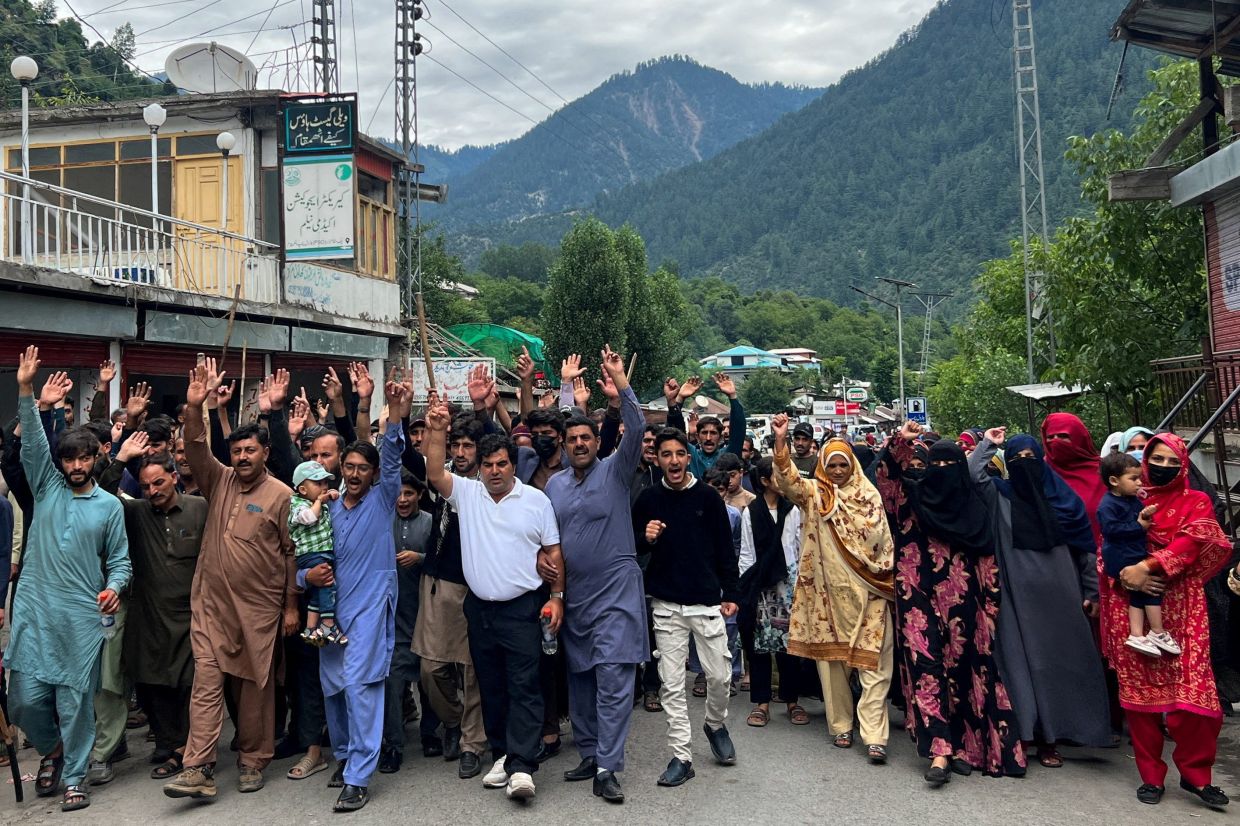
The United Nations has demanded independent investigations into the mounting death toll in Pakistan-administered Kashmir, where sporadic violence has claimed numerous lives ahead of the region's legislative assembly elections scheduled for July 27. UN High Commissioner for Human Rights Volker Turk issued an appeal for calm through his spokesman Jeremy Laurence at a Geneva press briefing on Friday, signalling serious international concern over the escalating humanitarian situation in this strategically sensitive Himalayan territory.
The wave of unrest has claimed dozens of lives since June, including both protesters and law enforcement officers caught in violent confrontations. Turk has specifically urged Pakistani authorities to conduct "prompt, thorough and impartial investigations into all deaths that have occurred due to the unrest, both amongst protesters and members of security forces." The timing of this international pressure is significant, as it arrives at a crucial juncture when the region stands on the precipice of electoral competition, making the credibility of any investigation particularly important for domestic and international observers monitoring democratic processes in South Asia.
The primary catalyst for the current disturbances is the Joint Awami Action Committee (JAAC), an anti-government civil society movement that has mobilised public sentiment around demands for economic reform and improved governance structures. Despite the organisation's ban under anti-terrorism legislation enacted last month—justified by authorities as necessary to preserve public order and security—the JAAC has continued organising demonstrations, reflecting deep-rooted frustration within the local population that cannot be easily suppressed through administrative measures alone.
This is not the first instance of serious turmoil in the region under JAAC leadership. The organisation orchestrated significant protests last September that descended into violent clashes with police, resulting in at least nine confirmed deaths. The recurrence of such cycles of unrest suggests underlying grievances remain fundamentally unresolved, and that electoral processes alone may not address the substantive concerns driving mobilisation among ordinary citizens who feel disconnected from decision-making structures affecting their daily lives.
For Malaysian and broader Southeast Asian observers, the situation illuminates how geopolitical sensitivities can complicate domestic governance challenges. Kashmir's status as a contested territory claimed entirely by both India and Pakistan since their independence from British rule in 1947 has transformed the region into an exceptionally sensitive area within Pakistani strategic calculations. The military establishment and civilian government view security concerns through an acute lens, partly due to historical wars and ongoing border tensions with India, which can sometimes result in disproportionate responses to domestic dissent perceived as threatening to territorial stability.
The UN rights office has specifically criticised the criminalisation of JAAC and the restrictions imposed on public gatherings, characterising these measures as raising "serious concerns about infringements on the rights to freedom of expression, peaceful assembly and association." This formal rebuke highlights the tension between security imperatives and democratic freedoms—a balance that democratic governments across Asia, including Malaysia, regularly navigate. The UN has insisted that detained JAAC leaders must receive proper legal representation, access to family members, and full guarantees of due process and fair trial rights, principles fundamental to the rule of law.
Another dimension of concern flagged by the UN involves information access. Internet restrictions currently in place throughout Pakistan-administered Kashmir have drawn criticism for disproportionately limiting citizens' ability to seek, receive, and share information precisely when communal tensions run highest. Such digital restrictions can exacerbate polarisation by creating information vacuums that rumour and misinformation readily fill, potentially escalating rather than de-escalating underlying conflicts. The UN has explicitly urged authorities to restore full internet connectivity across the territory as a confidence-building measure.
The upcoming July 27 elections represent a critical moment for legitimacy and stability in the region. However, the UN's intervention suggests that international observers question whether electoral processes conducted amid restrictions on civil liberties, arrests of political activists, and ongoing security operations can genuinely reflect popular will or produce durable political settlements. For Malaysia and other ASEAN nations that have experienced their own electoral contestation, the precedent is instructive: elections held under conditions of restricted freedoms and targeted enforcement against opposition figures risk delegitimisation both domestically and internationally, potentially prolonging rather than resolving underlying tensions.
Turk has called for "meaningful and inclusive political dialogue to address the underlying issues and grievances of the local population," suggesting that technical electoral administration alone cannot substitute for substantive engagement with communities' substantive concerns. This emphasis on dialogue reflects growing international recognition that security-centric approaches, while sometimes necessary, must be complemented by political problem-solving that addresses root causes of mobilisation. The economic and governance grievances animating JAAC support—whether relating to employment, corruption, or resource distribution—require institutional responses beyond security operations.
The UN's intervention also carries implications for Pakistan's international standing at a time when the country faces significant economic challenges requiring sustained international cooperation and investment. International criticism over human rights concerns in Kashmir, particularly if perceived as politically motivated crackdowns rather than proportionate security responses, can complicate Pakistan's diplomatic relationships and economic partnerships. The upcoming elections present an opportunity for Pakistani authorities to demonstrate commitment to democratic norms and civil liberties protections, thereby simultaneously addressing international concerns while potentially building domestic political legitimacy.
For the broader South Asian region, the Kashmir situation remains a persistent flashpoint requiring careful management. Malaysia, as a nation navigating its own complex ethnic and religious demographics, recognises the dangers of allowing legitimate grievances to fester unaddressed or responding to dissent primarily through security mechanisms. The UN's clear messaging reflects international consensus that sustainable stability requires combining security operations with genuine political engagement, legal accountability for excessive force, and restoration of fundamental freedoms that enable populations to express concerns through legitimate channels rather than resorting to escalating confrontation.

