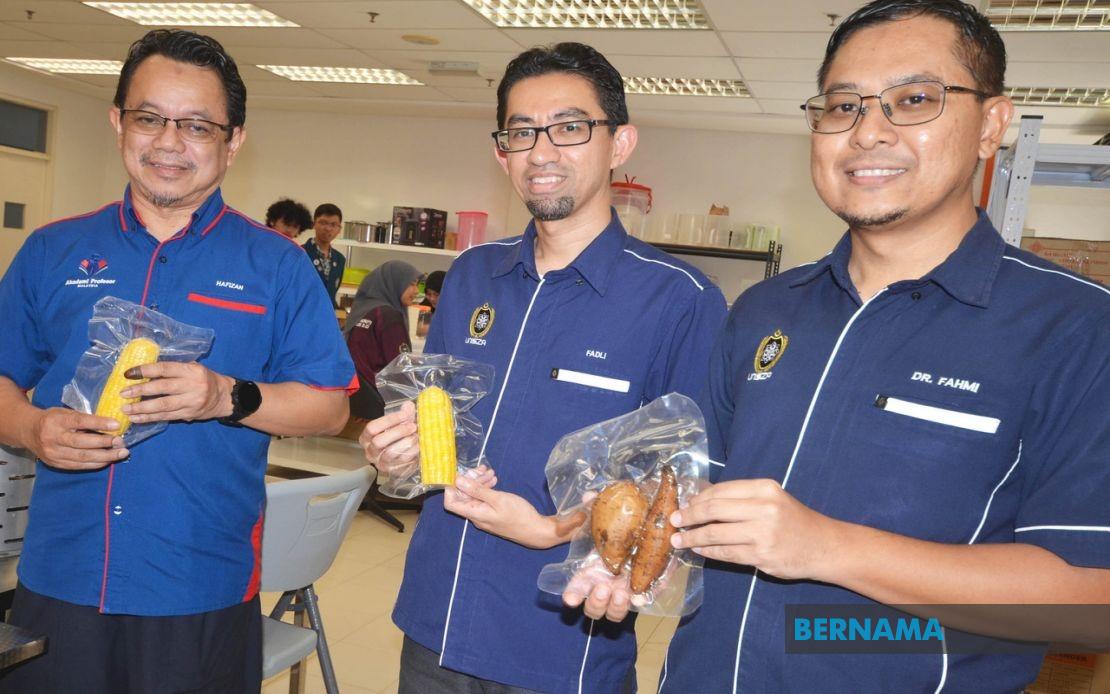
Universiti Sultan Zainal Abidin (UniSZA) has launched an innovative response to a longstanding problem plaguing rural farming communities across Malaysia: the chronic oversupply of agricultural produce that leaves farmers struggling with losses and middlemen controlling prices. The Dapur Komuniti initiative, developed by the university's faculty leadership, tackles this issue head-on by converting surplus and unmarketable farm output into shelf-stable, value-added products that command higher retail prices and generate sustainable income for agricultural producers in the Besut district of Terengganu.
Prof Dr Hafizan Juahir, dean of the faculty leading the initiative, explains that the project operates as a dual-purpose hub: simultaneously functioning as a research and development facility and a practical training centre for the surrounding community. By processing fresh agricultural commodities into preserved and packaged goods, the facility extends product shelf life from days or weeks to more than a year, fundamentally changing the economics of farming in the region. The Dapur Komuniti operates alongside UniSZA's Sustainable Community Farm on the Besut campus, creating an integrated ecosystem where production, processing, and market linkages strengthen one another.
The genesis of the initiative emerged from detailed research into the economic realities confronting Besut farmers. Prof Dr Hafizan details how local agricultural producers face a constrained market structure where their bargaining power remains minimal. Sweet potatoes, a significant crop in the region, exemplify the problem: farmers received less than RM2 per kilogramme at farm-gate prices, yet identical produce sold for substantially more in wholesale markets across Kuantan and Malaysia's major urban centres. This pricing gap reflects more than simple transport costs; it reveals structural barriers that prevent farmers from accessing higher-value distribution channels and digital platforms that could bypass traditional middlemen entirely.
Logistical constraints and digital divide challenges compound the difficulties faced by Besut's agricultural community. Many smallholder farmers lack reliable access to online marketing channels, limiting their ability to reach consumers directly or secure bulk orders from institutional buyers. The cumulative effect manifests in unsold produce rotting in fields or storage facilities, representing both immediate financial losses and demoralising waste of productive effort. For farming families already operating on thin margins, these losses threaten household food security and income stability, pushing some toward agricultural abandonment.
The Dapur Komuniti addresses these challenges through product innovation and value addition. A notable example involves processing lower-grade Terengganu sweet melons—fruit that fails to meet fresh market aesthetic standards and would typically be discarded—into pickled products suitable for retail distribution. This transformation simultaneously achieves multiple outcomes: unmarketable produce gains commercial viability, food waste diminishes substantially, and farmers receive payment for what would otherwise represent total loss. The facility has demonstrated that creative processing converts commodity crops into differentiated products where farmers capture a larger share of final retail value.
Beyond the immediate economic benefits to produce suppliers, the initiative functions as a skills-development platform for the broader Besut community. Local residents, particularly those with farming backgrounds, receive hands-on training in food processing techniques, product formulation, safety standards, and packaging requirements. These competencies enable participants to establish their own small-scale value-addition enterprises, diversifying local economic opportunities beyond traditional field agriculture. The training approach emphasises practical, immediately applicable skills rather than theoretical knowledge disconnected from employment realities.
Universal Recognition of qualifications represents another strategic dimension of the Dapur Komuniti's design. University leadership is currently negotiating with the Department of Skills Development to secure accreditation enabling the facility to serve as a training centre for the Malaysian Skills Certificate (SKM) in food processing. Once approved, this credential framework would allow UniSZA students to graduate with both bachelor's degrees and industry-recognised SKM Level 3 qualifications. Dual certification fundamentally enhances graduate employment prospects by demonstrating to potential employers that graduates possess both theoretical knowledge and verified practical competency in food production standards.
The initiative's scope extends beyond university students and farming families to encompass Malaysian Armed Forces veterans transitioning to civilian employment. Many retiring military personnel lack commercial skills or business experience relevant to civilian labour markets, creating employment challenges during this critical transition period. By equipping veterans with food processing capabilities through the Dapur Komuniti's training programmes, the initiative positions them to establish income-generating enterprises. This approach recognises that post-service economic security depends on transferable skills and entrepreneurial opportunity rather than traditional wage employment alone.
The Dapur Komuniti initiative reflects broader policy recognition that agricultural modernisation in Malaysia requires more than technological inputs or infrastructure investment. Rural farming communities need systematic support addressing the entire value chain from production through final consumer delivery. By integrating research-backed product development, technical training, credential recognition, and direct market linkages, UniSZA demonstrates how universities can function as anchor institutions driving rural economic transformation. The model developed in Besut offers a replicable template for other agricultural regions throughout Malaysia and Southeast Asia confronting similar oversupply dynamics and farmer impoverishment cycles.
For Malaysian policymakers and development agencies, the initiative highlights how strategic institutional partnerships between universities, government skills agencies, and rural communities can address complex socioeconomic challenges that market forces alone cannot resolve. The Besut experience demonstrates that agricultural surplus becomes a development opportunity rather than a crisis when processing infrastructure, training support, and market access converge around farmer-centred solutions. As Malaysia pursues its domestic food security agenda and rural income growth objectives, models like the Dapur Komuniti provide evidence-based pathways for translating policy intentions into sustainable community prosperity.

