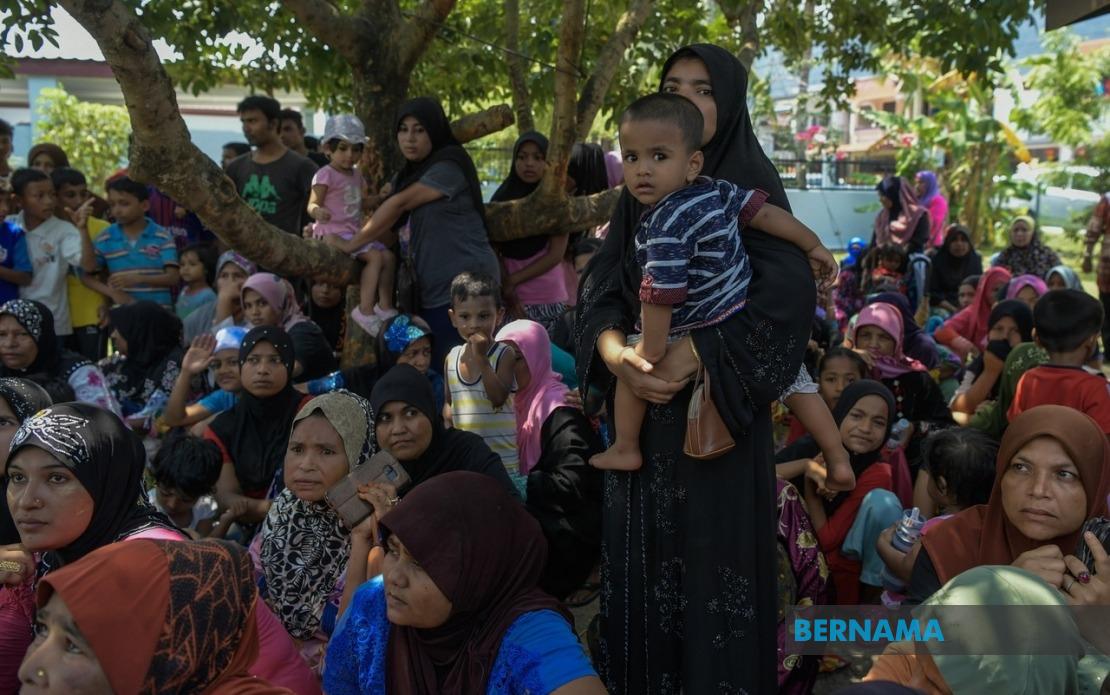
Malaysia's Economy Minister Datuk Akmal Nasrullah Mohd Nasir has issued a clear statement that possession of a United Nations High Commissioner for Refugees (UNHCR) card does not shield individuals from Malaysian legal jurisdiction or accountability. Speaking during the Global Supply Crisis Briefing on July 13, Akmal Nasrullah emphasized that the document serves only as a humanitarian identification tool and carries no immunity provisions that would place cardholders above the nation's laws. This clarification comes against a backdrop of growing public discourse about refugee documentation and its perceived implications for law enforcement.
The minister's intervention reflects mounting public concerns about refugee management across Malaysia, particularly surrounding documentation practices, trafficking networks, and perceived threats to community safety. These anxieties have prompted government agencies to re-establish clear boundaries around what refugee documentation actually represents in the Malaysian legal framework. By distinguishing between the administrative purpose of UNHCR identification and its complete absence of legal exemption, authorities are attempting to address fears that refugees operate in some form of protected category outside normal criminal jurisdiction. The statement underscores that any individual, regardless of their refugee status or documentation type, remains fully subject to investigation and prosecution should they breach Malaysian law.
The clarification emerged during a meeting of the National Economic Action Council (MTEN) chaired by Prime Minister Datuk Seri Anwar Ibrahim at Parliament. The Home Ministry (KDN) presented the refugee management situation to senior government officials, signalling that this has become a matter of sufficient economic and security importance to warrant top-level policy discussion. The integration of refugee issues into an economic action council meeting suggests government recognition that migration patterns and border management directly influence Malaysia's economic stability and investor confidence in the country's security infrastructure.
In response to the identified concerns, the Home Ministry through its Immigration Department is rolling out the Refugee Registration Document (DPP) Programme, which represents a more comprehensive approach to tracking and managing the refugee population. This initiative moves beyond simple card issuance to include biometric registration systems that create detailed digital records of individuals. The screening element allows authorities to identify security risks before documents are issued, while the control and enforcement components establish mechanisms for ongoing monitoring. For Malaysian security agencies, this programme represents a technological upgrade in their capacity to distinguish between legitimate refugees and those who may pose risks to public order.
Border security operations are being substantially reinforced through integrated multi-agency efforts targeting smuggling networks, human trafficking syndicates, document fraud, and unauthorised crossings. These operations reflect understanding that refugee crises often intersect with organised crime, as criminal networks exploit migration flows for profit. The government's emphasis on combating human trafficking acknowledges a particular vulnerability in Malaysia's region, where sophisticated criminal organisations regularly prey on desperate migrants. By attacking the supply chains that facilitate illegal movement, authorities aim to reduce the refugee population itself while simultaneously disrupting criminal enterprises that profit from human misery.
Technological investment forms a crucial component of this enhanced security posture. Data analytics platforms and monitoring systems will enable authorities to identify patterns and risks across large databases of migrants and refugee information. This approach allows intelligence analysis to flag individuals or groups exhibiting suspicious patterns without requiring constant physical surveillance. Real-time information sharing between agencies can support rapid enforcement action when threats are detected. For a country managing significant refugee populations across multiple entry points and settlement areas, such technology represents a meaningful capability increase in enforcement capacity.
Financial commitment to this agenda has been substantial. The government has allocated RM1.2 billion across several agencies for border control and security projects. This investment encompasses infrastructure improvements, technology systems, personnel training, and operational expenses. The substantial allocation indicates that refugee management has been elevated beyond routine administrative functions to become a strategic security and economic priority. For Malaysian taxpayers, this represents significant public resource commitment justified by government assessment that security risks warrant the expenditure.
The Malaysian Border Control and Protection Agency's operations are being expanded and accelerated to create more streamlined and effective border management. By consolidating border enforcement under a dedicated agency structure, the government aims to eliminate gaps between different agencies and create unified command authority over enforcement activities. This institutional restructuring reflects lessons learned from complex border challenges and represents recognition that fragmented responsibility among multiple agencies creates inefficiencies and coordination failures. Streamlining enforcement suggests the government believes some past border control weaknesses stemmed from institutional factors rather than resource constraints alone.
These refugee policy developments must be understood within Malaysia's broader economic and security context. The country's position as a major trading hub and manufacturing centre creates particular vulnerability to supply chain disruptions and security incidents. Large refugee populations, if inadequately managed, could theoretically disrupt port operations, manufacturing facilities, or commercial infrastructure. Additionally, Malaysia's regional role requires demonstrating effective sovereignty over national borders and territory. International investors and trading partners assess not only economic fundamentals but also political stability and security governance. Perceived inability to manage migration flows can undermine confidence in Malaysian institutions and deter foreign direct investment.
For Southeast Asia more broadly, Malaysia's approach to refugee management offers a case study in how middle-income countries balance humanitarian obligations with security imperatives and economic concerns. The region hosts millions of refugees, many from conflicts in Myanmar and other nearby regions. Malaysia's combination of documentation requirements, biometric registration, technology-enabled monitoring, and dedicated border enforcement represents one model for managing large refugee populations. Other nations in the region facing similar challenges will likely observe Malaysia's experiences and results with considerable interest as they develop their own policies.
The political framing of this issue remains delicate. Malaysia does host significant refugee populations, many of whom have lived in the country for years and contributed to local economies. Overly harsh enforcement could be perceived as targeting vulnerable populations, potentially creating international reputational concerns and criticism from humanitarian organisations. Conversely, insufficient enforcement could fuel legitimate public concerns about security and order. The government's approach appears to seek middle ground by emphasising rule of law equality, biometric precision, and human trafficking prevention rather than blanket anti-refugee messaging. This framing positions the government as protecting both refugees and Malaysian citizens through professional, evidence-based enforcement.
Moving forward, implementation will determine whether these policy announcements translate into meaningful improvements in border security and refugee management. Technology systems require substantial training and maintenance. Integration across multiple agencies demands sustained coordination and information sharing. Public compliance with registration programmes depends on refugees perceiving the process as fair and transparent. The success of this comprehensive approach will likely influence Malaysia's refugee policy trajectory for years to come and may establish precedents that other nations in the region adopt as they grapple with similar challenges.

