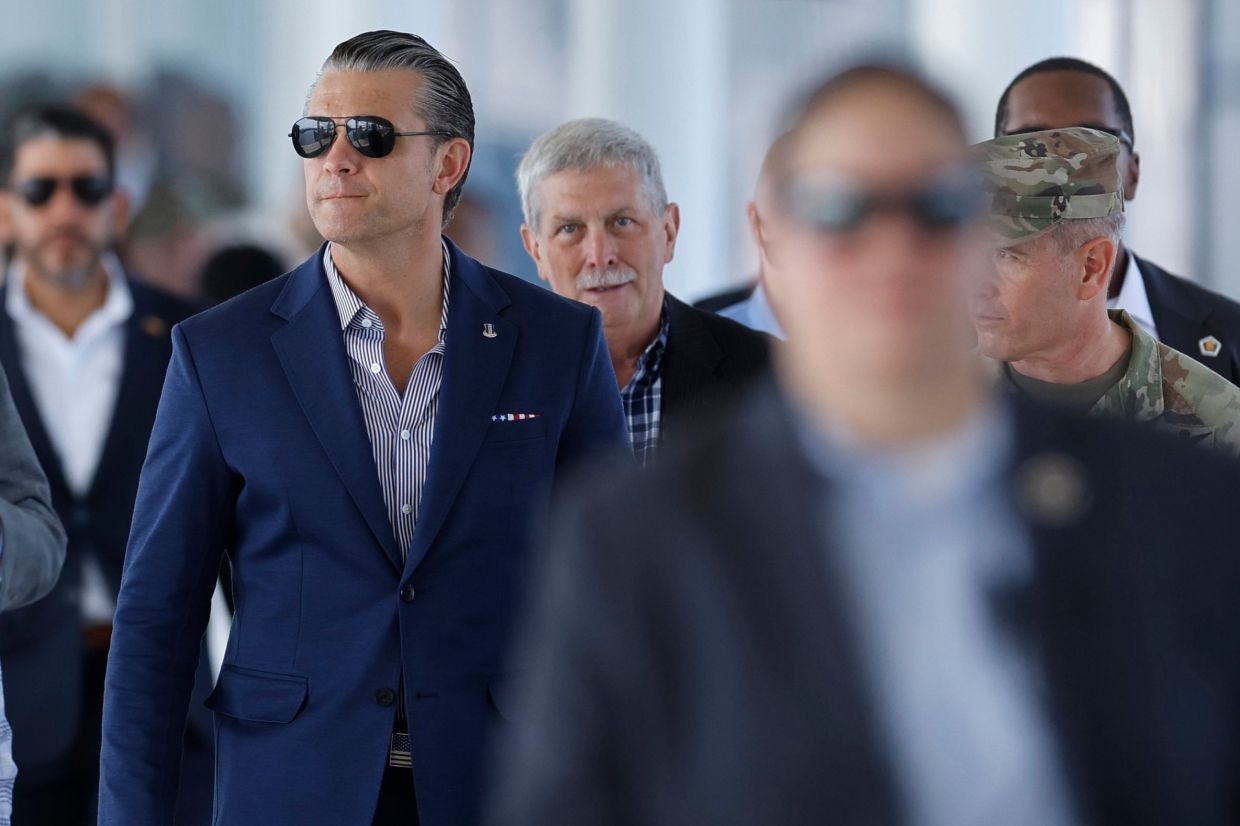
Reports circulating within Washington suggest that Pete Hegseth, the US Defence Secretary, is facing mounting pressure and may soon lose his position, raising fresh questions about the stability of military relations between the United States and China at a moment when both countries have been working to rebuild trust and communication channels. According to sources granted anonymity because they lack authorisation to comment publicly, Hegseth's tenure is under threat from a combination of unresolved disputes over Iran policy and a series of damaging media reports that have gradually eroded his standing within the administration.
The timing of this potential upheaval carries particular significance given the trajectory of US-China defence relations over the past several months. Since President Trump and Chinese President Xi Jinping met in Beijing during May, the two militaries have experienced what observers describe as their most productive period of engagement in more than a decade. Contacts have occurred at nearly every level of the defence establishment, reflecting a conscious effort by both capitals to establish mechanisms that prevent miscalculation and build what Trump and Xi have termed a relationship based on "strategic stability."
In the weeks following the Beijing summit, Hegseth himself articulated this improving dynamic publicly, telling defence analysts that military ties between Washington and Beijing had reached levels unseen in years and that the civilian leadership's commitment to constructive relations had extended directly to the armed forces. This messaging was reinforced when senior Pentagon officials, including Alvaro Smith, the Deputy Assistant Defence Secretary for China, Taiwan and Mongolia, met with Chinese Vice-Minister for Foreign Affairs Ma Zhaoxu in Washington last month. Smith characterised these talks as part of Hegseth's broader mission to "actively repair" what had previously been a severely fractured military-to-military channel, describing progress as steady and incremental.
The potential removal of Hegseth introduces considerable uncertainty into this delicate diplomatic arrangement. Zhao Minghao, a professor at Fudan University's Institute of International Studies, argues that Trump may ultimately decide that someone must assume responsibility for the administration's handling of the Iran situation, and that cabinet reshuffles of this nature typically precede US midterm elections as presidents attempt to reset their governance narrative. Were Hegseth to depart, the institutional memory and personal relationships he has cultivated with his Chinese counterpart Defence Minister Dong Jun would be lost, requiring any successor to undertake what Zhao characterises as an entirely new process of relationship-building with Beijing.
Hegseth has previously met Dong Jun at multiple venues, including in Malaysia and during Trump's visit to China itself. These face-to-face encounters have contributed to the warmer atmosphere currently prevailing between the two militaries. The loss of a senior figure familiar with both the strategic context and the personalities involved could introduce delays and complications into ongoing military-to-military discussions at a time when momentum, however fragile, is working in favour of continued engagement.
However, not all analysts view Hegseth's potential departure as necessarily catastrophic for the broader trajectory of US-China military relations. Some Pentagon sources argue that a change of defence secretaries would not necessarily derail the developing relationship, particularly if key working-level officials remain in their positions. Ely Ratner, who currently serves as Deputy Assistant Defence Secretary, was among the officials who participated in last month's talks with Ma. According to sources familiar with Beijing's assessments, Chinese officials have been notably impressed by Ratner, particularly because of his previously stated view that Taiwan does not represent a vital existential interest for the United States.
Beijing's perspective on Taiwan is unambiguous: the mainland regards the self-governed island as an integral part of China and has explicitly refused to renounce the use of force as a means of achieving reunification. Conversely, the United States maintains the position adopted by the vast majority of countries globally—it does not formally recognise Taiwan's independence, yet it opposes any forcible seizure of the island and maintains a legal obligation to provide it with defensive weaponry. Within this constrained diplomatic space, Beijing appears to view Ratner's strategic thinking as more aligned with Washington's broader interest in managing great-power competition than with a confrontational approach toward Chinese sovereignty claims.
Evaluation of Hegseth's potential replacement hinges partly on the philosophical disposition of his successor. Multiple sources indicate that US-China military contacts are currently functioning extremely well, and that a new defence secretary would likely have minimal impact on the momentum of military-to-military engagement unless that person emerged from hawkish circles strongly opposed to closer ties with Beijing. Should Hegseth's replacement come from the defence establishment's more moderate wing, or should officials like Ratner retain their positions, continuity in China-policy implementation would remain feasible despite the change at the top.
Zhao emphasises that if Ratner and his counterparts remain at the Pentagon, there would be "continuity going forward in military exchanges." Resumption of talks between the two militaries at various working levels has already been achieved, in part because both Trump and Xi agreed to anchor their relationship in the pursuit of strategic stability—language that explicitly encompasses the expansion and strengthening of defence-sector engagement and communication. The momentum toward military-to-military collaboration stems from deliberate high-level commitment on both sides, suggesting that the relationship possesses some structural resilience even should personnel changes occur at the cabinet level.
The near-term diplomatic calendar lends additional weight to the importance of maintaining this trajectory. Xi is scheduled to make a state visit to Washington in the coming weeks, his first such visit to the United States since 2015. Chinese and American officials on both sides are likely to prioritise strengthening military-to-military relations as a central agenda item for these talks, viewing enhanced defence-sector dialogue as both a confidence-building mechanism and a practical tool for managing the complex competition that characterises the US-China relationship across technology, economics, and security domains. Whether Hegseth remains in position or is succeeded by someone else, the structural incentives pushing both sides toward continued military engagement appear sufficiently durable to survive administrative turbulence in Washington.

