The women's field at this year's US Open presents an unusually fluid competitive landscape as the main draw prepares to commence on Sunday, with significant vulnerabilities emerging among the tournament favourites that could reshape the trophy race. Top seed Aryna Sabalenka and second seed Elena Rybakina, typically formidable forces on the hardcourts of Flushing Meadows, find themselves burdened by circumstances that threaten to derail their campaigns before the tournament even reaches its critical stages. Sabalenka's pursuit of an unprecedented third consecutive US Open title has been undermined by her sluggish performance throughout the latter half of the season, while Rybakina's recent departure from Cincinnati with a leg injury has cast serious doubts over her readiness to compete at the highest level.
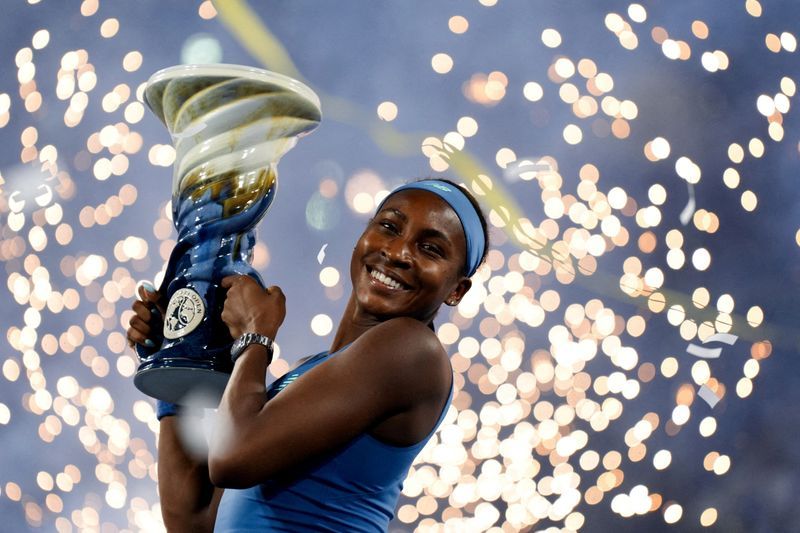
This window of opportunity has emerged at precisely the moment when Coco Gauff has found her stride. The American fourth seed, who won the tournament in 2023, has undergone a notable transformation in recent weeks, particularly regarding the serve that has long been a point of criticism among analysts and observers. Her resurgence reached full momentum in Toronto, where she advanced to the semi-finals before claiming her inaugural title of the season in Cincinnati with a performance that radiated confidence and technical precision. For Gauff, playing in New York carries an additional advantage beyond her current form: the legendary support of American tennis crowds, whose vociferous backing has historically lifted her game to another level. Former world number four Mary Joe Fernandez, now an ESPN commentator, has identified Gauff as the player currently executing the most convincing tennis on the professional tour, citing her exceptional showings in both Canada and the Cincinnati victory.
The timing of Gauff's resurgence holds particular significance for American tennis as a whole. The United States has endured a disappointing run at this year's major championships, failing to reach a single final across the Australian Open, French Open, and Wimbledon. With Gauff now occupying the fourth ranking and fellow American Jessica Pegula seeded third, the pressure and opportunity to reverse this drought falls squarely upon them. A triumph for either player would not merely represent an individual achievement but would mark a turning point for American women's tennis on the sport's grandest stage.
While Gauff has ascended through the rankings via improved form, Poland's Iga Swiatek has clawed her way back to competitiveness through sheer determination and psychological resilience. The eighth-seeded Swiatek arrives at Flushing Meadows having captured six major titles throughout her career, yet she endured a genuinely challenging campaign marred by inconsistency and considerable criticism within her native Poland. The turning point came during the North American hard-court season when she travelled to Toronto and claimed her first title of the year, defeating Rybakina in the final despite having struggled to advance beyond quarter-finals at any of the season's previous major tournaments. Her journey this season has been explicitly described by Swiatek herself as bumpy, marked by impatience as she sought victories before her game had fully recovered its rhythm and competitive edge.
Swiatek's trajectory stands in sharp contrast to Sabalenka's declining fortunes during this same period. Since capturing the Australian Open and Miami to complete a prestigious Sunshine Double earlier in the year, Sabalenka has experienced a notable downturn, failing to reach a single final across the intervening tournaments. Her difficulties have manifested most acutely in high-pressure moments, with Fernandez noting that Sabalenka has struggled to convert crucial points and has relinquished several commanding leads in recent competitions. Should Sabalenka nevertheless find a way to triumph at Flushing Meadows, she would accomplish a historic feat by becoming only the third woman in the Open Era to win the same major championship three consecutive times, and the first since Serena Williams achieved the distinction by winning the US Open in 2012, 2013, and 2014. This historic dimension underscores just how remarkable her achievement would be if she could overcome her current vulnerability and the formidable competition surrounding her.
Beyond the established stars, the women's field contains several emerging talents whose breakthrough moments have captured the tennis world's attention. Russia's Mirra Andreeva has already announced herself among the elite after capturing her maiden major title at Roland Garros earlier this season, while Czech Republic's Linda Noskova similarly made a striking impact by winning Wimbledon last month, demonstrating that elite performance at majors is no longer concentrated solely among the highest seeds. The Philippines' Alexandra Eala has turned heads even more recently with her victory at the Washington DC WTA 500 event this month, a triumph that involved defeating both four-time major champion Naomi Osaka and Jessica Pegula in succession, signalling that she possesses the capability to threaten established players across multiple surfaces and conditions.
Japan's Naomi Osaka, despite her absence from competitive tennis throughout 2023 due to maternity leave, has re-established herself as a legitimate contender in the eyes of analysts and fans alike. The three-time Grand Slam champion, having captured the US Open in both 2018 and 2020, has remained absent from major titles since winning her fourth Grand Slam at the 2021 Australian Open. However, her recent trajectory suggests a legitimate opportunity for revival, particularly given her impressive run to the semi-finals at last year's US Open and her appearance in the Bad Homburg final this past June. The New York crowds, which have consistently adored Osaka, may well provide the emotional and psychological lift necessary to propel her deeper into the tournament than recent form might suggest.
The remarkable competitive balance currently defining the women's draw has prompted ESPN's Patrick McEnroe to characterise the tournament as genuinely contested rather than predetermined, though he has also cautiously observed that between six and eight different players could plausibly win the championship. This assessment reflects the genuine uncertainty permeating the field and stands as a reminder that major championships, particularly on the hardcourts where conditions can prove volatile and mental fortitude becomes paramount, rarely unfold according to pre-tournament predictions. The absence of a commanding favourite creates narrative intrigue and unpredictability that has historically produced the most memorable major championships.

