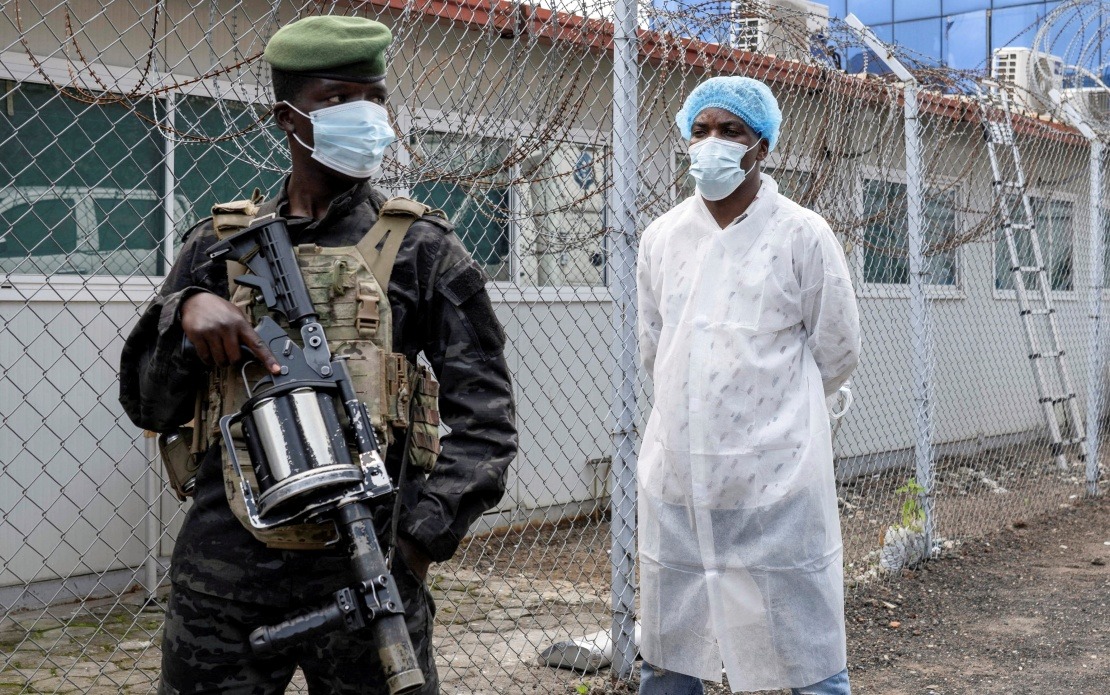
The Democratic Republic of Congo's struggle against a rapidly deteriorating Ebola outbreak has been complicated by deeply rooted cultural practices around death and burial. A United Nations migration agency has specifically flagged the transportation of victims' bodies across provincial boundaries to home communities as a critical vector for viral transmission, warning that this practise is significantly amplifying the speed and scale of the crisis. The alert comes as the death toll climbed past 828 confirmed fatalities, with the outbreak showing no signs of slowing down.
Since health authorities formally declared the outbreak on May 15, the situation has spiralled dramatically. The Democratic Republic of Congo's Health Ministry reported more than 2,100 confirmed cases across multiple provinces, translating to a case fatality rate of 37.5 per cent. These figures underscore not only the virulence of the Bundibugyo strain but also the systemic challenges in treating patients and containing spread. The geographic reach now spans five provinces—Haut-Uele, Ituri, North Kivu, South Kivu and Tshopo—demonstrating how interconnected movement patterns within the country are enabling the virus to reach new populations.
The trajectory of the crisis has accelerated alarmingly in recent weeks. According to International Organisation for Migration Regional Director Frantz Celestin, the outbreak expanded by approximately 70 per cent over a fourteen-day period, with communities recording an average of more than 40 new cases daily. This rapid escalation reflects both the virus's transmissibility and the breakdown in basic public health measures. The spatial distribution across five provinces suggests that the virus is no longer confined to initial hotspots but has become entrenched in multiple regions simultaneously, complicating response coordination.
A fundamental obstacle to controlling the outbreak lies in community attitudes toward safe burial protocols. Widespread resistance from residents has consistently impeded the work of trained burial teams tasked with applying rigorous safety measures to prevent contact transmission. In some instances, these teams have faced outright hostility and violent confrontation, creating a dangerous impasse between public health imperatives and local sentiment. This tension reflects deeper issues around trust in institutions, belief systems regarding proper treatment of the deceased, and the psychological toll of mass mortality within communities.
Celestín highlighted a troubling statistic that encapsulates the scale of this cultural challenge: 60 per cent of confirmed deaths have occurred in community settings rather than in controlled medical facilities. This distribution pattern severely limits the ability of health authorities to manage the deceased safely and prevent exposure to family members and others participating in traditional funeral rites. The reliance on community-based care, while sometimes necessary due to hospital capacity constraints, creates ideal conditions for transmission among those handling and preparing bodies for burial.
The movement of bodies across internal borders has become so pervasive that it has warranted specific surveillance operations at health zone entry points. The IOM documented that surveillance teams intercepted 105 bodies during border and checkpoint operations, indicating the scale of clandestine transport occurring throughout the country. These interceptions represent only detected instances; the actual volume of bodies moved without official knowledge almost certainly exceeds this figure, representing a significant blind spot in outbreak response efforts and a mechanism for spreading infection to previously unaffected regions.
Violence surrounding funeral practices has directly endangered the responders themselves. During one particularly alarming incident in Bunia, the capital of Ituri province, Red Cross volunteers were severely injured when a cemetery ceremony descended into chaos. Local witnesses reported that youths attempted to forcibly open a coffin during an Ebola victim's burial, an action that would have exposed them to infectious material and potentially accelerated transmission. Such incidents underscore how cultural practices and funeral protocols can become flashpoints of community tension during public health emergencies.
The outbreak's classification as the third-largest Ebola outbreak on record, achieved within merely two months of declaration, places it in a concerning category of epidemiological severity. Doctors Without Borders has emphasised the alarming speed at which this particular Bundibugyo strain variant has spread compared to historical outbreaks, suggesting either enhanced transmissibility or particularly vulnerable population characteristics. The rapid expansion stands in sharp contrast to earlier Ebola responses where authorities were able to establish containment more quickly, indicating that standard intervention approaches may be insufficient against current conditions.
Expansion into new geographic areas accelerated during the most recent week of monitoring. The World Health Organisation reported that affected health zones increased from 36 to 42 in a seven-day period, a 17 per cent geographic expansion that signals intensifying difficulty in maintaining outbreak containment. As the virus permeates additional administrative zones, the logistical burden on response teams multiplies, straining already limited resources across the conflict-affected eastern provinces. Each new health zone represents a fresh challenge in establishing early warning systems, locating contacts, and securing community cooperation with preventive measures.
For regional observers including those in Southeast Asia, the DR Congo crisis offers sobering lessons about outbreak management in contexts marked by weak institutional capacity, community distrust, and cultural practices at odds with biomedical prevention protocols. Malaysia and neighbouring countries with significant populations from Central Africa face potential exposure risks if travellers from affected areas develop infection. The experience demonstrates that technical epidemiological responses alone prove insufficient without addressing the social, cultural, and political dimensions of disease transmission. The persistence of Ebola in the DR Congo reflects not merely a viral threat but a complex interplay of institutional, behavioural, and structural factors that conventional public health measures struggle to overcome.

