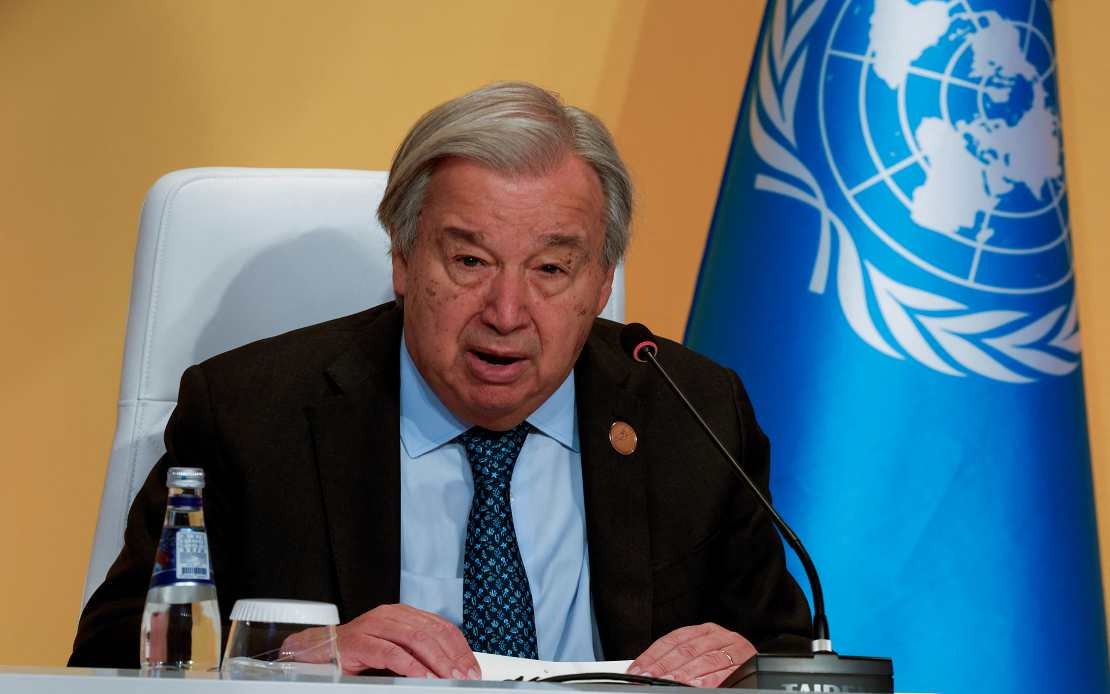
The deteriorating security situation in the Persian Gulf has drawn urgent appeals from the United Nations, with Secretary-General Antonio Guterres expressing deep alarm over a cascade of military incidents involving major regional and international powers. In a statement issued through his spokesperson Stephane Dujarric on Sunday, Guterres highlighted the mounting dangers posed by recent Iranian attacks on commercial shipping in the Strait of Hormuz, subsequent American military responses against Iranian targets, and further Iranian strikes on neighbouring countries. This cycle of tit-for-tat military action represents precisely the kind of escalatory spiral that threatens to spiral beyond current containment and plunge the region into open warfare.
The strategic implications of current tensions extend far beyond the immediate region. The Strait of Hormuz remains one of the world's most critical maritime chokepoints, with roughly one-third of globally traded seaborne oil passing through its narrow waters annually. Any sustained disruption to shipping traffic through this waterway would create immediate shockwaves across global energy markets, driving oil prices higher and threatening the economic stability of nations far removed from the Middle East. For Malaysia and other Southeast Asian economies dependent on steady energy supplies and reliable international trade flows, instability in this region carries direct consequences for inflation, economic growth, and manufacturing competitiveness.
Guterres emphasised that a return to full-scale military hostilities would produce what he described as catastrophic consequences across multiple dimensions. Beyond the devastating human toll that armed conflict would inflict on the peoples of the region, such escalation would fundamentally undermine international peace and security architecture at a moment when global cooperation on multiple fronts is already strained. The economic fallout would extend to developing nations and emerging markets across Asia, Africa, and Latin America, which lack the financial buffers to absorb sudden energy price shocks or prolonged supply chain disruptions.
The secretary-general's call for maximum restraint from all parties reflects the UN's traditional diplomatic approach, yet the language employed signals the gravity with which the organisation views current developments. Guterres explicitly urged both Tehran and Washington to refrain from further military action and instead take concrete steps toward de-escalation. This dual emphasis—on halting new provocations while simultaneously working to reverse existing tensions—acknowledges that the situation has already moved beyond theoretical concerns into the realm of active military engagement requiring immediate intervention.
A central element of Guterres' appeal centres on the restoration of freedom of navigation in the Strait of Hormuz, a principle enshrined in international maritime law and essential to global commerce. Iranian restrictions on shipping, combined with the risks posed by military operations in the waterway, have created genuine hazards for merchant vessels traversing these waters. Insurance costs have risen, shipping companies have rerouted vessels through longer and more expensive routes, and uncertainty pervades the maritime insurance industry. Reaffirming this principle serves as a reminder that both regional and international law must remain the foundation for resolving disputes, rather than military force or unilateral coercion.
Guterres made a final and forceful appeal for Iran and the United States to resume bilateral negotiations, characterising this resumption as urgent and necessary. This reflects the belief that diplomatic channels, despite their apparent breakdown, remain the only viable pathway toward genuine conflict resolution. The UN secretary-general's advocacy for negotiation carries particular weight given that direct dialogue between Washington and Tehran has proven difficult, with both sides citing preconditions and expressing deep mistrust. Restarting negotiations requires both capitals to demonstrate political will and flexibility, qualities that have been notably absent from recent public statements and actions.
For Malaysia and the broader Southeast Asian region, these developments carry implications across security, economic, and diplomatic domains. As a nation dependent on maritime trade and energy imports, Malaysia has a direct stake in maintaining stability in the Gulf and preserving the international rules-based order that guarantees freedom of navigation. The region has traditionally sought to remain neutral in Middle Eastern conflicts while advocating for peaceful resolution through multilateral mechanisms. Any significant escalation between Iran and the United States would force Southeast Asian nations to navigate increasingly difficult geopolitical choices regarding sanctions, military alliances, and economic partnerships.
The UN's intervention also underscores the limitations of multilateral institutions in preventing determined state actors from pursuing confrontational policies. While Guterres commands considerable diplomatic authority and the UN Security Council represents the highest level of international governance, both Iran and the United States have demonstrated willingness to act contrary to UN preferences when they perceive vital national interests at stake. This dynamic suggests that external pressure alone may prove insufficient to alter current trajectories, and that genuine de-escalation will require shifts in the strategic calculations and domestic political circumstances of the principal actors.
The broader question animating current Gulf tensions involves competing visions of regional order, sanctions regimes, nuclear proliferation concerns, and the distribution of power and influence in the Middle East. These deeper structural issues cannot be resolved through appeals for restraint alone, though such appeals remain diplomatically necessary. Any sustainable resolution will require addressing the underlying causes of mistrust and confrontation, including reviving or reconstructing frameworks for arms control, confidence-building measures, and mutual security assurances that both parties can credibly commit to honouring.
As international attention focuses on the immediate risks of military escalation, the humanitarian dimensions of any conflict must not be overlooked. Millions of civilians across Iran and the Gulf states would face devastating consequences from prolonged warfare, including displacement, infrastructure destruction, and economic collapse. The refugee and humanitarian burden would extend across the region and potentially reach Southeast Asia and other parts of Asia, creating secondary crises that would compound the direct costs of conflict. These human dimensions reinforce the moral imperative underlying Guterres' diplomatic appeals.
The coming days and weeks will prove crucial in determining whether the current trajectory toward confrontation can be arrested. Both Iran and the United States face domestic political pressures that may constrain their flexibility, yet both also stand to lose enormously from escalation. International mediators, including the UN, remain engaged in behind-the-scenes diplomatic efforts aimed at creating space for negotiations. The success or failure of these efforts will shape not only the immediate security situation in the Gulf but also broader patterns of international relations and the viability of multilateral institutions in managing great power competition during an increasingly turbulent period.

