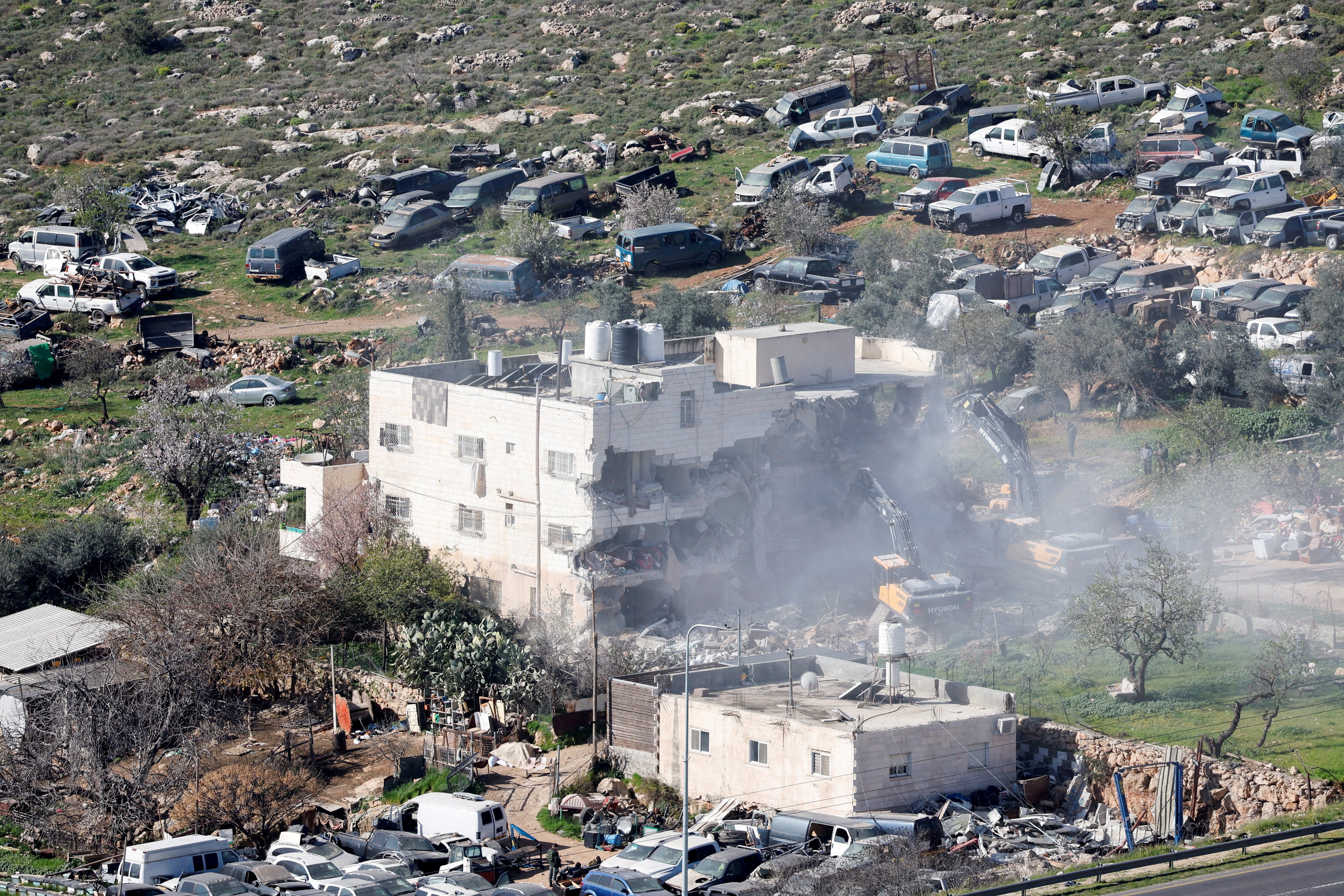
The United Nations has intensified its criticism of Israeli settlement activities in the occupied West Bank, with Secretary-General Antonio Guterres raising fresh concerns about what he characterises as unlawful expansion that threatens the viability of Palestinian statehood. Speaking through his spokesperson Stephane Dujarric on Wednesday, Guterres drew particular attention to developments surrounding the E1 settlement, a strategically significant area whose development would have far-reaching consequences for the territorial structure of the Palestinian territories.
The E1 settlement has emerged as a focal point of international concern because its expansion would effectively rupture the physical connection between the northern and southern portions of the West Bank. This geographic fragmentation carries profound implications beyond mere territorial division. The planned settlement would essentially bisect Palestinian-controlled areas, making it extraordinarily difficult for Palestinians to move freely between regions and undermining the practical foundations upon which a functional Palestinian state would need to operate.
Guterres has characterised the territorial consequences as constituting an existential threat to the two-state solution framework that has underpinned international peace efforts for decades. The Secretary-General's concern reflects a broader worry within the international community that continued settlement expansion erodes the territorial integrity necessary for any viable Palestinian political entity. Without contiguous territory and unimpeded movement across the West Bank, Palestinian self-governance becomes increasingly nominal rather than substantive.
The UN Chief's statement represents a direct call for Israeli policy reversal, explicitly urging the government to refrain from pursuing additional settlement projects and to align its conduct with relevant UN resolutions. The appeal carries particular weight given recent developments in international law. Guterres has grounded his position in the International Court of Justice advisory opinion issued on July 19, 2024, which carried unprecedented legal weight in addressing the occupation question.
The ICJ advisory opinion represented a significant moment in the legal debate surrounding Israeli presence in Palestinian territories. The court determined that Israel's continued occupation of Palestinian land constitutes an unlawful situation under international law. This finding provided the judicial foundation for more forceful international demands regarding Israeli policy adjustments.
Beyond merely declaring the occupation unlawful, the court imposed specific obligations on Israel. The advisory opinion stipulated that Israel must terminate its presence in the occupied Palestinian territory at the earliest feasible opportunity, a directive that carries moral and legal weight despite advisory opinions lacking binding enforcement mechanisms. The court further mandated that Israel immediately discontinue all new settlement construction, a direct prohibition on the very activities that have drawn Guterres's recent alarm.
The court's directive extended to requiring Israel to withdraw all settlers from Palestinian territories and to provide comprehensive compensation for damage inflicted through its occupation and settlement policies. These reparations encompass not only physical destruction but also the opportunity costs and development losses Palestinians have endured over decades of restricted sovereignty.
For Malaysia and other Southeast Asian nations, this dispute carries implications for broader questions of international law, sovereignty, and the principle that territorial conquest cannot legitimately generate legal title. Malaysia's foreign policy has consistently emphasised support for Palestinian self-determination and adherence to international legal frameworks. The ICJ advisory opinion provides reinforcement for the legal arguments that have long underpinned Malaysian diplomatic positions on this issue.
The settlement expansion controversy also reflects ongoing tensions between unilateral Israeli actions and the international consensus regarding resolution parameters. The systematic establishment of civilian communities in occupied territory represents a strategy that fact-ground implementation of territorial claims. From the Palestinian perspective and that of their international supporters, these settlements constitute irreversible alterations of territory that complicate any negotiated settlement process.
Guterres's emphasis on compliance with UN resolutions underscores the gap between international legal frameworks and implementation capacity. Multiple UN resolutions have addressed Israeli settlement activity, yet their passage has not translated into effective policy constraints. This disconnect between legal authority and practical enforcement capacity represents a persistent challenge within the international legal system.
The timing of the Secretary-General's statement reflects heightened international attention to Palestinian territorial issues. Recent developments have intensified global focus on the occupation question, with growing recognition that the status quo trajectory threatens the fundamental prerequisites for eventual Palestinian statehood. The E1 settlement specifically represents a crossroads in this regard, as its completion would substantially complicate future territorial negotiations.
Movement within international institutions has gradually shifted toward more explicit recognition of Palestinian legal claims and more critical assessments of Israeli settlement policy. The ICJ advisory opinion exemplifies this evolution, providing authoritative legal analysis that reinforces long-standing Palestinian arguments. Guterres's invocation of this opinion signals that UN positioning has become more firmly grounded in international judicial determinations.
For regional stability more broadly, the settlement question remains intertwined with prospects for eventual Israeli-Palestinian reconciliation. International observers increasingly recognise that settlement expansion narrows the negotiable space and hardens entrenched positions on both sides. The UN Secretary-General's alarm reflects concern that current trajectories may be rendering the two-state framework practically obsolete before genuine negotiations occur, a possibility with profound implications for long-term regional peace.

