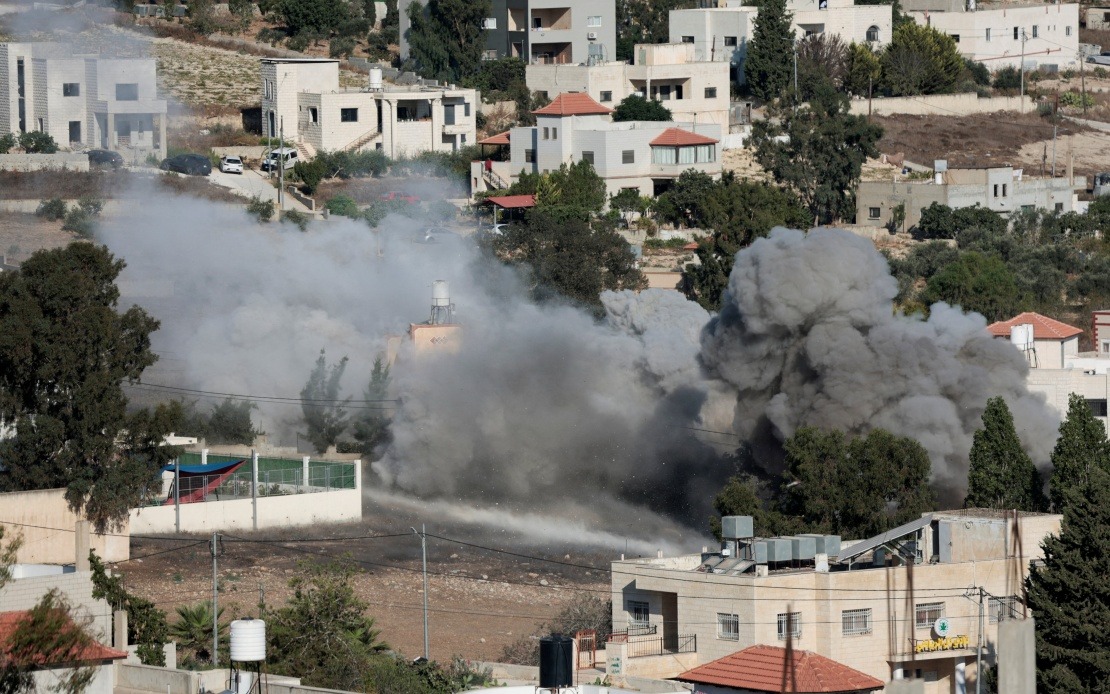
The United Nations Human Rights Office in the Occupied Palestinian Territory has escalated its criticism of Israeli settler violence, characterising the scale and severity of attacks against Palestinian civilians as having crossed into unacceptable territory. Speaking through a formal statement released Thursday, the office underscored the systematic nature of harassment and violence perpetrated by colonists against Palestinian communities, demanding that Israeli authorities intervene decisively to halt these abuses and remove those engaging in violent conduct.
The violations documented by the UN body encompass a troubling spectrum of criminal activity targeting Palestinian families and their property. Beyond the physical assaults and home invasions, settlers have engaged in deliberate campaigns of theft, arson, and vandalism designed to terrorise residents into abandonment. Particularly alarming from a humanitarian perspective has been the desecration of sacred spaces, with attacks documented against local mosques—actions that extend collective punishment into the realm of religious intimidation.
The situation in and around Qusra, located south of Nablus, exemplifies the escalating confrontation between settlers and Palestinian residents. The establishment of a new Israeli colonial outpost in November 2025 marked a turning point, prompting an immediate intensification of hostile actions against adjacent Palestinian communities. In the months following this development, residents endured repeated incursions and harassment campaigns, suggesting a coordinated strategy to render Palestinian occupation of the area untenable through sustained pressure and fear.
A particularly severe incident in the Ras al-Ain area of Qusra illustrated the systematic deprivation tactics deployed by settlers. Over successive days beginning in late July, colonists sequestered three Palestinian homes by cutting utility supplies and physically blocking access. By August 9, the situation had deteriorated dramatically as settlers erected infrastructure surrounding the properties and sealed all entry and exit points, effectively placing approximately fifteen individuals—including at least two children—under siege conditions. The families were left without electricity, water access, or freedom of movement, unable to obtain basic necessities or receive medical attention.
The role of Israeli security forces in these incidents compounds international concern about state complicity. Despite the presence of Israeli soldiers at the sites of these incidents, forces failed to intervene when families explicitly requested assistance. More troublingly, personnel appeared to have actively prevented humanitarian access, blocking paramedics, journalists, and solidarity workers from reaching the trapped civilians. Only after international scrutiny intensified did soldiers remove the physical barriers erected by settlers, yet this partial action stopped short of removing the settlers themselves, who continued maintaining a threatening presence around the homes.
This pattern of violence, the UN office argues, operates within a framework of tacit or active state approval. The occupying power's failure to prosecute perpetrators, combined with the apparent coordination between settler actions and military presence, suggests systemic enablement rather than isolated incidents. The office characterised these criminal acts as deliberately designed to render Palestinian habitation impossible and force displacement—effectively functioning as an instrument of ethnic cleansing through privatised violence.
The legal framework governing such conduct has been clarified through international judicial processes. The International Court of Justice has previously affirmed the illegality of all Israeli colonies under international law and mandated that Israel terminate colonial activities, evacuate settlers, and conclude its unlawful occupation of the West Bank. These decisions establish unambiguous legal obligations that remain largely unimplemented, creating a credibility gap between international legal standards and operational reality on the ground.
Israel's obligations under international humanitarian law remain binding regardless of the occupation's legal status. These include affirmative duties to ensure civilian security, prevent and investigate attacks by non-state actors, and establish accountability mechanisms proportionate to violations committed. The systematic failure to prosecute settlers or impose meaningful penalties creates perverse incentives, suggesting to potential perpetrators that violence against Palestinians carries minimal consequences—a calculus that encourages escalation rather than restraint.
For Southeast Asian observers and policymakers, the situation underscores broader questions about the effectiveness of international humanitarian frameworks when major powers show selective commitment to enforcement. The region's own experience with displacement, conflict, and humanitarian challenges means that patterns documented in the Palestinian territories carry particular resonance. The apparent immunity enjoyed by settlers despite documented crimes raises concerns about whether international law functions as a genuine constraint on state behaviour or merely provides rhetorical cover for actions predetermined by geopolitical considerations.
The urgency conveyed by the UN office reflects genuine humanitarian anxiety about imminent risk. The three families at the centre of this incident face an accelerating timeline toward forcible displacement, with each passing day rendering their situation more precarious. The trauma of violent confinement, combined with deprivation of essential services, creates conditions deliberately designed to break civilian resistance and compliance through suffering. Without swift international intervention backed by genuine enforcement mechanisms, the documented pattern suggests these incidents represent merely the current iteration of a continuing dynamic.
The broader implications extend beyond individual incidents to encompass the viability of Palestinian existence within the occupied territories. When settlers can impose siege conditions without legal consequence, when security forces can block humanitarian access with impunity, and when the international community observes through documentation rather than decisive action, the architecture supporting Palestinian life experiences cumulative stress. Each incident normalises state-facilitated displacement, gradually rendering permanent Palestinian presence increasingly difficult—a trajectory that successive incidents are gradually crystallising into irreversible demographic reality.

