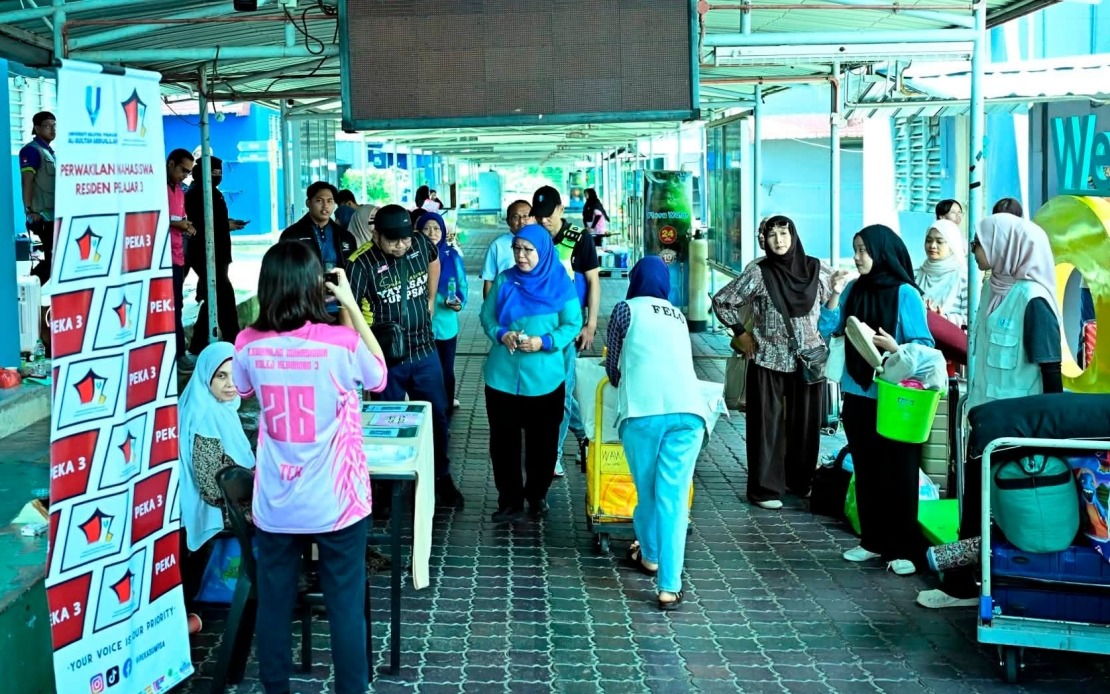
Universiti Malaysia Pahang Al-Sultan Abdullah (UMPSA) has renewed its pledge to prioritize the welfare and educational access of underprivileged students, with Vice-Chancellor Prof Dr Yatimah Alias underscoring the institution's resolve to remove financial barriers to higher learning. Speaking during the diploma student registration period in Kuantan on July 19, Alias emphasized that UMPSA remains steadfastly committed to delivering equitable and high-quality educational opportunities across its campus, regardless of students' socioeconomic backgrounds. The statement reflects growing pressure across Malaysian universities to broaden access to tertiary education and ensure that financial hardship does not prevent talented individuals from pursuing academic advancement.
The university's commitment extends beyond rhetoric into tangible support mechanisms designed to ease the financial burden on economically vulnerable students. UMPSA has established a comprehensive aid framework that encompasses multiple assistance channels, including direct scholarship provision, targeted academic support programmes, and various university-led initiatives aimed at enabling students to overcome obstacles encountered during their studies. According to the vice-chancellor, these coordinated efforts represent a deliberate institutional strategy to foster an inclusive learning environment where academic potential, rather than family wealth, determines educational outcomes. The breadth of support signals recognition that financial constraints extend beyond tuition fees to encompass broader living costs and educational resources required for effective participation in university life.
During the registration period, UMPSA distributed tangible evidence of its commitment by awarding scholarships to 20 students, with each scholarship package covering the complete tuition fees alongside a monthly allowance to support living expenses. This targeted disbursement represents a substantial investment in individual student trajectories, removing dual financial pressures that commonly force disadvantaged students to abandon studies or split attention between coursework and employment. The scholarship structure acknowledges that tuition fees constitute only one component of the financial burden facing underprivileged students, and that living allowances directly enable fuller engagement with academic life. Such comprehensive packages prove particularly significant in Malaysia's context, where regional disparities in household income create pronounced educational inequalities between urban and rural students.
Complementing the scholarship awards, UMPSA's Foundation established an Early Education Incentive programme distributing RM1,000 grants to students identified as requiring immediate financial assistance. This distinct funding stream addresses urgent needs during the critical transition period of the academic year, when unexpected expenses or delayed financial arrangements can jeopardize enrollment. The Foundation-backed initiative demonstrates institutional commitment extending beyond traditional scholarship structures to provide responsive, flexible support that addresses real-time student circumstances. For Malaysian higher education stakeholders, such tiered assistance approaches offer a replicable model that acknowledges different types of financial difficulty affecting students at varying points in their academic journey.
The distribution of aid occurred against the backdrop of UMPSA recording its highest diploma student intake since establishment, with 1,045 new diploma candidates registering for the 2026/2027 academic session. This milestone enrollment figure carries significant implications for equity in Malaysian higher education, suggesting that purposeful institutional strategies emphasizing accessibility and financial support mechanisms can successfully attract larger cohorts of students, potentially including those from disadvantaged backgrounds who might otherwise remain deterred by cost barriers. The surge in diploma enrollments also reflects evolving educational pathways within Malaysia's tertiary sector, where diploma qualifications increasingly serve as direct entry points to university-level study rather than purely terminal credentials. The concurrent achievement of expanded access and record intake demonstrates that institutional commitment to student welfare and inclusivity need not compromise enrollment growth or institutional competitiveness.
Vice-Chancellor Alias's direct engagement with newly registered students during the enrollment process highlights institutional leadership that moves beyond administrative distance to understand student circumstances firsthand. This hands-on approach enables senior university management to identify emerging student needs, witness the tangible impact of support mechanisms, and model organizational culture prioritizing student-centric values. For Malaysian universities competing to attract high-caliber students whilst maintaining social responsibility, such demonstrative leadership carries symbolic weight extending beyond individual interactions to communicate institutional priorities through visible action. The registration engagement period thus functions simultaneously as logistical necessity and organizational statement about leadership accessibility and commitment to student experience.
Malaysian universities increasingly recognize that student welfare initiatives generate multiplicative benefits extending beyond individual beneficiaries. When underprivileged students successfully complete tertiary qualifications, they become knowledge workers contributing to national economic productivity whilst breaking intergenerational poverty cycles affecting their families and communities. UMPSA's investment in disadvantaged students therefore constitutes human capital development with broader social implications. Regional economic competitiveness increasingly depends upon maximizing utilization of talent across entire populations rather than concentrating educational investment among advantaged cohorts, rendering inclusive institutional policies strategically prudent alongside ethically justified.
The scholarship and incentive programme announcement occurs within Malaysia's broader policy environment emphasizing equitable access to education as foundational to inclusive development and social mobility. Government initiatives promoting technical and vocational education, combined with university-level scholarship schemes, reflect recognition that educational inequality perpetuates economic stratification. UMPSA's institutional commitment aligns with these national priorities whilst demonstrating how individual universities operationalize equity principles through concrete financial support structures. For policymakers evaluating higher education funding mechanisms, the university's experience offers practical evidence regarding scholarship design, administration, and measurable outcomes supporting policy calibration.
Looking forward, UMPSA's sustained emphasis on underprivileged student welfare suggests institutional strategy recognizing that higher education sector reputation and competitiveness increasingly depend upon demonstrated commitment to access and inclusion alongside academic excellence. As Malaysian universities compete regionally for student enrollment and international standing, institutional narratives emphasizing social responsibility and educational equity gain prominence. UMPSA's proactive public communication regarding student welfare initiatives positions the institution favorably within evolving stakeholder expectations that universities fulfill social missions extending beyond knowledge transmission to encompass active poverty alleviation and opportunity creation. For students contemplating tertiary education choices, institutional commitment to financial accessibility becomes increasingly significant selection criterion, implying that UMPSA's welfare focus carries strategic institutional benefits alongside genuine social value.

