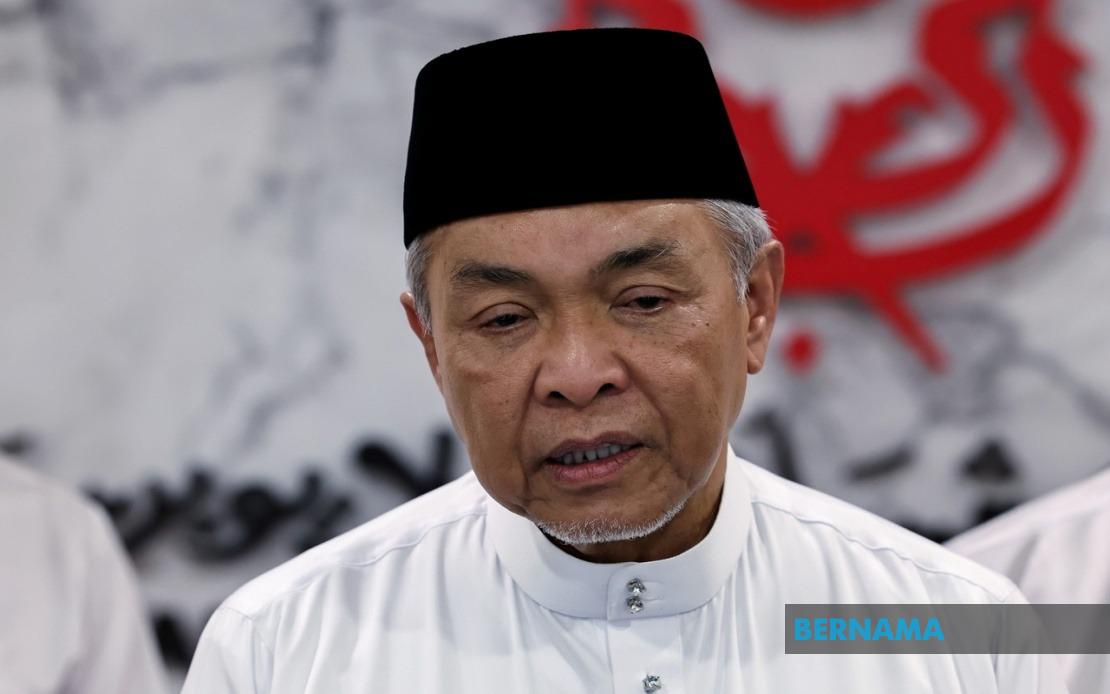
UMNO has indicated it will hold structured coalition talks regarding the upcoming Melaka state election, but only after the state legislative assembly undergoes formal dissolution. Party president Datuk Seri Dr Ahmad Zahid Hamidi disclosed this timeline during media comments in Kuala Lumpur on Thursday, clarifying that preliminary and informal exchanges may already be underway, yet binding negotiations cannot proceed until the procedural dissolution occurs.
The Deputy Prime Minister designated Melaka Chief Minister Datuk Seri Ab Rauf Yusoh as the lead negotiator for any potential cooperation arrangements. This delegation places significant responsibility on the state-level leadership to navigate complex coalition dynamics that could reshape Melaka's political landscape. By entrusting negotiations to the Chief Minister rather than handling them centrally, UMNO has signalled confidence in Ab Rauf's political acumen and ability to balance various party interests while protecting UMNO's electoral positioning.
Ahmad Zahid's statement arrives amid persistent speculation about UMNO's possible alignment with Perikatan Nasional (PN) in the Melaka contest. The question of cooperation between Malaysia's major Malay-Muslim political blocs remains consequential for regional power distribution. Both organisations maintain competing visions for governance, and any electoral arrangement would carry broader implications for federal-level politics and the trajectory of Malaysia's political realignment that has unfolded since 2020.
Internally, UMNO has undertaken comprehensive electoral preparation. The party president revealed that Melaka's political bureau presented detailed operational readiness assessments to the national party leadership. These materials subsequently received thorough examination during a plenary session of UMNO's Supreme Council (MKT), where decision-makers reviewed intelligence gathered through the party's Melaka war room operations. This structured approach suggests UMNO seeks to enter negotiations from a position of informed strength, armed with ground-level data regarding voter sentiment and competitive positioning.
The distinction Ahmad Zahid drew between informal and formal discussions holds procedural significance in Malaysian political culture. Informal exploratory conversations between party representatives occur regularly and carry no binding obligations, allowing participants to test feasibility and identify common ground without official commitment. Formal negotiations, by contrast, typically involve designated representatives with clear mandates, documented positions, and explicit authorisation to negotiate terms. By explicitly deferring formal talks until dissolution occurs, UMNO maintains flexibility while signalling seriousness about potential arrangements.
For Malaysian political observers, the timing carries strategic implications. Dissolving an assembly triggers a defined election calendar, which creates pressure to conclude coalition agreements expeditiously. Parties cannot afford prolonged negotiations once the constitutional machinery activates. This deadline effect incentivises faster decision-making and reduces the window for protracted bilateral discussions. UMNO's framework essentially positions the party to move swiftly once dissolution occurs, assuming preparatory groundwork proceeds during the informal phase.
The Melaka scenario reflects broader patterns in contemporary Malaysian politics, where coalition formation and electoral cooperation have become standard features. Unlike earlier decades when individual parties typically contested elections independently, present-day state elections frequently involve multi-party arrangements negotiated shortly before polling. The Melaka election, whenever it occurs, will likely exemplify this trend, with UMNO's eventual partner selection potentially reverberating across other scheduled state contests and influencing federal political calculations.
Melaka's political significance extends beyond its own governance. As a strategically located state with historical and cultural prominence, its electoral outcome carries symbolic weight. An UMNO victory, particularly if achieved through coalition arrangements, would reinforce the party's recovery narrative following recent electoral setbacks. Conversely, opposition breakthroughs would demonstrate sustained resilience and suggest emerging realignment possibilities. The coalition question directly affects these probabilities, making partner selection consequential for broader political trajectories.
Ahmad Zahid's emphasis on the Chief Minister's leadership role also reflects UMNO's organisational priorities. Rather than centralising coalition negotiations at party headquarters, the structure acknowledges that state-level political dynamics require localised expertise and decision-making authority. Ab Rauf, operating within Melaka's political context and maintaining direct relationships with both state-level UMNO figures and potential coalition partners, possesses information advantages that Kuala Lumpur-based decision-makers cannot replicate. This decentralised approach potentially enables more nimble negotiations calibrated to Melaka's specific circumstances.
The commitment to formal talks only after dissolution distinguishes UMNO's position from more aggressive pre-emptive coalition-building strategies. Some political parties prioritise securing alliances before assembly dissolution to present unified candidacy lists and demonstrate voter stability. UMNO's more cautious sequencing suggests the party weighs competing considerations: maintaining negotiating flexibility, avoiding premature commitment to unfavourable terms, and preserving options should unexpected political developments alter the strategic landscape. This patience-focused approach carries risks, particularly if competitors conclude binding arrangements first, but potentially rewards calculated timing.
Looking forward, Malaysian analysts will scrutinise whether UMNO ultimately partners with PN or pursues other arrangements in Melaka. Such decisions test the coherence of Malaysia's political blocs and may foreshadow patterns across other pending state elections. Pakatan Harapan's role similarly remains uncertain, though Ahmad Zahid's framing suggests UMNO envisions negotiations potentially encompassing multiple potential partners, not exclusively PN. This apparent openness positions UMNO as negotiator rather than supplicant, a posture consistent with the party's historical dominance and current revival trajectory.

