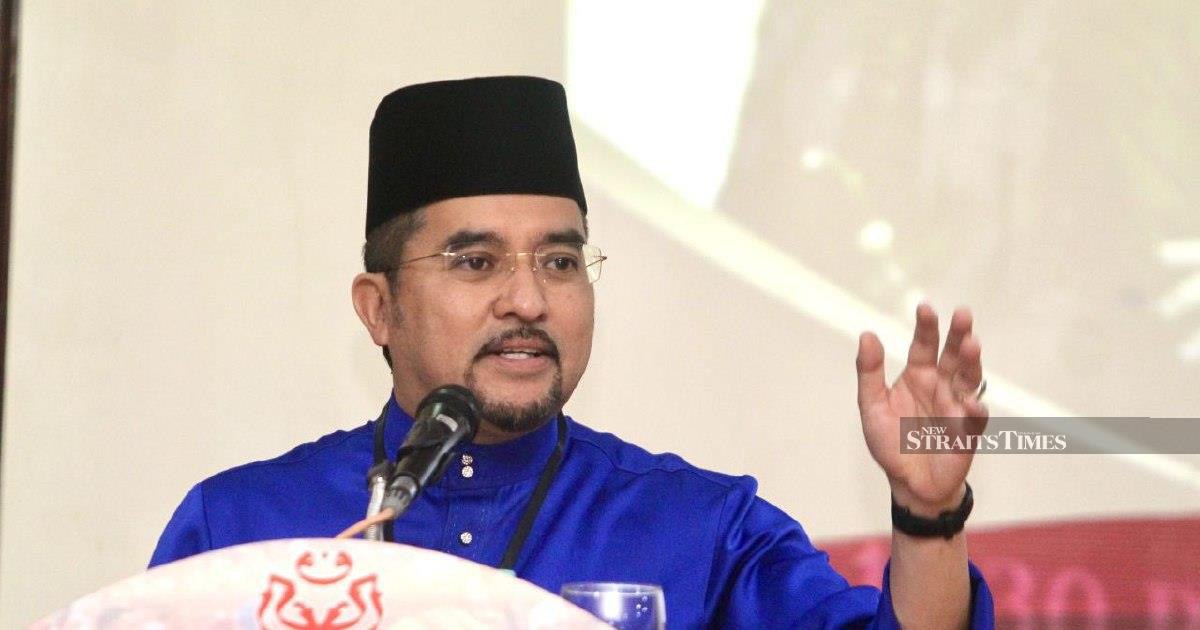
Umno leadership has firmly rejected attempts by PKR Youth to influence seat distribution negotiations ahead of the Melaka state election, drawing a distinction between parties' rights to voice their interests and the appropriate channels for resolving coalition disputes. Speaking from Kota Baru, party officials made clear that while all constituent members of the ruling coalition deserve space to articulate their electoral aspirations, the ultimate allocation of parliamentary and state assembly seats must flow from structured dialogue among senior party representatives rather than from youth wing activism or media campaigns.
The statement comes as tensions simmer within the Pakatan Harapan-Barisan Nasional coalition regarding how to fairly distribute Melaka's competitive constituencies. PKR Youth had publicly demanded certain seat allocations, a move Umno characterizes as overstepping the bounds of internal coalition etiquette. The party's response underscores deeper questions about coalition discipline and the proper hierarchy of decision-making within Malaysia's complex political architecture, where multi-party agreements require consensus-building among multiple factions with competing interests.
Melaka represents a significant electoral battleground for the coalition, with implications extending beyond state-level politics into federal parliamentary mathematics. The state has historically been a Barisan Nasional stronghold, though recent electoral cycles have demonstrated volatile voter sentiment across constituencies. For Umno, maintaining strong representation in Melaka is crucial to party legitimacy within its traditional support base, particularly among rural and semi-urban communities where party machinery remains deeply embedded in local governance structures.
PKR's growing assertiveness within the coalition reflects the party's consolidation of urban constituencies and its emergence as Anwar Ibrahim's political vehicle. However, this assertiveness can create friction when pursued through informal channels rather than formal negotiation protocols. The party's youth wing, which tends toward more combative political messaging, appears to have crossed a line in Umno's calculation by making public demands rather than respecting the behind-closed-doors nature of coalition seat allocation discussions.
The Malaysian political system has long operated on unwritten conventions regarding coalition seat negotiations. Senior party leaders from Umno, PKR, DAP, and other coalition members typically engage in quiet bilateral and multilateral talks, often mediated by party presidents or coalition coordinators. These negotiations balance each party's electoral prospects, historical voting patterns, grassroots organization capacity, and symbolic importance of particular constituencies. When junior party structures attempt to influence outcomes publicly, they risk destabilizing these delicate arrangements and creating precedents for future intra-coalition disputes.
For Malaysian readers watching coalition dynamics, this squabble illuminates a persistent vulnerability in the unity government model adopted in 2020. While the coalition has managed broader policy coordination at the federal level, state-by-state electoral arrangements remain prone to tension, particularly when one coalition partner—in this case, Umno—fears marginalisation in territories where it has traditionally dominated. The Melaka dispute reflects anxieties within Umno that PKR and other Pakatan components might use coalition structures to erode Umno's traditional power bases.
The timing of this confrontation also matters. With various state elections potentially on the horizon and federal parliamentary elections constitutionally due by late 2025, coalition parties are positioning themselves for electoral contests that will determine whether the current arrangement survives or fractures. Melaka, as a mid-sized state with meaningful parliamentary representation, becomes a testing ground for coalition durability and the distribution of spoils that keeps multi-party governments cohesive.
Umno's emphasis on leadership-level negotiations reflects the party's institutional memory of successful coalition management under previous arrangements. The party, which governed Malaysia for seven decades before 2018, views proper procedural channels as essential to preventing coalition collapse. Youth wings or lower-ranking party members operating independently could undermine the compromises that senior leaders painstakingly negotiate, particularly in states where seat numbers are limited and every constituency carries strategic weight.
PKR Youth's public intervention also reveals internal party dynamics within the PKR structure, where the youth wing sometimes pursues agendas distinct from the party president's coalition strategy. This creates confusion about what PKR as an institution is demanding versus what its youth wing wants. For coalition partners like Umno, such ambiguity complicates negotiations because it becomes unclear whether statements from youth wings represent serious party positions or merely activist posturing.
Looking ahead, the resolution of this dispute will set precedent for how the coalition handles similar conflicts. If Umno successfully asserts that senior-level negotiations must precede any public demands, it reinforces traditional coalition discipline. Conversely, if PKR Youth's public pressure influences the final seat allocation, it could encourage similar tactics from other coalition members' youth wings, gradually destabilizing the quiet negotiation culture that keeps multi-party governments functioning.
The Melaka seat row also highlights the structural challenge facing Malaysia's unity government: balancing democratic participation from party members and youth wings with the operational necessity of elite-level consensus building. As coalition parties prepare for upcoming electoral contests, finding mechanisms to incorporate grassroots aspirations while maintaining negotiation discipline will prove essential to coalition survival. Without such mechanisms, the frustrations now manifesting in seat distribution disputes could eventually fragment the coalition itself, returning Malaysian politics to the volatility that characterized 2018-2020.

