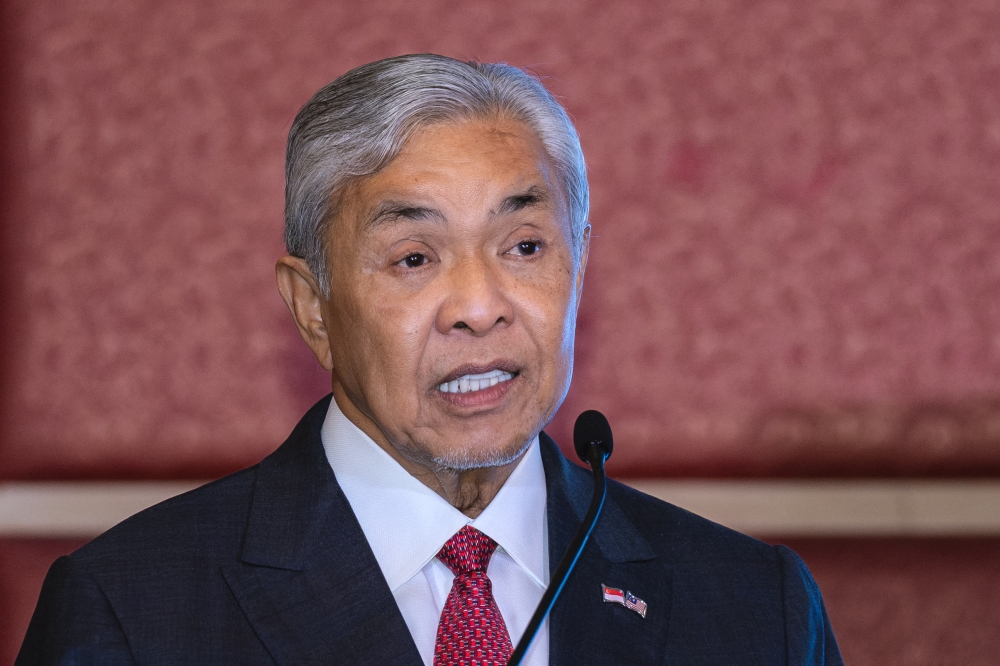
Umno president Datuk Seri Dr Ahmad Zahid Hamidi has moved to dispel suggestions of a binding electoral agreement between Umno and PAS in Negeri Sembilan, emphasising that the two parties operate independently in the state. Speaking in Kuala Lumpur on July 13, Zahid underscored that any cooperation between the two Malay-Muslim political forces remains fluid rather than institutionalised, and that circumstances on the ground could alter coalition strategies at any juncture.
The clarification comes as speculation about seat-sharing and candidate selection in Negeri Sembilan intensifies across the political landscape. Zahid's measured approach suggests Umno wishes to preserve tactical flexibility in a state where electoral mathematics remain unpredictable and where the two parties' voter bases may overlap significantly. By denying a formalised pact, Umno appears intent on signalling that it retains autonomy in determining its electoral approach, rather than being locked into predetermined arrangements that might constrain its options.
Negeri Sembilan occupies strategic importance within Malaysia's political structure. The state has historically been a battleground where various coalitions compete, and control of its state assembly carries implications for broader federal and regional balance of power. Umno's historical dominance in the state has been tested in recent electoral cycles, making the party's positioning particularly consequential. The presence of PAS as an increasingly active political force in the state adds another layer of complexity to the calculus of coalition-building.
Zahid's warning that political positions can shift reflects the pragmatism endemic to Malaysian political culture, where alliances are frequently recalibrated based on evolving circumstances. This flexibility has long characterised Malaysian coalition politics, enabling parties to pivot strategies as demographic shifts, local grievances, and national developments warrant. For Umno, maintaining this optionality allows the party to respond to ground-level developments without being bound by public commitments that might become strategically disadvantageous.
The distinction Zahid drew between formal agreements and informal cooperation carries significant implications for how Negeri Sembilan constituencies might be contested. Without an explicit pact, both Umno and PAS could theoretically contest the same seats, creating scenarios where their respective supporters split votes in ways that benefit opposition parties. Conversely, informal understandings might achieve similar outcomes to formal agreements without the political liability of appearing to sacrifice party autonomy to coalition partners.
PAS has undergone a notable evolution in recent years, expanding beyond its traditional strongholds in Peninsular Malaysia's east coast to contest seats across numerous states. Negeri Sembilan, whilst not a traditional PAS bastion, represents territory where the party has increasingly sought to establish presence. This expansion reflects PAS's broader political ambitions and its confidence in its appeal across Malay-Muslim demographics nationwide. For Umno, the prospect of PAS encroachment in its traditional strongholds inevitably generates internal tensions about seat allocation and electoral strategy.
The relationship between Umno and PAS has oscillated between cooperation and competition throughout Malaysia's contemporary political history. Both parties draw substantially from overlapping voter demographics, creating inherent tensions even when they formally cooperate. Recent years have seen the two parties align in opposition to the earlier Pakatan Harapan government, yet maintain distinct organisational identities and leadership structures. Zahid's comments suggest that Umno prefers to manage this relationship on a case-by-case basis rather than through overarching agreements.
For Malaysian voters and political observers, such declarations warrant careful interpretation. Politicians' public statements about electoral arrangements often serve multiple audiences simultaneously—reassuring party supporters while signalling flexibility to potential coalition partners. Zahid's emphasis on political fluidity could be read as Umno's assertion that it will not be constrained by PAS or other coalition partners' demands, particularly if electoral arithmetic in specific constituencies suggests alternative approaches might yield superior results.
The broader context involves Umno's post-2022 recovery trajectory following its near-collapse in 2020. Under Zahid's leadership since 2022, the party has sought to reestablish itself as the dominant Malay-Muslim party and central figure in Malaysian coalition politics. Maintaining strategic autonomy in state-level contests like Negeri Sembilan forms part of this rehabilitative strategy, signalling to party members and supporters that Umno remains master of its own destiny rather than subordinate to coalition partners or constrained by their agendas.
Regionally, Umno's positioning in Negeri Sembilan reflects broader questions about Malay-Muslim political consolidation across Southeast Asia. How parties manage coalition relationships while retaining distinct identities bears implications for democratic competition, voter choice, and governance outcomes. Zahid's carefully calibrated messaging attempts to balance Umno's interests with recognition that political landscapes shift, constituencies evolve, and new opportunities regularly emerge requiring fresh strategic calculations.
The months ahead will reveal whether Umno and PAS can sustain informal cooperation without formal agreements, or whether the lack of explicit arrangements creates friction that undermines both parties' electoral prospects. Zahid's warnings about political flexibility may ultimately prove prescient if ground developments necessitate significant strategic adjustments closer to election time.

