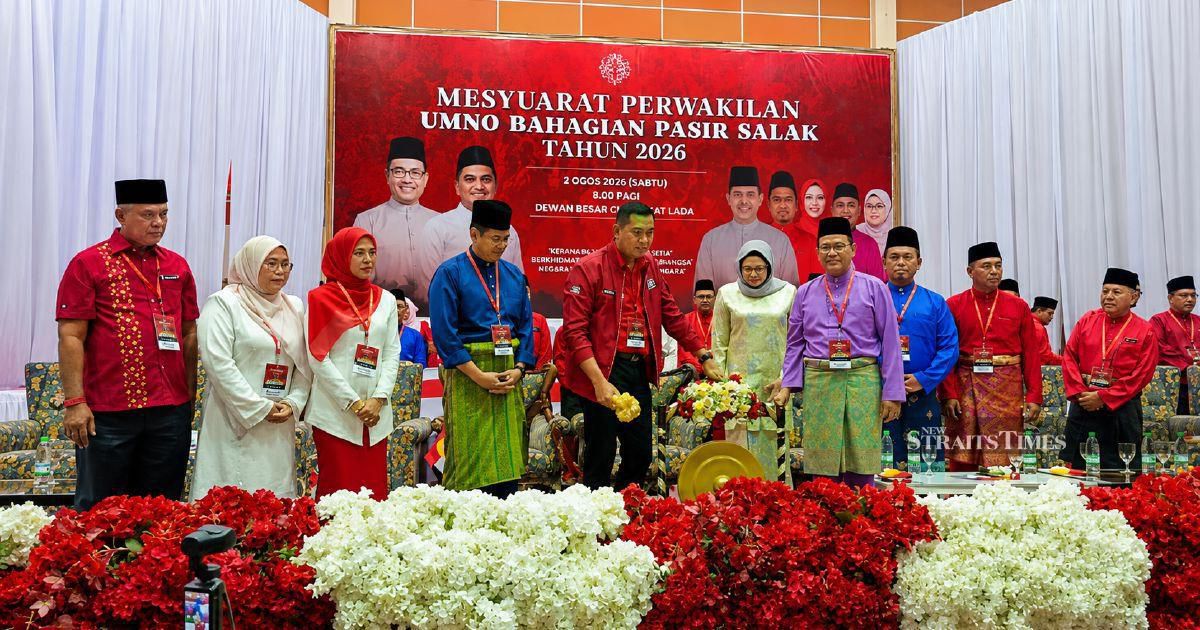
Umno Youth chief Datuk Dr Muhamad Akmal Saleh has emphasised that the views held by divisional leaders within Umno regarding how parliamentary and state assembly seats are distributed in forthcoming elections must receive serious consideration as the party negotiates its evolving political understanding with Perikatan Nasional. Speaking at a gathering in Pasir Salak, Akmal underscored the importance of integrating grassroots perspectives into the framework being shaped at the national level.
The statement reflects growing attention within Malaysia's largest Malay-Muslim party to how seat allocation arrangements—a perennially contentious issue in multiparty coalitions—will be managed under the new political architecture. Division chiefs, who command significant influence over local candidate selection and voter mobilisation, have historically wielded considerable sway in determining their constituencies' electoral fortunes. Their input on how seats are portioned becomes especially consequential when rival factions within the same party or coalition partners harbour competing territorial claims.
Umno's relationship with Perikatan Nasional has undergone substantial shifts since their earlier cooperation gave way to heightened competition. The party's leadership has been actively exploring terms under which a fresh political understanding might function, seeking to avoid the fraught outcomes that resulted from previous partnerships that lacked clear boundary definitions. Seat allocation disputes have been responsible for fracturing several coalitions in Malaysian politics, making Akmal's appeal for inclusive deliberation a recognition of this hazard.
The Pasir Salak division, which Akmal addressed, sits within a state where both traditional and emerging power dynamics complicate interparty relations. By explicitly validating division leaders' perspectives, Akmal appears to be performing two simultaneous functions: reassuring grassroots members that their institutional knowledge and local networks remain valued in strategic planning, while signalling to national negotiators that any agreement reached must command acceptance at divisional level or risk implementation difficulties.
Divisional autonomy in seat selection has long represented a flashpoint within Umno's organisational culture. While the party's supreme council and presidency traditionally determine broad coalition frameworks, division chiefs possess de facto veto power through their ability to either support or obstruct candidate campaigns. This reality gives grassroots perspectives material weight that cannot be dismissed in formal negotiations, irrespective of hierarchical protocol. Akmal's acknowledgement of this dynamic suggests Umno's upper echelons are adopting a more consultative posture than might have been evident in earlier coalition arrangements.
The broader context involves Perikatan Nasional's own internal calculations regarding seat distributions. The coalition has expanded its footprint in several states and federal territories, creating overlapping territorial claims with Umno members in constituencies where both parties maintain organisational presence. Without mechanisms to mediate these claims fairly and transparently, grievances could fester and undermine the stability of any formal understanding. Akmal's emphasis on respecting divisional perspectives may represent an attempt to establish such mechanisms before detailed negotiations commence.
Previous coalitions involving Umno have suffered from allocation disputes that generated resentment among sidelined candidates and their supporters. The fallout extended beyond individual disappointment to broader questions about whether party leadership truly represented members' interests. By explicitly centering divisional voices now, Akmal may be attempting to reconstruct confidence that any new arrangement has been democratically legitimised rather than imposed from above. This approach could prove instrumental in securing grassroots buy-in for whatever framework eventually emerges.
For Malaysian voters and observers monitoring Umno's trajectory, the statement carries implications regarding how internally cohesive the party remains under its current leadership. A party that successfully integrates grassroots perspectives into strategic decisions typically demonstrates greater stability than one where decisions appear disconnected from membership realities. Conversely, if divisional leaders voice concerns that the final agreement ignores their input, the resulting friction could manifest as competitive candidate nominations or campaign enthusiasm deficits during elections.
The position Akmal has articulated also positions Umno's negotiators with a clearer mandate when engaging their Perikatan Nasional counterparts. By stating that division leaders' views must be respected, Umno effectively signals that any allocation proposal must withstand scrutiny from its own party structures before implementation. This constrains the negotiating space somewhat but also provides greater legitimacy to whatever arrangement emerges, as it will have passed internal evaluation rather than arriving as a unilateral settlement.
As both coalitions contemplate Malaysia's political future and the distribution of electoral opportunities, the challenge of accommodating divisional preferences while maintaining coalition discipline remains fundamental. Akmal's remarks suggest Umno is approaching this challenge with greater awareness of past pitfalls, recognising that sustainable political understandings require buy-in from layers of party organisation that ultimately determine electoral success. Whether this commitment to consultation translates into the actual design of seat allocation mechanisms will become apparent as negotiations progress toward concrete proposals that division leaders will evaluate against their own territorial interests and ambitions.

