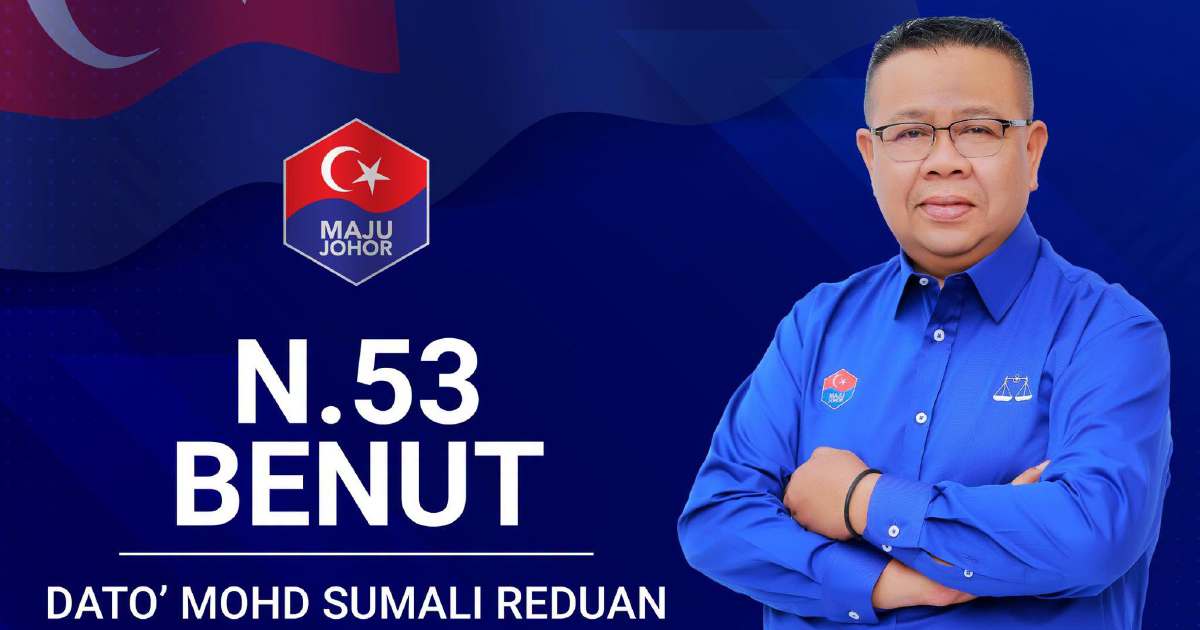
Johor Barisan Nasional has tapped Datuk Mohd Sumali Reduan, the executive secretary of Umno, to contest the Benut state assembly seat in the forthcoming Johor election. The selection represents a significant political move as Sumali makes his debut in electoral politics, bringing his administrative experience from the party's central machinery directly into the race for this contested constituency.
The decision to field Sumali for Benut underscores Barisan Nasional's strategy of deploying seasoned party operatives into key battlegrounds across Johor. As executive secretary, Sumali has been instrumental in managing Umno's internal affairs and coordinating party activities at the national level. His candidacy signals confidence from the coalition leadership that his organisational credentials and understanding of party machinery will translate into electoral advantage in this constituency.
Benut, located in Johor, represents neither an entirely safe nor a hopeless seat for the coalition. The constituency has seen competitive contests in previous elections, making it a strategic priority for Barisan Nasional as it seeks to maintain its political dominance in one of Malaysia's most important states. The selection of a relatively high-profile party administrator for this seat suggests that the coalition views Benut as a significant battleground requiring experienced representation.
For Sumali, the transition from behind-the-scenes party management to direct electoral campaigning marks a notable career inflection point. His previous role focused on executing party policy and maintaining organisational discipline, skills that will be tested in the more public-facing arena of state assembly politics. The Benut campaign will require him to connect with local voters, understand constituency-specific issues, and differentiate himself from opposition candidates.
The Johor state election has assumed heightened importance within Malaysia's broader political landscape. As the nation's second-largest state by population and a traditional Barisan Nasional stronghold, Johor's electoral performance carries implications for national politics. The coalition's candidate selections across various constituencies, including the appointment of Sumali to Benut, reflect careful strategic planning to consolidate its support base and defend against opposition inroads.
Umno's positioning of executive-level personnel in electoral contests demonstrates the party's confidence in retaining control despite recent political volatility. The introduction of administrative officials into candidate pools also suggests a desire to emphasise competence and experienced governance as campaign themes. In constituencies like Benut, voters may be presented with messaging that emphasises the candidate's track record in party administration as evidence of capability to manage state assembly responsibilities.
The Benut constituency encompasses diverse communities with varying economic interests and social concerns. Manufacturing, agriculture, and small commerce form significant components of the local economy. A state assemblyman from this area would be expected to address infrastructure development, vocational training, small business support, and environmental concerns affecting residents. Sumali's nomination positions him as the face of Barisan Nasional's commitments to these local issues.
Opposition parties will likely scrutinise Sumali's record within Umno and his vision for Benut-specific development. While his administrative experience within a major political party represents conventional qualification, opposition candidates may attempt to portray his background as removed from grassroots concerns. The campaign will therefore test whether Sumali can effectively communicate his understanding of local constituencies despite his predominantly central-office career trajectory.
The candidate announcement reflects broader Barisan Nasional preparations for Johor's electoral contest. State elections in Johor typically involve complex inter-party negotiations and coalition management, particularly regarding seat distributions among Umno, MCA, and MIC. The selection of candidates across constituencies indicates that these internal discussions have progressed substantially, with the coalition identifying individuals deemed capable of winning and representing their respective seats.
Sumali's entry into Benut politics also carries implications for Umno's internal dynamics. His elevation to a prominent candidacy may influence perceptions of his standing within party hierarchy and could have ripple effects regarding future party positions. Successful electoral performance in Benut would likely enhance his political profile, potentially opening pathways to higher responsibilities in state government or party management roles.
For Malaysian voters observing the Johor election as a significant political indicator, the quality and profile of candidates selected across constituencies provides insight into each coalition's strategic priorities and confidence levels in different areas. The deployment of an Umno executive to Benut suggests that Barisan Nasional views this seat as competitive enough to warrant experienced representation, yet winnable through organised party machinery and effective grassroots engagement.
As the Johor election campaign unfolds, Sumali's performance in Benut will be monitored not only as a measure of his personal electoral viability but also as a barometer for Barisan Nasional's overall campaign effectiveness in this critical state. The coming weeks will reveal whether his administrative expertise and party connections prove sufficient to overcome any disadvantages stemming from his limited prior electoral experience and grassroots presence.