Malaysia's dominant Malay-Muslim political force has taken a significant step in preparing for the next general election cycle by granting its state-level leadership considerable latitude to pursue political cooperation agreements. During a late-evening Supreme Council session held at Menara Dato' Onn in the capital, UMNO formally authorised its state divisions to conduct discussions and formal negotiations with any political parties that express interest in working together during the forthcoming electoral contest. The decision reflects a strategic pivot towards decentralised decision-making, allowing regional leaders to respond to local political conditions and opportunities without waiting for central approval on each individual overture.
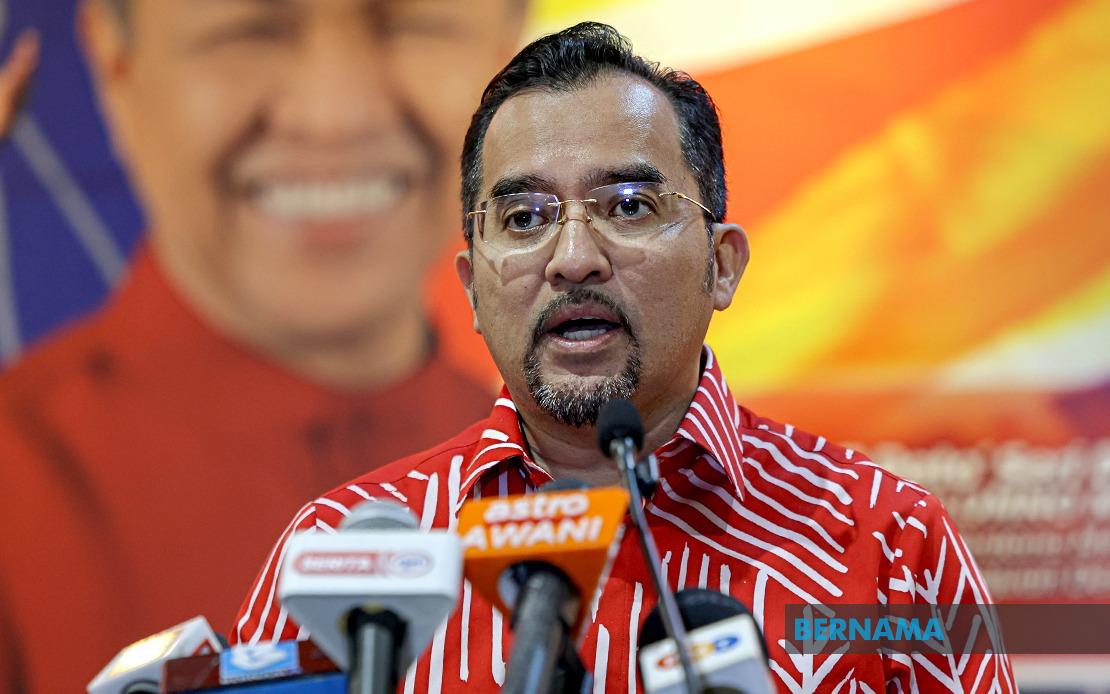
UMNO secretary-general Datuk Dr Asyraf Wajdi Dusuki, speaking to journalists following the meeting, outlined the parameters governing these negotiations. He emphasised that any attempts to establish cooperation between UMNO and potential allies must rest upon foundations of genuine sincerity and reciprocal trust rather than coercive tactics or threats of political isolation. This framing suggests the party is conscious of past criticisms regarding heavy-handed coalition negotiations, and wishes to project a more collaborative approach as it charts its course through an increasingly fragmented Malaysian political landscape. The statement carries particular weight given the country's recent history of shifting alliances and defections that have frequently turned on accusations of arm-twisting and broken promises.
The gathering, which commenced at 8.45 pm and was presided over by UMNO president Datuk Seri Dr Ahmad Zahid Hamidi, drew attendance from deputy president Datuk Seri Mohamad Hasan and a full complement of Supreme Council members. The formal nature of the proceedings and the explicit documentation of this resolution underscore that the mandate represents a deliberate institutional shift rather than an ad hoc arrangement. Such decisions emanating from the party's highest decision-making body carry considerable weight when state-level officials are interpreting their scope for action in political negotiations.
Parallel to the alliance-building authorization, UMNO extended a formal invitation to leadership figures from PAS, its primary Islamic-oriented coalition partner, to participate in the party's 2026 General Assembly. The gathering, scheduled for September 9 through 12, will provide a platform for the two parties to reinforce their relationship and coordinate messaging as they prepare for electoral contests. This gesture simultaneously serves to reaffirm UMNO's commitment to the broader Malay-Muslim political coalition while demonstrating openness to external participation in internal party proceedings—an unusual step that underscores the collaborative framework the party wishes to project.
The Supreme Council also approved a calendar of three significant cultural and religious programmes scheduled for September 8, the day immediately preceding the General Assembly's commencement. These events include the 2026 Malay Education Convention, the Malaysian Islamic Scholars Convention, and an initiative designated as Laman Wanita Kreatif. The clustering of these programmes suggests UMNO is constructing a thematic narrative around Malay and Islamic identity, education, and social engagement that will form the backdrop for its electoral positioning. For Malaysian observers, this represents the party's effort to ground its political appeals in cultural and educational concerns rather than purely transactional electoral calculations.
In a distinct but related matter, UMNO reiterated its institutional commitment to the rule of law and the presumption of innocence in legal proceedings. Datuk Dr Asyraf Wajdi stressed that UMNO adheres to the principle that no individual should be adjudged guilty absent formal prosecution, judicial trial, and courtroom conviction. The statement carries obvious contemporary relevance given that various political figures have faced legal challenges in recent years, and some observers have questioned whether political parties adequately distance themselves from members facing allegations of misconduct or corruption. UMNO's explicit articulation of this commitment suggests the party wishes to position itself as respecting judicial independence and due process.
The party further amplified this message by declaring that UMNO will not defend or shield any member or leader engaged in wrongdoing, misconduct, or departure from legal and ethical standards. Instead, the party positions itself as committed to ensuring that all individuals, regardless of membership status or rank, face justice through appropriate legal channels and due process. For Malaysian readers accustomed to allegations that political parties have functioned as protective structures for members facing legal jeopardy, such statements represent either genuine institutional reform or strategic repositioning—the distinction between these possibilities will likely remain contested among political analysts and commentators.
The timing of these resolutions reflects UMNO's awareness that electoral positioning and coalition-building must commence years in advance of actual polling. By granting state leadership discretionary authority to explore alliances, UMNO acknowledges that political circumstances vary considerably across Malaysia's thirteen states and federal territories, and that a one-size-fits-all approach to electoral cooperation would be impractical. State leaders in Peninsular Malaysia, Sabah, and Sarawak face markedly different political environments, local competitor dynamics, and community preferences. Decentralised negotiating authority permits regional flexibility while maintaining the party's broader strategic direction.
For Malaysian and broader Southeast Asian observers, UMNO's moves carry implications extending beyond the party's immediate electoral prospects. The Malay-Muslim political ecosystem that UMNO anchors remains central to Malaysian governance, national identity debates, and federalism itself. How UMNO structures its alliances, justifies its cooperation choices, and manages its internal discipline will shape the country's political trajectory. The party's emphasis on trust-based rather than coercive negotiations, its commitment to legal processes, and its decentralisation of alliance-building authority collectively suggest a party attempting to adapt to contemporary political constraints while preserving its core institutional position in Malaysian politics.

