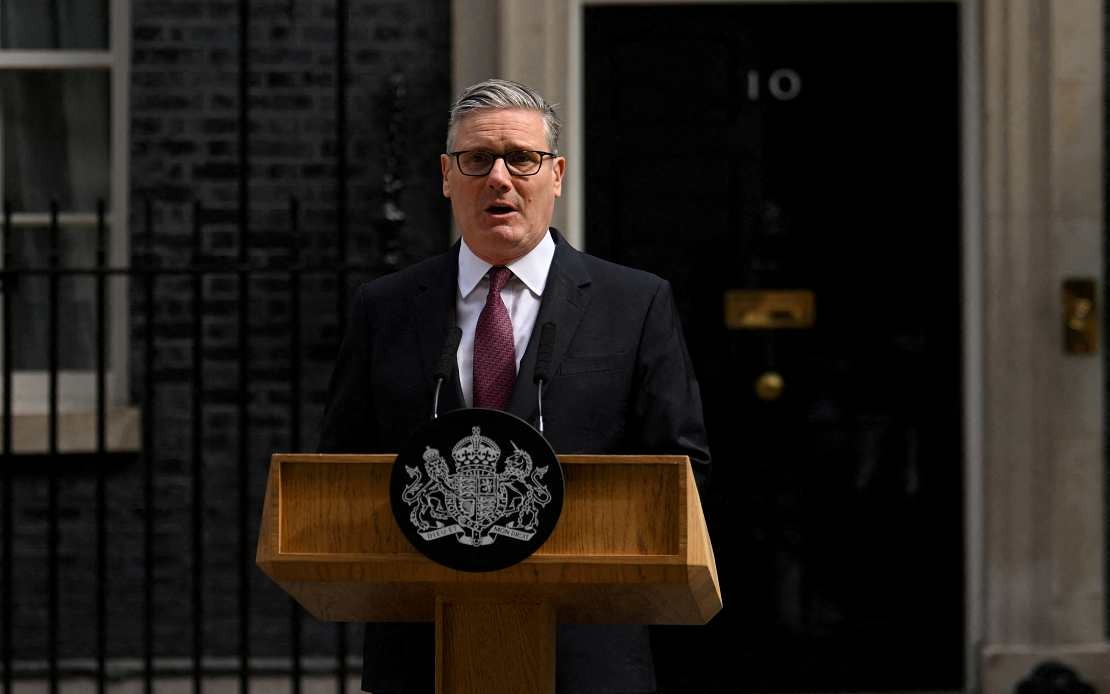
Prime Minister Keir Starmer announced on Monday that he would step down from his position, with a replacement set to assume office by September when parliament returns from recess. The decision marks a dramatic reversal for a leader who secured a commanding electoral victory less than two years ago on a mandate to restore stability to British politics after years of turbulent governance.
Starmer's political position has deteriorated sharply in recent months as his personal approval ratings have fallen to historic lows for a sitting British leader. The deterioration in public confidence has created mounting pressure within his own party, with backbenchers increasingly vocal about the need for new direction. He has pledged to support whoever emerges victorious from the forthcoming Labour leadership contest, positioning himself as putting party interests above personal ambition.
The immediate catalyst for Starmer's departure came on Friday when Andy Burnham, the Mayor of Greater Manchester, decisively won a parliamentary seat in a special election. Burnham's victory came at the expense of a Reform UK candidate, demonstrating that Labour could still compete effectively in constituencies where Nigel Farage's populist party has dominated opinion polling for over a year. The result energised Labour lawmakers who see Burnham as a potential saviour for their struggling party, given his reputation as an accomplished communicator and seasoned political operator with a track record of connecting with voters.
Burnham's parliamentary return has positioned him as the frontrunner in what is expected to be a competitive leadership race. However, his policy positions remain largely unformed in several critical areas. While he has articulated a general commitment to fundamental economic change and reducing the cost of living for British households, his approach to foreign policy, macroeconomic management, and defence spending remains unclear. These gaps suggest he may take time to develop detailed platforms before the September transition.
Any incoming Labour leader, whether Burnham or another contender, will inherit a severely constrained policy environment. Britain currently carries the highest borrowing costs among Group of Seven wealthy nations, a consequence of elevated government debt levels, persistent structural deficits, and the substantial interest payments required to service this debt. Years of sluggish economic growth have compounded these challenges, while the electorate demands investment in critical areas including defence and infrastructure despite the government's limited fiscal space.
The bond market dynamics that have hemmed in Starmer will equally constrain his successor. Financial markets have demonstrated little appetite for substantially increased government borrowing, forcing any new administration to prioritise fiscal caution even as voters express anger at public service shortcomings. Burnham has previously suggested that Britain should move beyond what he characterised as excessive dependence on bond market confidence, yet his tenure as Prime Minister would likely require careful management of investor expectations.
Economists at Citibank have already flagged concerns about Burnham's capacity to deliver meaningful policy changes given these structural constraints. In their assessment, a Burnham premiership would confront what they describe as a precarious fiscal situation offering limited tools for transformative change. This analysis suggests that regardless of who leads Labour, the party may struggle to fulfill voter expectations for substantial improvement in living standards and public services.
Starmer's departure represents another chapter in a remarkable period of British political instability. He will become the seventh Prime Minister since the 2016 Brexit referendum, a turnover rate that represents the highest frequency of leadership changes in nearly two centuries of British parliamentary history. This extraordinary instability reflects deep public dissatisfaction with successive governments' inability to deliver tangible improvements in citizens' lives, resolve the immigration challenge, or stabilize public institutions.
The timing of the transition reflects political calculation as much as necessity. Political advisors have suggested that allowing Starmer to remain in post through July enables him to attend a UK-European Union reset summit planned for that month, potentially repairing some damage in the relationship with Europe. Simultaneously, this extended transition period would allow Burnham or another successor several weeks to prepare for the responsibilities of government before parliament reconvenes and the new Prime Minister faces immediate scrutiny and legislative demands.
For Malaysian observers, the British political convulsion offers instructive parallels regarding the challenges of managing voter expectations in periods of economic constraint. Britain's experience demonstrates how even significant electoral mandates can evaporate when governments prove unable to improve material living conditions, and how bond market discipline can restrict policy options regardless of electoral pledges. The instability also underscores how populist alternatives like Reform UK can exploit dissatisfaction when mainstream parties lose credibility.
The succession race itself will occupy British politics intensely over the coming weeks. Beyond Burnham, other potential candidates may emerge from the Labour ranks, though his parliamentary victory and communications skills currently position him as the frontrunner. The contest will likely focus on which candidate can best navigate the contradiction between voter demands for substantial change and the fiscal reality constraining government action.
The September return of parliament will introduce the new Prime Minister to immediate legislative priorities and budget pressures. Whether Burnham or another Labour figure assumes office, they will confront an electorate that has become progressively angrier at perceived governmental failure. The combination of structural economic challenges, public service pressures, and immigration concerns that contributed to Starmer's downfall will remain present for his successor, suggesting that the next Prime Minister may face similar pressure within an equally compressed timeframe.