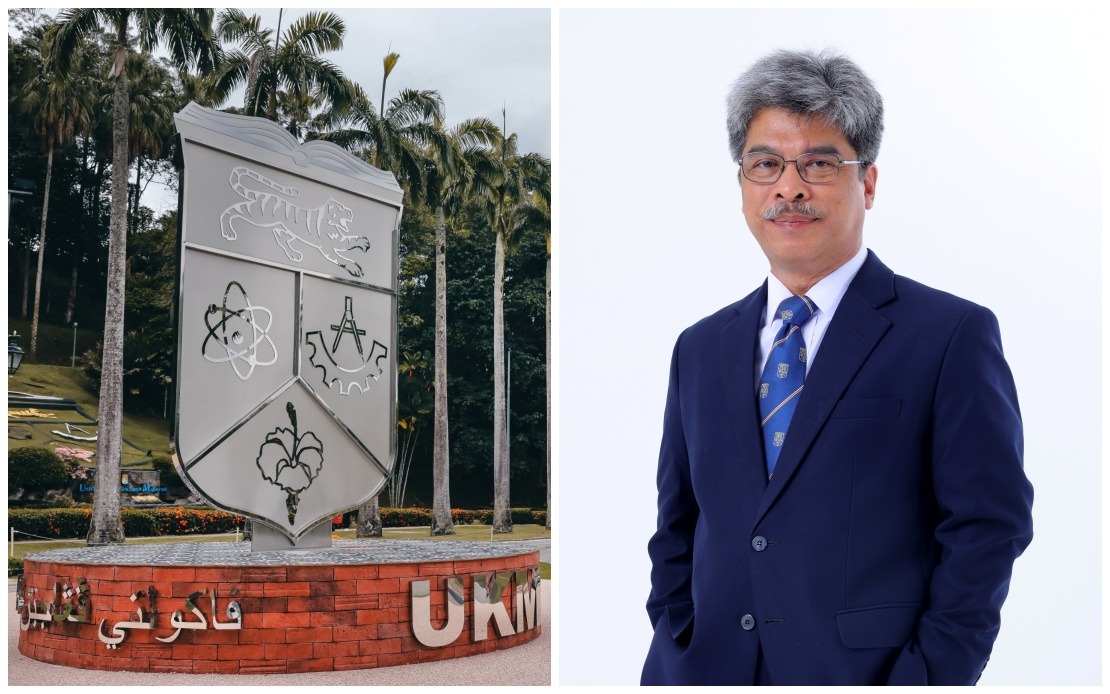
Universiti Kebangsaan Malaysia is positioning itself as a key contributor to Malaysia's most significant overhaul of higher education legislation in over five decades, offering to marshal its academic and legal resources in developing the One Higher Education Act that will supersede the Universities and University Colleges Act 1971. Vice-Chancellor Prof Datuk Dr Sufian Jusoh made the commitment on behalf of the institution, signalling the university's determination to play a central role in reshaping the legal architecture that governs the nation's tertiary sector.
The proposed legislation marks a decisive departure from Act 30, which has governed Malaysian universities for more than half a century. That framework has long been criticised for constraining institutional flexibility and limiting democratic participation within campus communities. Prime Minister Datuk Seri Anwar Ibrahim had previously announced the government's intention to dismantle AUKU specifically to expand freedoms for student activism and create greater democratic space within universities, a pledge the Cabinet was scheduled to examine on Wednesday following his public statement.
UKM's formal engagement in this reform process reflects deeper strategic calculations at one of Malaysia's premier research universities. The institution views the legislative transition as an opportunity to advance several longstanding institutional priorities, particularly the expansion of autonomous decision-making and the removal of bureaucratic constraints on academic work. Sufian emphasised that UKM intends to participate comprehensively, engaging not merely as a passive stakeholder but as an active catalyst bringing together university leaders, faculty members, industry representatives, and student voices in structured dialogue.
The university's commitment aligns explicitly with its UKM TEKAD 57 Strategic Plan, a long-term roadmap extending to 2030 that positions the institution as instrumental in preparing Malaysia to commemorate a century of independence by 2057. Within this framework, legislative reform to strengthen institutional autonomy and enhance governance flexibility becomes integral to UKM's vision of developing a knowledge economy rooted in innovation and ethical scholarship. Sufian framed the legislative work not as a technical exercise but as a transformative opportunity to recalibrate how Malaysian universities operate in the contemporary global landscape.
The Minister of Higher Education, Datuk Seri Dr Zambry Abd Kadir, has already outlined the contours of this replacement framework through the Malaysia Higher Education Plan spanning 2026 to 2035. This strategic document provides the blueprint for a more sophisticated and comprehensive legal structure than AUKU, one designed to address the complexities of modern tertiary education spanning diverse institutional types and evolving research demands. The new legislation is intended to move beyond the prescriptive constraints of its predecessor, granting universities greater latitude in internal governance while maintaining appropriate accountability mechanisms.
UKM's emphasis on inclusivity in the consultation process carries particular significance for Malaysia's federal system of higher education oversight. The institution recognises that any new legal framework must accommodate the heterogeneous character of Malaysia's tertiary sector, which encompasses research-intensive universities, teaching-focused institutions, polytechnics, and private colleges. A uniform legislative approach that fails to account for these structural differences would risk either constraining institutions with unnecessary restrictions or creating loopholes that undermine quality assurance. UKM's involvement can help ensure the emerging legislation achieves appropriate differentiation.
The university's focus on strengthening institutional autonomy without surrendering accountability or governance standards addresses a persistent tension in higher education policy globally. Many nations have discovered that enhanced autonomy divorced from robust accountability mechanisms can result in mission drift and declining standards, whilst excessive regulatory oversight stifles innovation and responsiveness. UKM's positioning suggests the institution seeks a calibrated approach where universities gain freedom to determine their strategic directions whilst remaining subject to transparent performance evaluation and external quality assurance aligned with international benchmarks.
From a Southeast Asian perspective, Malaysia's legislative reform occurs at a moment when several regional peers are similarly re-examining their higher education governance structures. Thailand, Indonesia, and the Philippines have all undertaken or contemplated significant reforms to expand university autonomy. Malaysia's approach, particularly if informed by the broad stakeholder engagement UKM proposes, could establish a model demonstrating how to transition from restrictive colonial-era legislation toward frameworks supporting both institutional innovation and social accountability.
The emphasis on ethical academic freedom within UKM's strategic vision carries implications that extend beyond campus boundaries. Malaysian universities increasingly compete for international research talent and partnerships; a legislative environment that provides robust protections for scholarly inquiry becomes a competitive advantage in attracting and retaining world-class academics. The current AUKU framework has sometimes created perceptions, whether justified or not, that restrict intellectual latitude. New legislation explicitly protecting academic freedom could enhance Malaysia's reputation as a regional hub for advanced research and knowledge production.
Student leadership engagement represents another dimension where the proposed reforms signal substantive change. Successive governments have grappled with balancing legitimate student activism against institutional stability. By explicitly incorporating student voices in the consultation process rather than imposing changes unilaterally, UKM and the Ministry suggest recognition that sustainable reforms require buy-in from those most affected. This inclusive approach, if implemented genuinely rather than performatively, could rebuild trust between student communities and university administrations after periods of tension.
The legislative transition also intersects with Malaysia's evolving quality assurance mechanisms. The Malaysian Qualifications Framework and associated standards bodies have matured considerably since AUKU's enactment, creating opportunities for the new legislation to embed quality expectations more explicitly. Rather than relying primarily on prescriptive rules about how universities must operate, the legislation could emphasise outcomes-based accountability where institutions retain methodological flexibility whilst demonstrating achievement of agreed standards.
Implementation will prove critical. Legislative ambitions often encounter resistance from entrenched interests, whether within government bureaucracies, university administrations reluctant to surrender familiar hierarchies, or political actors concerned about preserving formal oversight. UKM's commitment to sustained engagement throughout the consultation and drafting process suggests the institution understands that genuine reform requires continuing advocacy, not merely initial declarations of support. The university's reputation and institutional credibility can lend weight to technical recommendations and help navigate inevitable political compromises.
Ultimately, Malaysia's higher education reform represents not merely technical legislative adjustment but a statement about the nation's aspirations for its universities. By positioning institutions to function with greater autonomy within accountability frameworks, the government signals confidence in university leadership and trust in academic communities to operate ethically and effectively. UKM's willingness to invest significantly in shaping this transition suggests the institution views it as an opportunity not merely to remove outdated restrictions but to establish a framework enabling Malaysian universities to contribute meaningfully to national development and regional knowledge leadership in coming decades.

