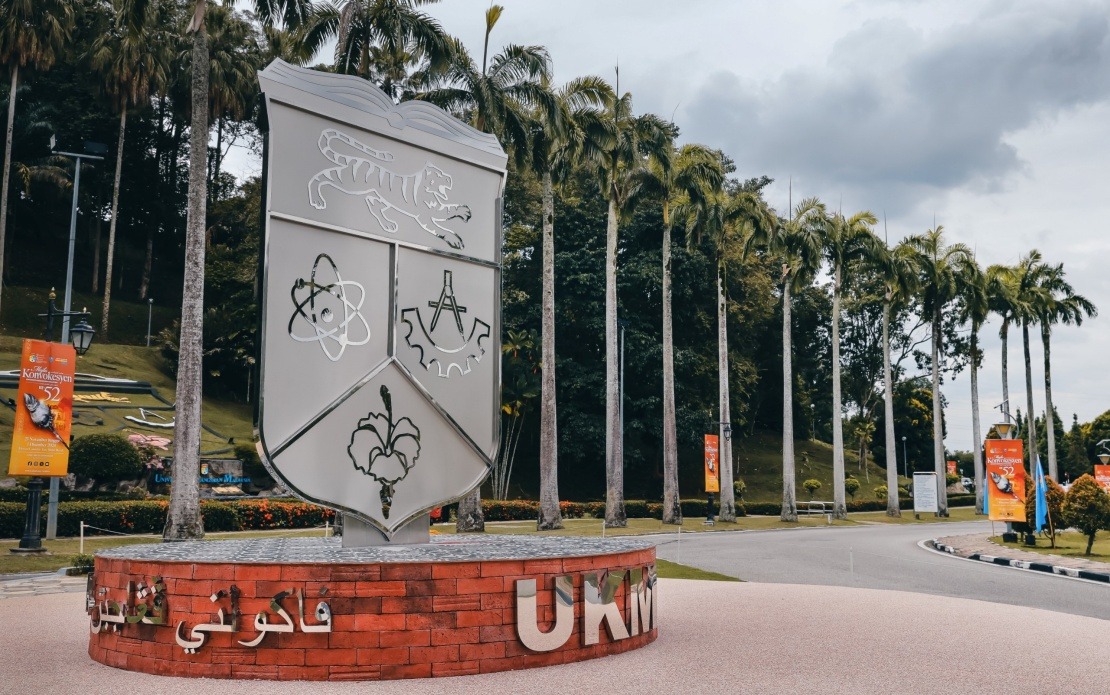
Universiti Kebangsaan Malaysia (UKM) has moved swiftly to counter what it characterises as a deliberately misleading social media narrative, issuing a formal statement denying allegations that the institution has become dominated by international enrollees. The claim circulating in online videos suggests a ratio of five international students for every Malaysian student, a charge the university dismisses as categorically false and potentially damaging to its standing.
According to official data compiled by UKM's Academic Management Centre and Centre for Continuing Education and Professional Studies, the university's actual international undergraduate presence is vastly lower than suggested by the viral narrative. With a total enrollment of 46,151 students across all programmes, only 3,917 are classified as international undergraduates, yielding a proportion of just eight per cent of the overall student body. This translates to approximately one international student per twelve total students—a ratio that presents a dramatically different picture from the 5:1 claim gaining traction online.
The emergence of such unsubstantiated claims reflects growing anxieties within Malaysian society regarding the role and impact of international students in local higher education institutions. These concerns, whether grounded in genuine institutional trends or inflated by misinformation, touch on sensitive questions about educational access, resource allocation, and national identity within universities. UKM's response signals that Malaysian universities view such narratives as threats warranting explicit institutional correction and legal recourse, establishing clearer boundaries around acceptable public discourse regarding student composition.
UKM's rebuttal emphasises that the selective recruitment of international students operates within carefully calibrated parameters set by the Ministry of Higher Education, rather than occurring in an uncontrolled manner that marginalises local applicants. The university positions international enrollment as a deliberate policy instrument aligned with broader government strategy to enhance Malaysia's standing as a regional higher education hub, thereby connecting campus diversity to national economic and diplomatic objectives. This framing transforms the question from one of institutional autonomy to one of coordinated national strategy, situating UKM within a larger ecosystem of Malaysian universities competing regionally.
The university explicitly reaffirms its foundational commitment to serving Malaysian students, stating that international recruitment does not diminish educational opportunities available to domestic applicants. This assurance addresses a core anxiety underpinning the viral claims: the suspicion that universities might prioritise fee-paying international students over quota-admitted local ones, potentially creating a two-tiered system. By anchoring its response in founding mission rather than merely quantitative correction, UKM attempts to restore public confidence in institutional governance and fairness.
The legal warning embedded within UKM's statement—threatening action against those continuing to spread what it characterises as defamatory content—represents an increasingly common institutional response to online misinformation. Rather than treating such claims as inevitable noise within social media ecosystems, Malaysian universities are adopting an adversarial posture, signalling that reputational damage carries measurable consequences. This approach reflects broader global trends wherein established institutions defend institutional authority against online discourse they cannot fully control.
UKM's request that the public rely exclusively on official communication channels reveals underlying tensions about information authority in the digital age. The university implicitly acknowledges that unverified claims circulate with dangerous efficacy on social platforms, yet its response—urging audiences away from social media towards institutional sources—may underestimate how populations actually consume information. The effectiveness of such appeals depends partly on whether the public perceives universities as credible compared to peer networks sharing viral content.
The broader Malaysian higher education context suggests that international student recruitment generates recurring controversy. Debates surrounding university autonomy, affirmative action policies favouring bumiputera students, and resource constraints have created fertile ground for concerns about perceived shifts in institutional priorities. While UKM's data appears to support its defence—eight per cent international undergraduates is relatively modest—the persistence of such claims suggests deeper anxieties extending beyond simple enrollment statistics, touching on questions about educational quality, funding models, and whether universities adequately serve national development needs.
For Malaysian families and prospective students, UKM's statement carries implications regarding institutional transparency and accountability. The university's willingness to release detailed enrollment figures demonstrates responsiveness to public concern, yet the requirement for institutional prompting also raises questions about whether such data should be routinely published and easily accessible. Greater proactive communication about student composition and institutional policies might preempt such controversies more effectively than reactive responses.
The incident illustrates how social media enables rapid amplification of claims affecting institutional reputation, regardless of factual accuracy. UKM's response—combining quantitative rebuttal, legal warning, and institutional reaffirmation—represents a comprehensive defensive strategy, yet its ultimate success depends on whether corrective narratives can penetrate networks where false claims circulate. The case underscores the vulnerability of Malaysian institutions to coordinated or organic misinformation campaigns, particularly around sensitive issues touching national identity and resource distribution among competing student populations.

