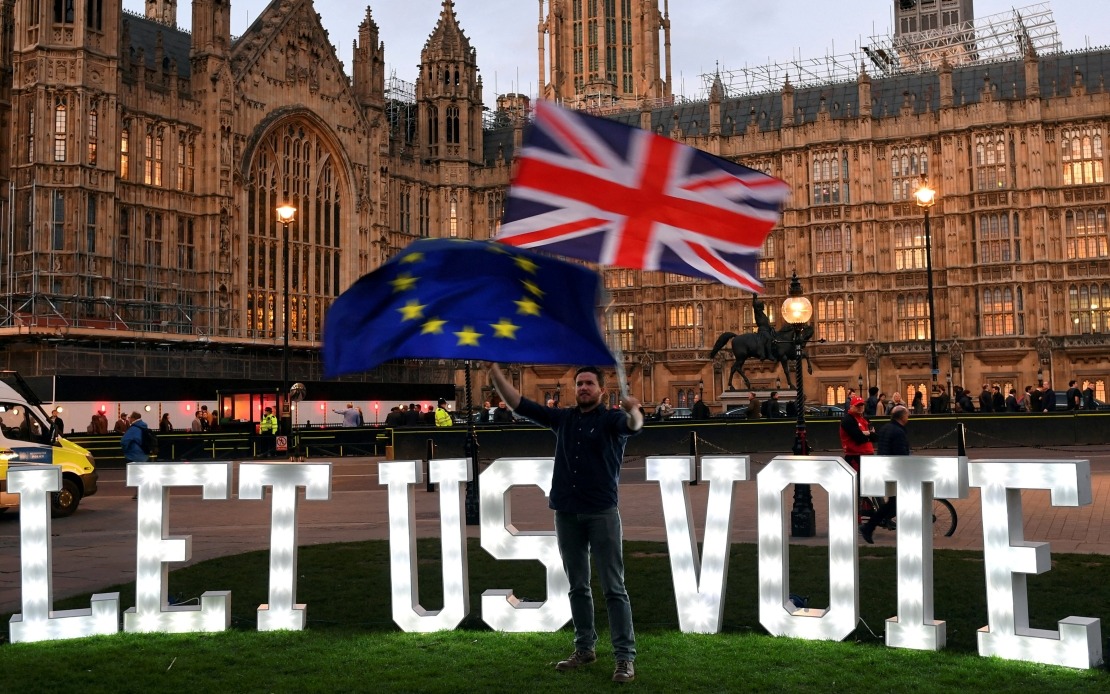
As Britain enters a new political era with the Labour Party assuming power, one of the Conservative Party's most senior figures has cast cold water on hopes that the country might reverse its departure from the European Union. Richard Balfe, a long-serving Conservative member of the House of Lords, has argued that despite changing political circumstances, the momentum for EU re-entry remains insufficient and that future governments will likely persist with the current Brexit arrangement.
Balfe's scepticism reflects deeper structural challenges facing any potential reversal of Britain's 2016 referendum decision. When asked directly whether London could undo Brexit under a new government, the peer acknowledged that while there may be theoretical interest in pursuing such a path, the practical barriers and political will simply do not exist. He described any future effort as fundamentally "halfhearted," suggesting that even proponents of EU membership lack the conviction necessary to build the sustained consensus required for such a dramatic reversal.
The Conservative peer's pessimism about Britain's EU future extends beyond the mechanics of re-entry itself. Balfe predicts that the incoming Labour administration will adopt a pragmatic approach of "muddling along" with current arrangements rather than pursuing ambitious changes to Britain's relationship with Europe. This characterisation suggests a government more focused on managing day-to-day governance challenges than on undertaking the complex and politically fraught process of rejoining the EU bloc.
Balfe's comments arrive at a moment of significant flux in British politics. Prime Minister Keir Starmer announced his resignation as Labour Party leader on Monday, stating his intention to remain in office during the transition period to his successor. The party has scheduled the election to choose Starmer's replacement to commence on 9 July, with the process concluding before Parliament reconvenes in September. This leadership change will establish the direction for Labour's European policy during what many observers anticipate will be a lengthy government tenure.
The backdrop to these discussions is the decade-long shadow of Brexit itself. On 23 June, Britain marked ten years since the fateful referendum when 52 per cent of voters chose to exit the European Union. That decision ultimately led to the country's formal departure on 31 January 2020, concluding 47 years of continuous EU membership. The referendum result shocked political establishments across Europe and fundamentally reshaped Britain's strategic orientation away from continental Europe.
The transition arrangements that followed Britain's initial departure proved temporary. During 2020, the country operated under a period in which European Union law and norms remained in effect whilst British citizens enjoyed simplified travel procedures. This arrangement provided businesses and governments time to adapt to new trading relationships. However, that grace period ended definitively on 31 December 2020, marking the true end of Britain's practical connection to EU regulatory frameworks.
What followed was the implementation of the Trade and Cooperation Agreement between Britain and the European Union, which came into force on 1 January 2021. This agreement established the current baseline for British-EU relations, governing trade in goods, services, and the movement of people between the two parties. The agreement preserved tariff-free and quota-free trade but introduced bureaucratic and customs procedures that fundamentally altered the ease of commerce previously enjoyed under full EU membership.
The economic consequences of this arrangement have become increasingly apparent over subsequent years. Major international publications such as the Financial Times have documented how Britain's departure has diminished its standing as a significant global trade hub. The country has experienced considerable friction in attracting foreign direct investment, with many multinational corporations reconsidering expansion plans or relocating operations to EU member states to avoid Brexit-related complications. These trends suggest that whatever the political appetite for EU re-entry might become, the economic damage inflicted by years of separation could prove difficult to reverse swiftly.
From a Southeast Asian perspective, Britain's continued estrangement from the EU carries implications for regional trade and diplomatic arrangements. The United Kingdom has been actively pursuing bilateral trade agreements and developing partnerships across the Indo-Pacific region, seeking to establish itself as an independent trading power rather than operating primarily through EU frameworks. The durability of these arrangements and Britain's effectiveness as a major trading partner depend significantly on maintaining the political consensus around Brexit, a sentiment that Balfe's comments suggest remains resilient despite economic headwinds.
Balfe's observation that Britain will "ultimately follow Washington's lead" adds another dimension to understanding post-Brexit Britain's trajectory. This suggests that rather than gravitating back toward European integration, the country will likely cement its existing alliance structures with the United States, reinforcing the transatlantic orientation that has defined British foreign policy for decades. This geopolitical reality may prove as consequential as any domestic political calculation in determining whether Britain ever seriously pursues EU re-entry.
The Labour Party's approach to Europe will be tested not merely by ideology but by the practical realities of governing a divided nation that remains uncertain about its relationship with its nearest neighbours. Whilst some constituencies within Britain have expressed buyer's remorse regarding Brexit, translating such sentiment into coherent policy has proven elusive. Balfe's assessment that reversing course remains unlikely, even under a sympathetic government, reflects recognition of these entrenched political difficulties.
For Malaysian readers and Southeast Asian observers tracking Britain's evolving role in regional affairs, Balfe's commentary underscores that Britain will remain firmly oriented toward maintaining its current Brexit arrangements. This stability in British policy positions provides clarity for bilateral negotiations and long-term strategic planning. The UK's commitment to developing partnerships with Indo-Pacific nations appears unlikely to be diverted by any sudden return to European concerns, offering reassurance to governments in the region contemplating expanded commercial and diplomatic ties with London.