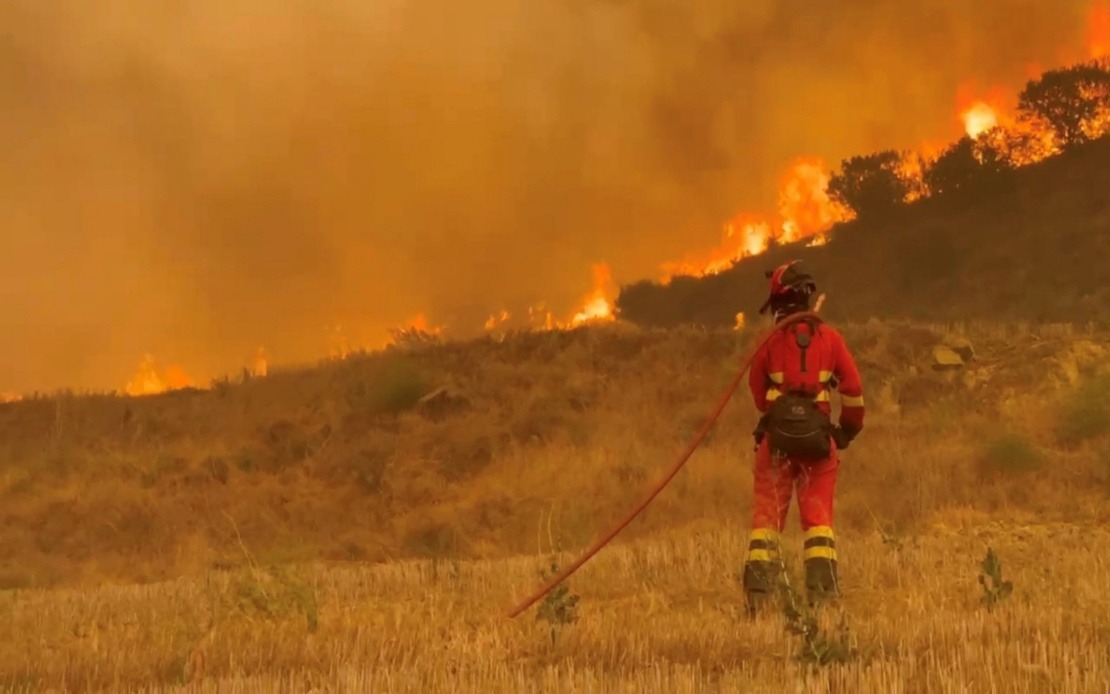
Britain's government is convening an emergency crisis meeting on Wednesday to coordinate its response to a cascade of weather-related disasters currently unfolding across the nation. The Cobra meeting, a high-level government coordination mechanism typically reserved for national emergencies, will be chaired by Andy Burnham as officials grapple with the compounding effects of record-breaking heat, spreading wildfires and severe drought conditions. The gathering reflects growing alarm within Westminster about the mounting toll these environmental challenges are taking on critical frontline services, including fire brigades stretched thin battling blazes, agricultural communities facing water shortages and the health service contending with heat-related casualties.
The decision to escalate to a formal emergency meeting underscores the gravity of the situation facing multiple sectors simultaneously. Firefighters across England continue their struggle against a major wildfire in Hampshire's New Forest, one of several significant incidents now consuming resources. Agricultural regions face unprecedented strain as drought declarations have expanded geographically across the nation, with Wales formally declaring drought status on July 30 and roughly half of England placed under similar declarations in recent weeks. The National Health Service, already operating under considerable strain, confronts a public health crisis distinct from its usual operational challenges, with the immediate threat posed by extreme temperatures to vulnerable populations.
Weather forecasters have issued stark warnings that intensify concerns about immediate conditions. The UK's Met Office has taken the unusual step of issuing an amber extreme heat warning for Thursday, a classification the agency reserves for genuinely dangerous meteorological conditions. Simultaneously, the Met Office indicated that current trends suggest the nation is positioned to record its hottest summer on average temperatures in the entire recorded history of British weather observation. This combination of current warnings and historical trajectory data paints a picture of environmental stress that extends beyond temporary discomfort into genuine public health territory.
The human toll from recent heat events has proven substantial and alarming. During the heat waves spanning May and June, the UK Health Security Agency documented 2,877 excess deaths attributable to extreme temperatures, a figure representing nearly double the 1,504 excess deaths recorded during the summer of 2025. This dramatic increase in mortality during relatively recent heat episodes demonstrates how quickly and severely such weather phenomena can strain public health systems and claim lives, particularly among vulnerable demographic groups including the elderly and those with existing medical conditions.
The geographic spread of the crisis continues expanding. Monday's announcement that additional areas in England had been reclassified into drought status signals that water resource challenges are not confined to particular regions but are instead becoming a nationwide phenomenon. The declaration of drought in Wales represents an escalation for that nation, where sustained high temperatures combined with record-low rainfall have depleted water reserves faster than replenishment systems can manage. This geographic breadth means the government must coordinate responses across multiple jurisdictions and sectors simultaneously.
Political pressure is mounting on the government to take decisive action. Zack Polanski, leader of the Green Party, has used the occasion to advocate for a comprehensive policy response addressing both immediate crisis management and longer-term preventive measures. His proposals encompass taxing fossil fuel corporations to fund firefighting helicopter operations, establishing public cool spaces in communities as heat refuge centres, implementing maximum working temperature thresholds to protect workers, and ceasing new petroleum and gas development in the North Sea. These suggestions reflect a political perspective arguing that the immediate crisis demonstrates the necessity of systemic economic and energy transition measures.
The emergency meeting represents an attempt by government to demonstrate responsiveness to cascading crises that no single department can manage independently. The convening of Cobra machinery signals that coordination across the National Health Service, the Environment Agency, the Met Office, local authorities and emergency services is now essential. This cross-governmental approach acknowledges that extreme heat produces ripple effects throughout multiple interconnected systems: water infrastructure, electricity grids managing cooling demand, transportation networks, and agricultural production chains all face simultaneous pressure.
For Malaysia and Southeast Asian observers, the British experience offers instructive perspective on how wealthy, well-resourced nations struggle when confronted with compound climate-related emergencies. The UK, possessing advanced forecasting capabilities, substantial emergency response infrastructure and sophisticated healthcare systems, nonetheless finds itself convening emergency meetings in response to heat and drought. The situation underscores that climate impacts do not simply affect developing economies or least-developed countries but increasingly present challenges even to highly developed nations with sophisticated adaptive capacity. The excess death tolls documented in British heat waves demonstrate that even populations accustomed to temperate climates face significant mortality risks when temperatures deviate substantially from historical norms.
The relationship between current weather events and longer-term climate trends remains contested in some quarters, yet meteorological institutions like the Met Office are increasingly clear in their assessments. British forecasters now routinely characterize current conditions as consistent with climate change projections, using language that connects specific events to broader atmospheric changes. This represents a shift in how official meteorological bodies communicate about extreme weather, moving from cautious hedging to more direct causal attribution.
The convergence of heat, drought and wildfire simultaneously demands government attention because each phenomenon individually stresses specific sectors, but their combination produces cascade effects that amplify overall system strain. Firefighters cannot easily battle wildfires if they simultaneously need to respond to heat-related medical emergencies. Farmers cannot irrigate crops if drought-driven restrictions limit water availability. Healthcare facilities struggle to maintain cooling during peak demand periods if infrastructure proves inadequate. The emergency meeting framework exists precisely because such compound crises require coordination that normal departmental structures cannot provide.
Looking forward, the British government's response to this emergency gathering will offer insight into whether democratic nations can mobilize comprehensive climate adaptation policies or whether response remains confined to crisis management without systemic change. The success or failure of coordination during this emergency will influence how future governments prepare for similar or intensifying events, particularly as climate scientists continue projecting that extreme heat events will increase in frequency and severity across coming decades.

