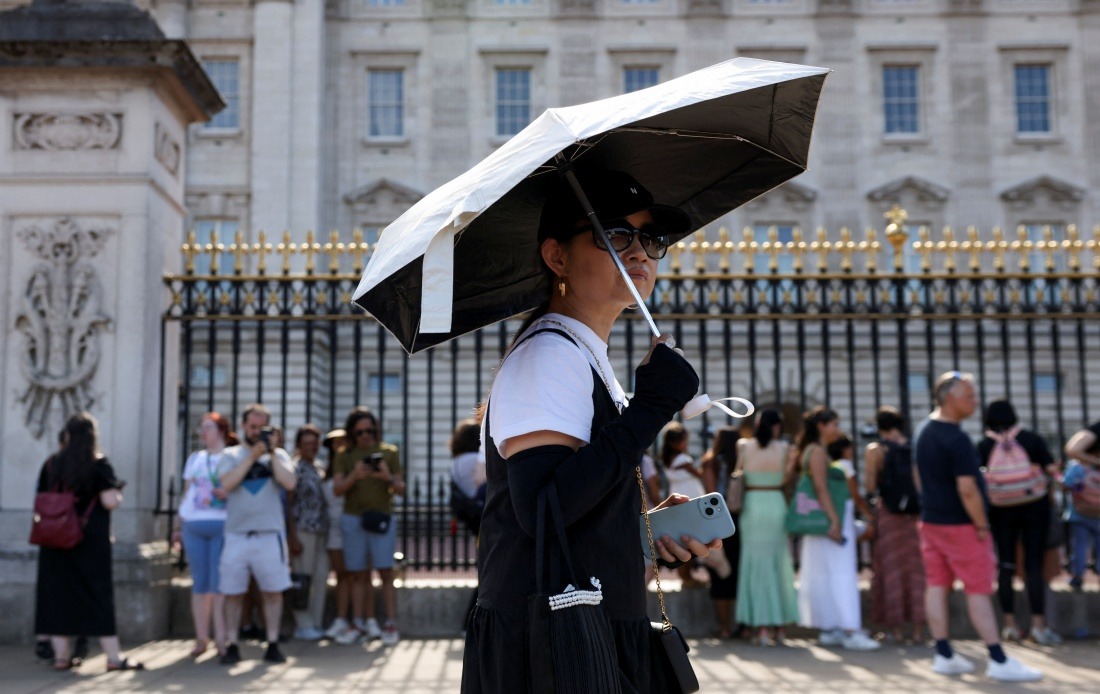
The United Kingdom's Household Division has made the unprecedented decision to suspend all ceremonial guard changes across London and Windsor, including the iconic ceremonies at Buckingham Palace, as an exceptional heatwave grips the nation. The cancellation takes effect from Tuesday through Thursday of this week, following a red weather alert issued by the UK's Met Office that signals the most serious threat level. The move reflects growing concerns about the welfare of soldiers, military horses, and the large crowds that typically gather to witness these carefully choreographed traditions.
Britain is bracing for temperatures that meteorologists expect will shatter the June heat record, with readings forecast to peak at 39 degrees Celsius on Wednesday and Thursday. Some regions within the warning zone may experience even more extreme conditions. The red weather alert—the highest classification in the UK's weather warning system—covers Wales and several southern English counties including Somerset, Gloucestershire, Buckinghamshire, and London, indicating that the public faces genuine health risks from the intensity of the heat.
In a formal statement, the Household Division prioritised the safety of all involved in ceremonial operations. The organisation emphasised that soldier welfare, the condition of the military working horses used in these pageants, and public health remained paramount considerations. These guard changes represent not merely symbolic duties but events that draw substantial crowds, particularly at Buckingham Palace where thousands of tourists and Londoners gather during the warmer months. Extended exposure to extreme temperatures in such densely packed conditions poses genuine dangers, especially for vulnerable groups.
While the full ceremonial programme has been shelved, the Royal Horse Guards' traditional Wednesday changing ceremony will proceed in modified form. The event will commence earlier in the morning when temperatures remain comparatively cooler, and organisers will eliminate the elaborate ceremonial elements that typically extend these occasions. This compromise allows the core military function to continue whilst reducing both the duration and intensity of exposure to dangerous heat conditions. Additionally, soldiers deployed during the modified ceremony will be positioned in shaded locations and rotated at shorter intervals to prevent heat-related illness.
The extreme weather event has created cascading disruptions across Britain's social and institutional landscape, extending far beyond ceremonial duties. Educational authorities across the south of England have taken the dramatic step of closing schools entirely rather than risk student safety. Somerset County Council reported that approximately 100 schools would remain shut during the heat emergency period. Buckinghamshire similarly closed roughly the same number of schools, while Gloucestershire suspended classes at more than 80 institutions. In London itself, nearly 10 major schools have cancelled in-person lessons, directing students to remain at home where conditions may be more manageable.
These closures underscore the exceptional nature of the heatwave affecting the United Kingdom. British schools remain open during typically mild summers, and emergency closure protocols activate only when conditions pose serious risks to student health and safety. The decision to shutter educational facilities simultaneously across multiple counties reflects official recognition that temperatures have reached levels dangerous for extended occupation of buildings that often lack modern air conditioning systems. Many UK educational facilities, built during cooler climate decades, feature poor thermal regulation and become dangerously overheated during such events.
The cancellation of Buckingham Palace ceremonies carries symbolic weight within British cultural tradition. The changing of the guard ceremonies have operated continuously for centuries, representing institutional continuity and royal pageantry. Such suspensions remain rare, typically occurring only during national emergencies or exceptional circumstances. This week's cancellation therefore signals to observers the genuine severity of the heatwave affecting the nation. The willingness of the Household Division to disrupt this venerated tradition demonstrates that authorities consider the heat emergency sufficiently dangerous to warrant extraordinary measures.
For Malaysian and Southeast Asian observers, the British response offers instructive contrasts with how different nations approach extreme heat management. While Southeast Asian countries regularly experience temperatures well above 39 degrees Celsius, the infrastructure and population acclimation present in tropical regions differ markedly from conditions in temperate Britain. The disruption caused by these relatively moderate temperatures in a wealthy developed nation highlights how heat response depends not simply on absolute temperature readings but on infrastructure adaptation, public health systems, and population vulnerability factors. Britain's experience demonstrates that established systems can require substantial modification when conditions deviate significantly from historical norms.
The heatwave also raises questions about climate adaptation and infrastructure resilience in developed economies. Many British public institutions, schools, and transport systems were designed when such extreme temperatures fell far outside reasonable planning scenarios. As global climate patterns shift, governments increasingly face decisions about retrofitting existing infrastructure for heat resilience. The cascading closures of schools and cancellation of longstanding ceremonies illustrate how climate change introduces practical disruptions to daily civic and cultural life, even in wealthy nations with substantial resources for adaptation.
Looking forward, this week's emergency response may prompt British authorities to reconsider operational protocols for extreme heat events. The decision to modify rather than completely abandon the Royal Horse Guards ceremony suggests emerging frameworks for maintaining institutional functions whilst prioritising safety. Future extreme heat events—which climate scientists increasingly expect will recur with greater frequency—may trigger similar emergency adjustments to longstanding traditions and public operations throughout the United Kingdom.