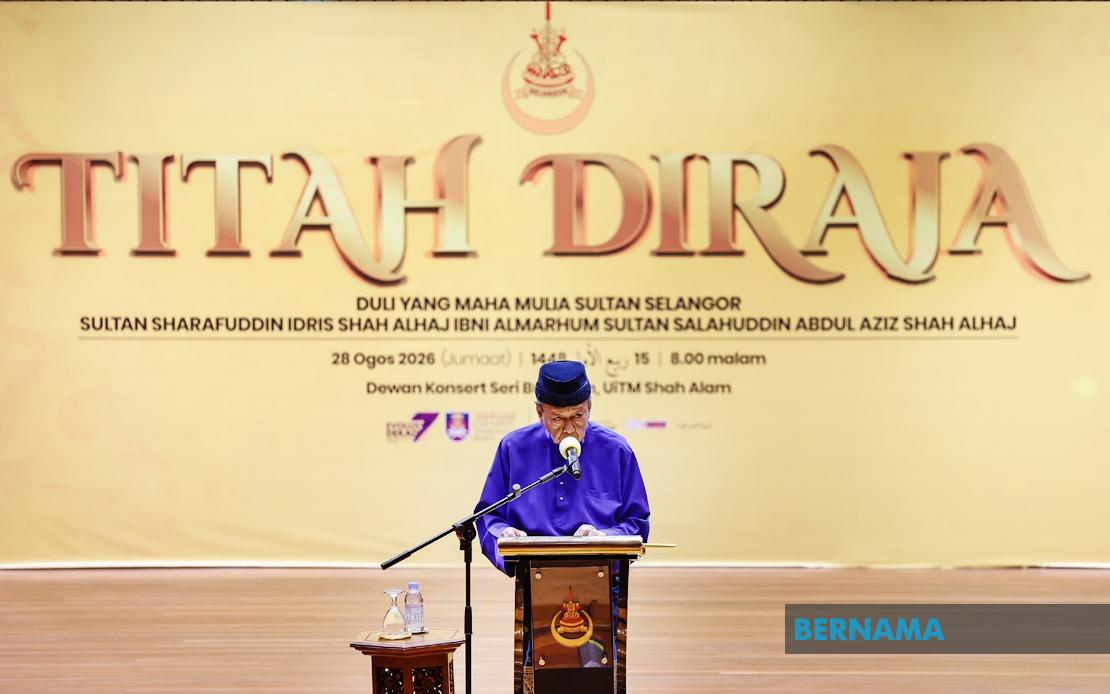
The Sultan of Selangor, Sultan Sharafuddin Idris Shah, has reaffirmed his commitment to ensuring that Universiti Teknologi MARA remains an institution fundamentally dedicated to serving underprivileged Malay and Bumiputera youth from low-income families and rural communities. Speaking at the UiTM 2026 Royal Address in Shah Alam, His Royal Highness emphasised that as the institution continues to expand and modernise, it must never lose sight of the economically disadvantaged communities for whom it was originally conceived.
The monarch's intervention highlights a growing concern within Malaysia's higher education sector about the risk that premier institutions can gradually drift away from their foundational missions as they scale up operations and pursue academic prestige. Sultan Sharafuddin articulated this dilemma with particular clarity, stressing that the children of farmers, fishermen, bus drivers, factory workers, and impoverished rural families deserve continued assurance that educational opportunity remains within their reach. This positioning reframes UiTM not merely as an academic institution but as a social contract with vulnerable populations whose members possess talent and determination but lack financial resources.
The historical trajectory UiTM has followed underscores just how transformative the institution has become. When established in 1965, the university enrolled approximately 219 students supported by just 11 teaching staff members. This modest beginning has evolved dramatically over six decades. Within ten years alone, enrolment had surged to nearly 7,000 students while the academic workforce expanded to approximately 1,000 personnel. The institution now produces more than 40,000 graduates annually and boasts an alumni network exceeding one million individuals, making it among Malaysia's largest repositories of educated talent.
Yet expansion brings pitfalls. As institutions grow larger and more complex, maintaining accessible entry points for economically marginal students becomes administratively challenging. Fee structures may creep upward, competitive entrance requirements may tighten, and institutional focus can unconsciously shift toward serving middle-class and elite constituencies whose children are better positioned to compete for admission. Sultan Sharafuddin's remarks suggest awareness that UiTM faces these pressures, and that explicit recommitment to its original constituency is necessary to prevent institutional drift.
To address this challenge, the Sultan proposed an innovative funding mechanism: a voluntary alumni contribution scheme whereby graduates commit to donating RM10 monthly or RM100 annually to their alma mater. While the amounts are modest individually, the aggregate impact could be substantial. With a million-strong alumni base, even partial uptake could generate approximately RM100 million annually, sufficient to create meaningful financial aid programs for struggling students while funding infrastructure and academic development. This approach transforms UiTM's graduate network from a passive constituency into an active philanthropic force.
The proposal carries particular significance for Southeast Asia's broader higher education landscape. Malaysia and neighbouring countries increasingly grapple with tensions between expanding access to university education and maintaining quality while ensuring financial sustainability. The alumni contribution model offers a template for institutions seeking to deepen ties between graduates and their universities while generating domestic funding streams less dependent on government allocations or international fee-paying students. Such schemes have succeeded elsewhere—notably in parts of India and the Philippines—where cultural and economic conditions resemble Malaysia's.
Higher Education Minister Datuk Seri Dr Zambry Abd Kadir's presence at the event signalled ministerial receptiveness to the Sultan's vision. Government endorsement matters considerably when institutions are asked to implement new funding mechanisms, particularly when those mechanisms rely on voluntary participation and goodwill rather than regulatory compulsion. The minister's attendance suggested tacit support for preserving UiTM's accessibility mission alongside institutional growth, a delicate balance the government must actively facilitate.
The Sultan's framing of UiTM's success is instructive for how Malaysia conceptualises educational achievement. Rather than emphasising raw metrics—student numbers, research output, or international rankings—he highlighted the diversity of careers and sectors into which UiTM graduates have penetrated. Accountants, engineers, doctors, lawyers, architects, entrepreneurs, civil servants, and media professionals constitute UiTM's footprint across Malaysian society. Many occupy leadership positions, establish businesses, create employment, and directly influence national development. This qualitative assessment recognises that an institution's true impact lies not in size but in how thoroughly it transforms individual life trajectories and contributes to national capability.
This broader perspective carries implications for how Malaysia evaluates its higher education system. As the country positions itself as a knowledge economy competing regionally and globally, balancing elite institutional aspirations with mass accessibility remains contentious. UiTM exemplifies this tension. The institution must simultaneously maintain sufficient academic standards to produce competitive graduates and preserve sufficient accessibility to justify its constitutional and moral standing as a Bumiputera institution. The Sultan's address reaffirms that accessibility is non-negotiable even as academic excellence is pursued.
The invocation of the "UiTM Dihatiku" motto—translating roughly as "UiTM in My Heart"—proved rhetorically significant. By connecting this emotional attachment to practical responsibility, the Sultan transformed sentiment into obligation. Alumni sentimentality, he suggested, should manifest as concrete financial contribution and active engagement with current student welfare. This reframes the relationship between institutional nostalgia and institutional duty, asking graduates to honour their experience through ongoing support.
Looking forward, several implementation challenges emerge. Will the alumni contribution system gain voluntary uptake, particularly among graduates working overseas or facing economic uncertainty? How will UiTM ensure that funds raised benefit the intended underprivileged cohort rather than becoming absorbed into general operating budgets? What accountability mechanisms will track whether the institution maintains its accessibility commitment as decades pass? These operational questions will determine whether the Sultan's vision translates into sustained institutional practice or remains an aspirational statement.
The Sultan's intervention also occurs within Malaysia's evolving conversation about affirmative action, meritocracy, and institutional equity. By emphasising that UiTM's purpose is enabling talented students from disadvantaged backgrounds—rather than simply preferring Bumiputera applicants regardless of ability—he articulated a defensible rationale for targeted institutional missions. This framing may prove increasingly important as Malaysia navigates regional and global pressures to justify ethnically-defined educational preferences in an era emphasising formal meritocracy.
Ultimately, Sultan Sharafuddin's address represents a clarion call for institutional memory and intentionality. Educational institutions, particularly large ones, face constant pressure to pursue rankings, revenue, and reputation through channels that may inadvertently exclude the communities they were established to serve. Explicit reaffirmation of foundational missions, coupled with concrete mechanisms to implement those missions, offers one pathway for preventing such drift. Whether UiTM heeds this call with sufficient vigour and creativity will shape not only the institution's future but also its contribution to Malaysian social mobility and regional higher education equity.

