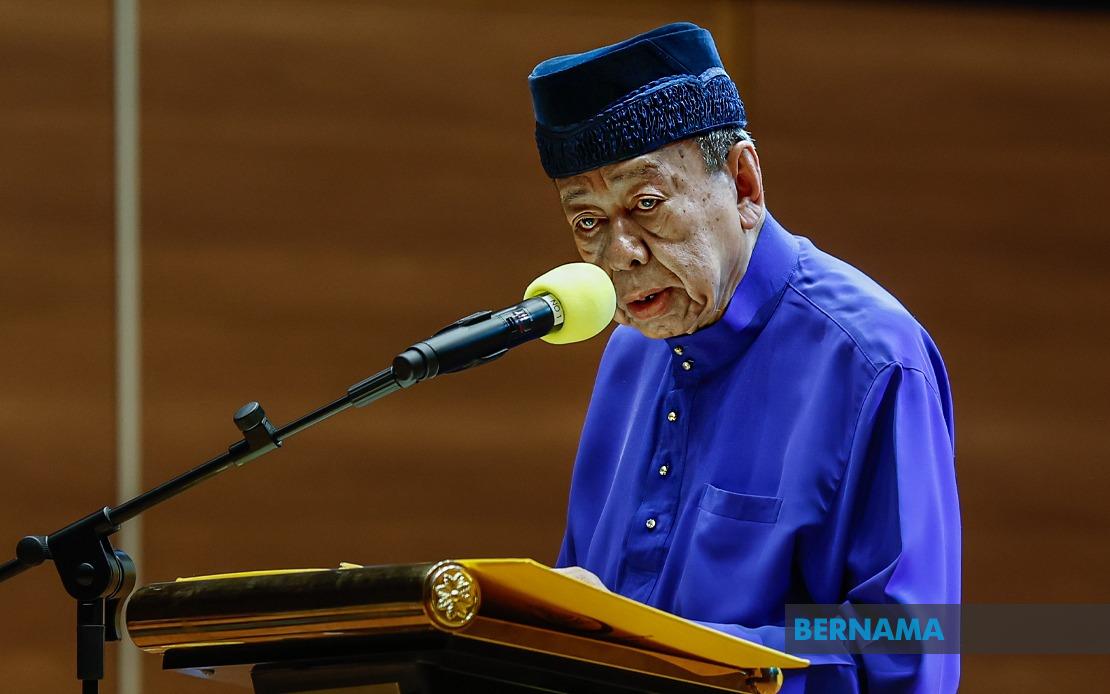
The Sultan of Selangor, Sultan Sharafuddin Idris Shah, has underscored the critical need for Universiti Teknologi MARA (UiTM) to continuously align its educational programmes with evolving global standards, emphasizing that institutional relevance determines graduate employability in an increasingly demanding international marketplace. Delivering his royal address at UiTM's 2026 convocation ceremony at the Seri Budiman Concert Hall in Shah Alam, the Sultan articulated a vision where the nation's premier Bumiputera-focused institution balances its founding constitutional mandate with the imperative to produce world-class professionals capable of competing at regional and global levels.
The Sultan identified critical academic domains requiring immediate attention and investment, particularly digital technology, artificial intelligence, science, engineering, medicine, finance, accounting, law, and creative industries. These fields represent not merely contemporary skill requirements but rather foundational pillars upon which Malaysia's future economic competitiveness will be built. The Sultan's emphasis on these sectors reflects a sophisticated understanding that economic diversification and technological advancement now determine national prosperity far more than traditional manufacturing or service sectors alone. His recognition of creative industries alongside technical fields signals acknowledgment that Malaysia's competitive advantage increasingly depends on fostering innovation across diverse knowledge domains.
Central to the Sultan's message was a fundamental reframing of what constitutes university success. He observed that whereas past generations measured achievement by simply gaining university admission, contemporary measures must focus on whether graduates possess the practical capabilities and confidence to excel in demanding professional environments. This distinction carries profound implications for how Malaysian universities structure curricula, assess learning outcomes, and prepare students for career transitions. The Sultan's observation suggests current graduation rates alone provide insufficient evidence of institutional effectiveness; rather, graduate trajectory, employment quality, and professional advancement offer more meaningful performance indicators.
Despite celebrating UiTM's well-documented track record in producing prominent national leaders and corporate figures, the Sultan cautioned against institutional complacency. He stressed that maintaining historical achievements requires continuous self-examination and willingness to identify and address institutional weaknesses. This frank acknowledgment from the royal patron carries weight within Malaysian governance contexts, effectively licensing institutional leadership to pursue necessary reforms without appearing to abandon institutional identity. The Sultan's balanced approach—praising accomplishments while demanding improvement—establishes credibility for his subsequent prescriptions regarding curriculum modernization and industry alignment.
A particularly significant element of the Sultan's address involved redirecting UiTM's graduate profile away from employment-seeking orientation toward entrepreneurship and wealth creation. Rather than celebrating graduates who fill professional positions within existing organizations, the Sultan advocated for producing innovators, business owners, and industry leaders who generate employment rather than merely seek it. This represents a consequential shift in institutional objectives, one that would require reimagining teaching methodologies, assessment frameworks, and student support systems. For Malaysian policymakers and educational administrators, this directive suggests UiTM should expand business incubation programmes, venture capital exposure, and practical entrepreneurship training alongside traditional academic instruction.
The Sultan emphasized language proficiency as a practical mechanism for enhancing graduate competitiveness, explicitly urging every UiTM student and graduate to achieve fluency in at least two foreign languages beyond Malay. This linguistic requirement addresses documented gaps between Malaysian graduate capabilities and international employer expectations. Such language mastery facilitates career mobility across Southeast Asia and beyond, enabling Malaysian professionals to compete for senior positions in multinational organizations and international institutions. The Sultan's specific articulation of this requirement provides clear institutional direction that can inform curriculum design and graduation requirements.
Crucially, the Sultan addressed potential tensions between UiTM's constitutional Bumiputera empowerment mandate and modernization imperatives. He grounded UiTM's founding purpose within the Federal Constitution itself, specifically referencing the Universiti Teknologi MARA Act 1976 and Article 153, demonstrating that Bumiputera advancement is not merely administrative policy but rather constitutional obligation. This framing carries significant political and legal weight within Malaysian governance structures, effectively insulating UiTM's core mission from critique while simultaneously creating space for curricular and operational innovation. The Sultan's approach enables institutional reform without requiring ideological compromise regarding Bumiputera empowerment objectives.
The Sultan further clarified that defending UiTM's constitutional purpose does not necessitate denying educational opportunities to other communities, as Malaysia maintains diverse higher education institutions serving all citizen groups. This nuanced position acknowledges Malaysia's multicultural context while affirming that persistent socioeconomic gaps between Bumiputera and non-Bumiputera populations justify continued targeted institutional support. For international observers and regional peer institutions, this explanation addresses potential accusations of institutional discrimination while maintaining principled commitment to equity objectives. The Sultan's reasoning suggests that UiTM's founding mandate remains incomplete given persistent educational and economic disparities requiring ongoing institutional focus.
The Sultan's insistence on strengthening university-industry relationships addresses a chronic weakness in Malaysian higher education generally. He explicitly warned against graduating academically credentialed individuals lacking practical workplace skills, professional confidence, or language capabilities valued by employers. This critique implies that current UiTM curricula may overemphasize theoretical knowledge while underweighting applied competencies and professional development. Implementing such industry collaboration requires institutional leadership to negotiate substantive partnerships with major employers, design curricula incorporating industry input, and establish internship and apprenticeship frameworks providing practical experience alongside theoretical instruction. For Southeast Asian higher education more broadly, the Sultan's observations reflect regional concerns that universities produce graduates misaligned with actual labor market requirements.
The Sultan's address carries implications extending beyond UiTM itself, potentially establishing precedent for how Malaysian national institutions should balance preservation of original missions with necessary modernization. His model suggests that constitutional or legislative foundations need not constrain institutional evolution but rather provide stable frameworks within which strategic advancement can proceed. This perspective may influence how other Bumiputera-focused or historically targeted institutions approach their own modernization challenges. Additionally, the Sultan's emphasis on entrepreneurship and job creation rather than employment-seeking reflects broader Malaysian policy concerns regarding employment quality, youth unemployment, and economic dynamism among Bumiputera communities.
Implementing the Sultan's vision will require UiTM leadership to navigate complex institutional change involving curriculum redesign, faculty development, infrastructure investment, and cultural shift within the organization. The royal endorsement of modernization provides political protection for such reforms, yet execution remains administratively challenging. Success will depend on institutional capacity to maintain educational quality during transformation, secure necessary financial resources, and cultivate faculty commitment to revised pedagogical approaches. For Malaysian stakeholders monitoring higher education development, UiTM's response to this royal directive will provide significant signals regarding the institution's adaptive capacity and commitment to contemporary excellence.

