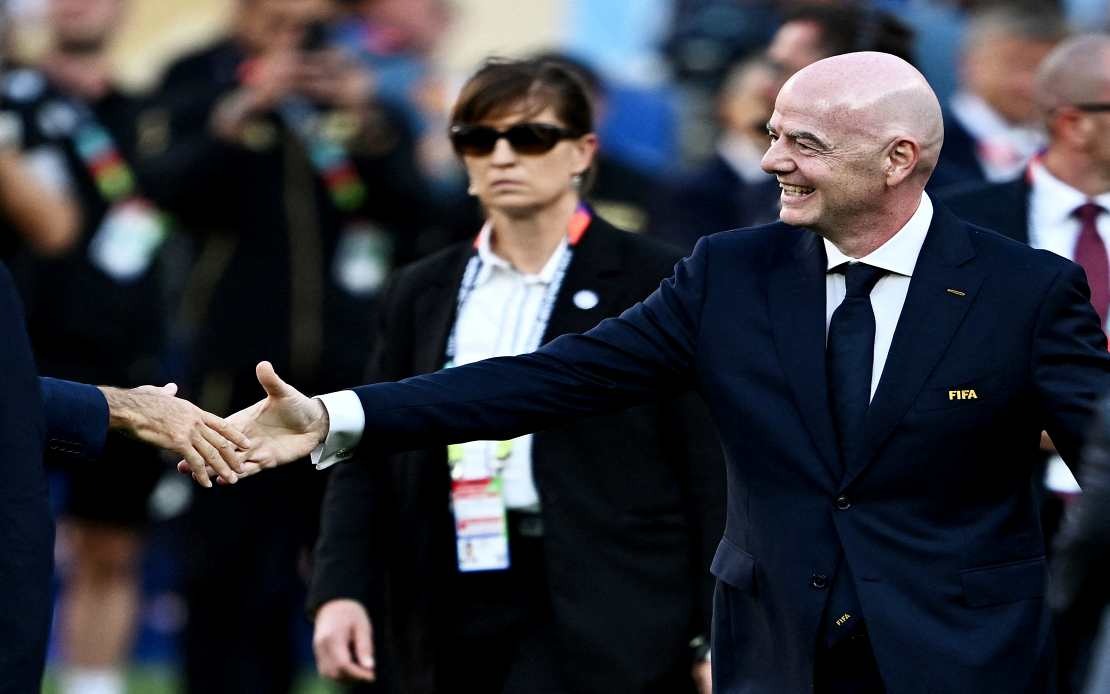
The Union of European Football Associations has escalated its confrontation with FIFA by formally notifying President Gianni Infantino that it intends to pursue legal proceedings over the contentious commercial rights proposal. In a written statement, UEFA declared it is actively considering lawsuits, arbitration, and regulatory complaints connected to FIFA's now-abandoned plan to monetise its broadcasting and commercial assets by selling stakes to private investors.
The dispute centres on FIFA's announcement in early August that it would raise approximately US$4.2 billion by offloading roughly 20 per cent ownership in a newly created entity designed to manage the organisation's media and commercial operations, encompassing World Cup broadcasting rights and ancillary revenues. Reports suggested Joshua Kushner's investment foundation was positioned to acquire these stakes, drawing immediate scrutiny given the investor's high-profile family connections to the Trump administration through his brother Jared Kushner, son-in-law of former US President Donald Trump.
UEFA's response was swift and forceful. Within days of FIFA's announcement, the continental governing body announced a full boycott of FIFA competitions by all member associations unless the proposal was completely withdrawn. This unified European stance represented an unprecedented challenge to FIFA's authority, signalling that even football's most established regional power was willing to sever ties over governance concerns. The threat of losing European participation would have fundamentally undermined FIFA's commercial viability, as European clubs and national teams generate enormous broadcasting revenue and competitive prestige.
Facing this unprecedented pressure, Infantino capitulated by Saturday evening, announcing that FIFA had abandoned the commercial rights sale initiative. The reversal represented a significant humiliation for the FIFA president, who had championed the scheme as essential for the organisation's modernisation. Behind the scenes, however, allegations emerged that the restructuring would have dramatically benefited Infantino personally, with reports indicating his annual compensation package would have expanded from 3 million euros to 30 million euros—a tenfold increase that raised serious questions about conflict of interest and governance standards within world football's governing body.
Despite Infantino's capitulation, UEFA's grievances extend far beyond the shelved proposal itself. The confederation issued a formal statement expressing loss of confidence in FIFA's leadership and vowing to pursue accountability for those responsible for devising and championing the plan. This suggests UEFA views the episode not as an isolated mistake but as symptomatic of deeper institutional problems within FIFA—questions about transparency, executive compensation, and the prioritisation of commercial interests over the sport's fundamental values and stakeholder interests.
UEFA's preservation notice to Infantino carries significant legal weight. The demand that FIFA and its president immediately identify and preserve all documents and electronically stored information related to the proposal establishes a formal record crucial to potential litigation. Such notices are standard in corporate and international disputes, designed to prevent the destruction or concealment of evidence that might prove damaging during legal proceedings. By issuing this notice now, UEFA is creating an irrefutable paper trail that could support future claims of impropriety or breach of FIFA's statutes.
The legal conflict reflects broader tensions within international football governance. For years, critics have questioned FIFA's accountability mechanisms, governance transparency, and the concentration of power within its executive structures. Infantino's tenure has been marked by significant reforms following the corruption scandals that engulfed his predecessor Sepp Blatter, yet controversies persist regarding decision-making processes and the distribution of revenues from football's most lucrative competitions.
For Southeast Asian football, this European dispute carries indirect implications. FIFA's commercial structure ultimately determines how revenues are distributed among continental confederations and eventually filtered to national associations. Any restructuring that concentrates wealth or decision-making authority could affect the resources available to developing football nations. Malaysia and other ASEAN members depend on FIFA funding mechanisms to support domestic league development, youth training programmes, and infrastructure investment.
The conflict also demonstrates the leverage that UEFA, representing wealthy established football nations, can exercise over global football governance. UEFA's ability to mobilise a boycott and force Infantino's retreat underscores the asymmetrical power dynamics within FIFA, where European and South American confederations control disproportionate commercial and political influence. Smaller confederations, including AFC which represents Asia, have historically wielded less bargaining power in disputes with FIFA's executive.
Moreover, the episode raises questions about FIFA's institutional resilience and the clarity of its governance protocols. The fact that a proposal of such magnitude and controversy could advance to public announcement before triggering adequate consultation with confederations suggests deficient internal processes. Proper governance would have involved extensive consultation with UEFA and other confederations before any commercial restructuring reached the announcement phase.
The preservation notice represents a crucial moment in this dispute. Should UEFA proceed with litigation, the documented communications and decision-making processes surrounding the commercial rights proposal will become subject to legal discovery. This could expose internal FIFA deliberations, Infantino's personal motivations, and the roles of other executives in championing the scheme. The resulting transparency, whether through litigation or settlement negotiations, could fundamentally reshape FIFA's governance arrangements and establish clearer limits on executive authority.
Looking ahead, the conflict signals that even FIFA's most powerful president cannot unilaterally pursue transformative financial schemes without consensus among its constituent confederations. UEFA's aggressive stance has effectively reclaimed a voice in FIFA governance after years of apparent marginalisation under Infantino's leadership. Whether this translates into structural reforms ensuring greater consultation and transparency in future decision-making remains unclear, but the confrontation has demonstrated that FIFA's governance legitimacy ultimately depends on maintaining support from its continental members.

