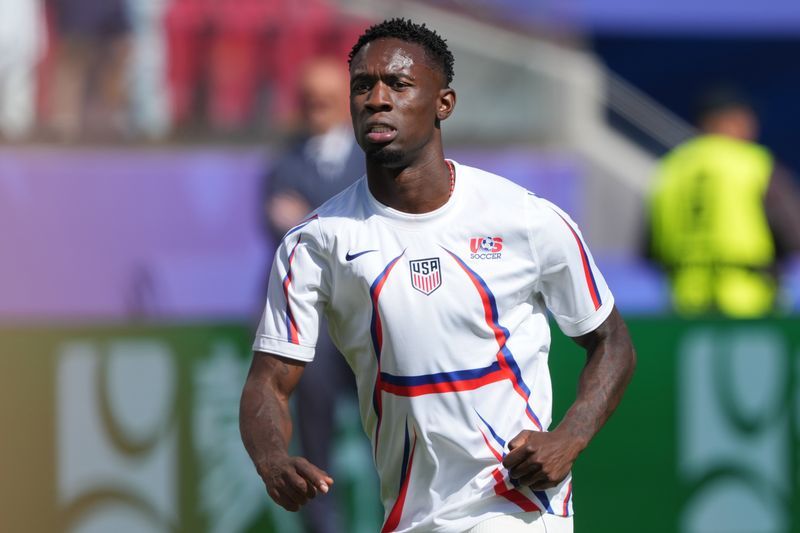
European football's governing body UEFA has issued a scathing rebuke of FIFA's choice to temporarily suspend a red-card ban imposed on United States striker Folarin Balogun, following an extraordinary intervention by American President Donald Trump requesting a review of the disciplinary matter. The move has exposed a fracture within world football's regulatory framework and sparked alarm among competing nations about the consistency of match-day enforcement.
UEFA stated in an official communication that it viewed the decision with "disbelief" and branded it "unprecedented, incomprehensible and unjustifiable." The European confederation's forceful language reflects deep concern that FIFA's willingness to reconsider disciplinary outcomes undermines the foundational principle that rules are applied uniformly, irrespective of political pressure or the stature of a player's nation. The statement warned that when governing bodies cannot be relied upon to uphold their own regulations consistently, the credibility of competitions themselves comes into question.
Balogun received a straight red card during the group stage match between the United States and Bosnia and Herzegovina after a VAR review determined he had deliberately dragged his studs down the back of Bosnia defender Tarik Muharemovic's leg. Under standard FIFA protocols, such a dismissal automatically triggers a one-match suspension, which would have prevented the American forward from participating in the round of 16 contest against Belgium. The incident itself was not ambiguous—it involved clear deliberate contact captured on video review.
FIFA's response to Trump's request was to suspend the implementation of the ban for a probationary period spanning one year, though the governing body preserved the red card on Balogun's record rather than expunging it entirely. This procedural middle ground appeared designed to satisfy the American President's request while maintaining nominal compliance with disciplinary protocol. However, the practical effect was identical to what Trump sought: Balogun was permitted to play in the knockout stage match that would otherwise have been unavailable to him.
The incident reveals the vulnerability of international sports governance to political intervention at the highest level. When a sitting head of state can successfully lobby for the review of a disciplinary decision captured on video evidence, it raises fundamental questions about whether the sport operates according to impartial standards or whether competitive outcomes can be influenced by diplomatic pressure and national power. For smaller nations and those without such high-level political access, the implications are troubling.
Belgium's football federation responded with official astonishment at FIFA's move, effectively protesting that its team would face an opponent in the knockout round who should have been unavailable due to a legitimate disciplinary sanction. The Royal Belgian Football Association subsequently lodged a formal appeal challenging FIFA's decision, seeking clarification on the grounds by which such exceptional circumstances could justify overturning automatic suspensions. Belgium's action signals that nations are prepared to escalate their objections through available channels.
FIFA has not yet publicly responded to the criticism from UEFA or Belgium, leaving the governing body's rationale for the decision unexplained in official channels. The silence itself speaks volumes—there is no principled argument readily available that justifies applying different standards to different players based on their national affiliation or the diplomatic weight of their country's leadership. Any explanation risks further exposing the politicization of what should be neutral enforcement mechanisms.
The broader implications for Southeast Asian football and developing nations are significant. If FIFA's disciplinary processes are susceptible to political pressure from major powers, then countries with less international influence face systemic disadvantage in their own competitions. Players and teams from wealthier, more politically prominent nations gain an unspoken advantage not derived from sporting merit but from institutional access. This undermines the fundamental principle that competitions should be decided on the field, not in diplomatic corridors.
The Balogun case also exposes tensions within FIFA's own governance structure. The organization presents itself as the neutral arbiter of global football, yet its decision-making processes appear opaque and subject to influence that lies outside the sport itself. For Malaysian football administrators and Southeast Asian federations monitoring how international bodies operate, the message is cautionary: the rules as written may not be the rules as applied, particularly when powerful national interests intervene.
UEFA's emphatic condemnation represents a rare moment of public institutional conflict within global football's hierarchy. The continental confederation is signaling that it will not remain silent when FIFA's actions appear to compromise competitive integrity. This positioning may encourage other regional bodies to scrutinize FIFA decisions more critically and to formally challenge outcomes that lack transparent justification.
Moving forward, this episode will likely intensify discussions about reforming FIFA's disciplinary processes to include greater transparency, appeals mechanisms with genuinely independent arbitration, and safeguards against political influence. Proposals for structural changes may emerge from the forthcoming FIFA congress, though meaningful reform faces entrenched resistance from those who benefit from the current opaque system.

