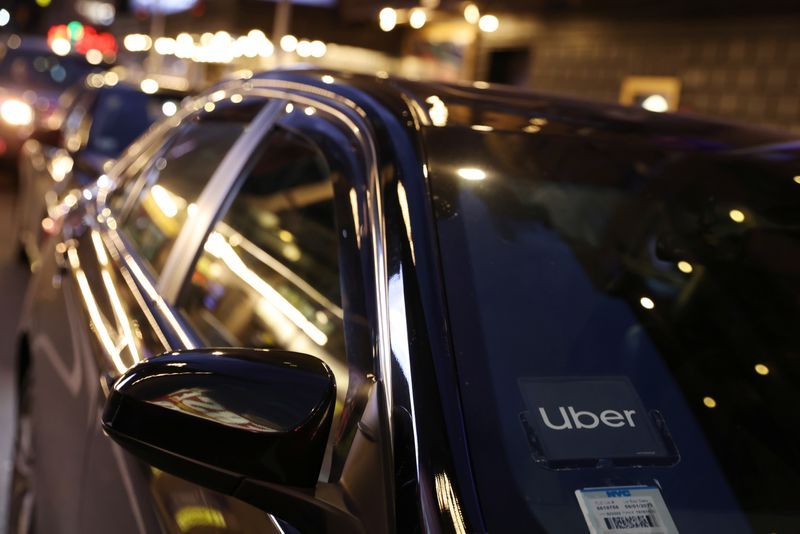
A shareholder derivative lawsuit filed in San Francisco federal court on Monday targets the board of Uber Technologies, alleging that management and directors systematically overlooked compliance obligations despite repeated internal and external warnings. The action, led by the Police and Fire Retirement System of the City of Detroit, underscores deepening corporate governance concerns at the ride-sharing giant, which has faced mounting legal and reputational challenges in recent years.
The shareholders' complaint characterises Uber as a "serial compliance offender" whose standing has been severely compromised by persistent negative media attention. Central to the allegations is the company's handling of sexual misconduct by drivers, an issue that has spawned an extraordinary volume of litigation. As of June 1, Uber confronted 3,571 active lawsuits in San Francisco federal court alone, each accusing drivers of sexual assault or harassment. The sheer scale of these cases suggests a systemic failure in vetting, monitoring, and removing dangerous drivers from the platform—functions that board oversight should theoretically prevent.
According to the complaint, board members repeatedly received intelligence from both internal sources and external observers flagging Uber's inadequate response to sexual abuse allegations. Despite these warnings, the directors allegedly took insufficient action to address the underlying safety deficiencies. This pattern of neglect extends beyond driver misconduct to encompass a broader catalogue of regulatory transgressions that culminated in federal enforcement action. Last year, the United States government sued Uber, alleging that the company routinely discriminated against disabled passengers by refusing service to individuals with service animals or stowable wheelchairs, while simultaneously engaging in deceptive billing practices and improper cancellation fees.
The lawsuit also highlights a troubling disconnect between Uber's public safety messaging and passenger perception. According to data presented to the board, fewer than 40 percent of users believe Uber takes safety seriously—a damaging indictment of the company's safety culture and external communications strategy. This metric suggests that even among regular users, confidence in Uber's commitment to passenger protection remains fragile, undermining the company's market position and brand equity in an increasingly competitive ride-sharing environment.
Chief Executive Dara Khosrowshahi stands as one of the named defendants in the action. The shareholders acknowledge that Khosrowshahi, who has held the position for nearly nine years, has adopted a somewhat less confrontational approach to regulatory boundaries compared to his predecessor. However, the complaint argues that despite this moderation in style, Khosrowshahi has nonetheless allowed cost-cutting to compromise compliance functions. This characterisation suggests that the governance problems transcend individual leadership personalities and reflect deeper institutional weaknesses in how the company prioritises legal and ethical obligations relative to operational efficiency and profitability.
The derivative lawsuit mechanism employed here is significant for Malaysian and regional investors monitoring Uber's corporate governance standards. Rather than seeking damages for individual shareholders, derivative suits attempt to compel corporate officials to repay breached fiduciary duties and remediate violations of federal securities law directly to the company itself. Success would require the court to find that the board failed in its fundamental duty to oversee material risks to the enterprise—a threshold that, while challenging to meet, reflects serious allegations of directorial negligence.
Uber's operational and legal travails are reflected in its share price performance. The company's valuation has declined by more than 25 percent since reaching a peak on September 22 of the previous year, eroding shareholder wealth and reflecting broader market scepticism about the sustainability of the business model and management's ability to navigate regulatory environments. For Malaysian institutional investors holding Uber stock, the decline underscores the financial consequences of governance failures and regulatory missteps.
Recent litigation between Uber and its primary competitor Lyft against New York City authorities illustrates the ongoing tension between the ride-sharing industry and regulators. Both companies challenged a new municipal law designed to facilitate the removal of drivers who pose safety threats to passengers. The fact that Uber actively litigated against measures ostensibly designed to enhance passenger safety creates a perverse optics problem: the company simultaneously faces thousands of sexual misconduct lawsuits while arguing against regulatory tools intended to exclude dangerous drivers from the platform.
For Southeast Asian regulators and stakeholders monitoring platform economy oversight, the Uber case offers cautionary lessons about the importance of robust early intervention in safety governance. The accumulation of 3,571 lawsuits reflects not an isolated problem but a systemic failure that, had proper compliance mechanisms existed and been enforced, might have been substantially mitigated. Countries in the region considering how to regulate ride-sharing and gig economy platforms can observe Uber's experience as a case study in how inadequate board oversight and compliance prioritisation can generate both human harm and shareholder value destruction.
The company declined to provide immediate comment on the lawsuit, and shareholder lawyers similarly did not respond to requests for statement. Uber's silence may reflect legal strategy—minimising public commentary during active litigation—but it also denies the company an immediate opportunity to rebut allegations or articulate its safety vision to stakeholders. As the case progresses through discovery and potential trial, the detailed evidence regarding what board members knew about compliance failures, when they knew it, and what actions they took in response will become central to assessing corporate accountability.