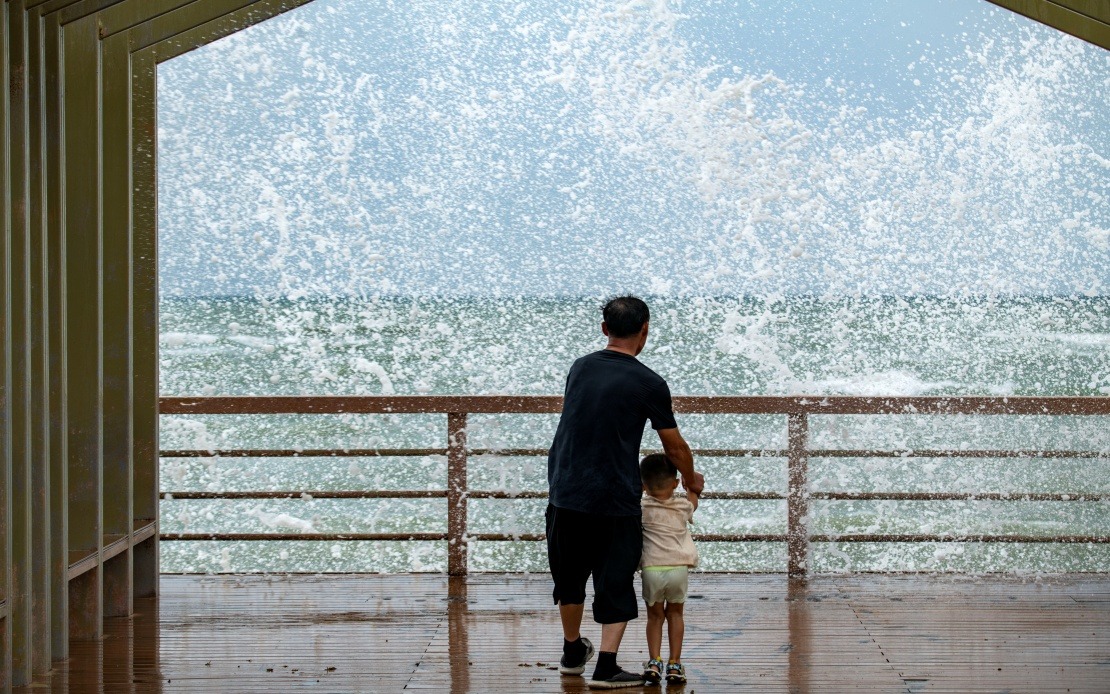
Typhoon Maysak made landfall on Friday evening along the coast of Hainan Province in southern China, delivering a significant blow to the region's transport infrastructure and daily operations. The storm, designated as the tenth typhoon of the year, came ashore at approximately 6.20 pm in Yelin Township within Lingshui Li Autonomous County, according to the provincial meteorological authority. At the moment of landfall, the system was packing maximum sustained winds of 23 metres per second near its centre, sufficient to cause considerable disruption across multiple transportation modes serving both the island province and the broader region.
The arrival of Typhoon Maysak triggered an immediate cascade of transport shutdowns that left thousands of travellers stranded and forced significant operational pauses across Hainan's key connection points. All railway services operating to and from the province were completely suspended for both Friday and Saturday, isolating the island from mainland rail networks. The suspension affected tens of thousands of passengers who had booked travel during what would normally be a busy period for inter-regional movement. Additionally, Sanya Phoenix International Airport, one of Hainan's busiest aviation hubs, halted all flight operations from 5 pm on Friday, stranding passengers at terminals and causing cascading cancellations for connecting journeys across China and beyond.
Maritime traffic across the Qiongzhou Strait, a crucial shipping corridor separating Hainan from Guangdong Province, ground to a standstill as ferry operators suspended all passenger and vehicle services beginning at 2 am on Friday. Authorities projected that this suspension would persist for one to two days depending on how quickly weather conditions stabilised, creating uncertainty for cargo operators and commuters relying on the strait as their primary crossing route. The ferry suspension was particularly consequential for the region's supply chains, as the strait represents a critical logistics corridor for goods flowing between the island and the mainland. Commercial interests dependent on timely delivery faced substantial cost implications from the extended closure.
Beyond transport disruptions, the typhoon's arrival forced the closure of educational institutions in heavily affected areas. Schools and childcare facilities throughout Sanya and Ledong Li Autonomous County were shuttered, affecting the education schedules of numerous students and creating childcare challenges for working parents across these communities. These closures reflected the serious hazard posed by wind, flooding, and debris that typhoons generate in populated areas, compelling local authorities to prioritise public safety over maintaining normal schedules.
Meteorological authorities tracking Typhoon Maysak indicated that the system would continue moving in a northwesterly direction after landfall, tracing a path across multiple population centres and geographic features within Hainan. The forecasted track showed the typhoon passing through Baoting, Wuzhishan, Baisha and Danzhou before ultimately entering the Beibu Gulf. This projected trajectory meant that inland areas of Hainan would experience heavy rainfall and wind impacts even as coastal regions experienced the most intense conditions at landfall. The passage through the interior would bring sustained precipitation that could trigger flooding and landslides in vulnerable terrain.
The timing and intensity of Typhoon Maysak underscores the vulnerability of southern China's transportation networks to tropical cyclone activity during peak storm season. Hainan Province, as an island jurisdiction heavily dependent on maritime and air transport for connectivity, faces particular exposure to typhoon disruptions that can rapidly isolate the region from surrounding territories. For Malaysian and broader Southeast Asian interests, the disruption serves as a reminder of how weather systems can rapidly disrupt regional supply chains and trade flows that extend throughout the South China Sea region.
The economic impact of transport suspensions extends beyond the immediate traveller inconvenience to affect businesses throughout Hainan and their partners in neighbouring provinces and overseas. Manufacturing operations reliant on just-in-time delivery face production delays, tourism operators must reschedule bookings, and exporters lose time-sensitive shipping windows. These ripple effects highlight how natural disasters in major Asian economies create cost pressures that ultimately spread throughout regional commerce and international trade networks.
For Southeast Asian nations monitoring the situation, Typhoon Maysak's landfall and subsequent behaviour provide important data points for regional meteorological understanding. The storm system affects weather patterns across a broader area, and its movement influences cyclonic activity patterns throughout the western Pacific. Malaysian meteorologists and disaster management authorities maintain close coordination with their Chinese counterparts during such events to anticipate secondary impacts that might reach Malaysian territory.
The suspension of Hainan's transport infrastructure, while expected during significant typhoon events, represents a substantial operational challenge given the province's strategic importance as China's southernmost major population and commercial centre. Recovery efforts typically require 48 to 72 hours following major typhoon passage, during which authorities must assess damage to transport infrastructure, clear debris from operational facilities, and gradually restore services to normal capacity. The economic cost of such disruptions accumulates across multiple sectors simultaneously, affecting not only immediate transport users but also broader supply chains and investment flows.

