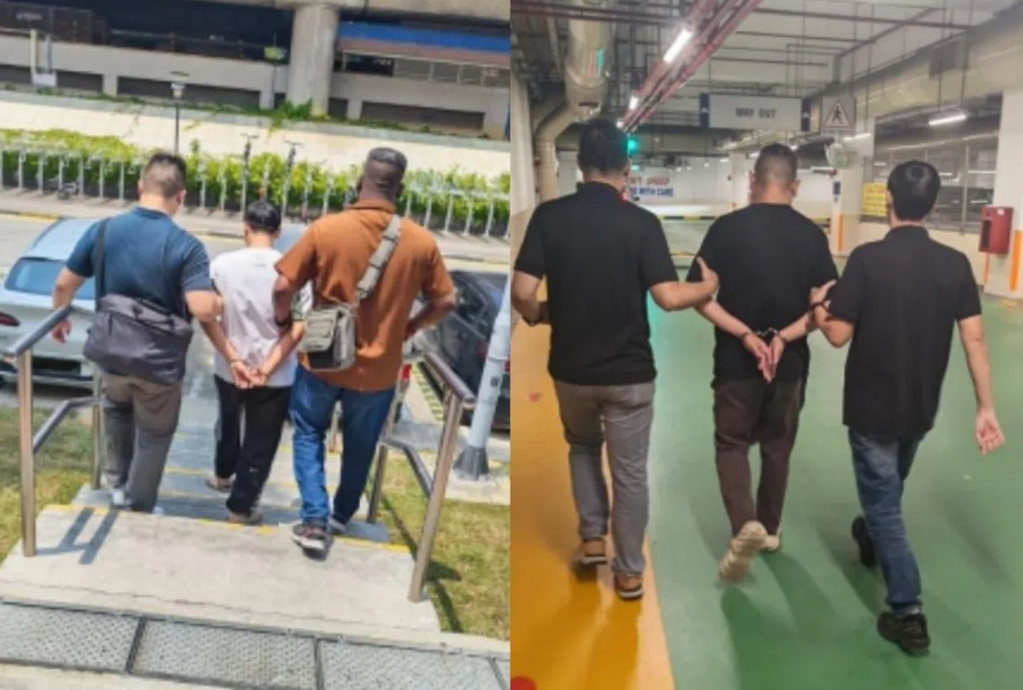
Singapore law enforcement has charged two Malaysian nationals employed at mobile phone retail outlets with orchestrating an identity theft operation that exploited compromised Singpass accounts to establish counterfeit digital payment wallets. The arrests on Tuesday followed a joint investigation by the police's Cyber Command and the Singpass Trust & Safety team at the Government Technology Agency of Singapore, uncovering a sprawling syndicate that weaponised stolen government login credentials for financial crime.
The two suspects, aged 25 and 47, are accused of systematically harvesting Singpass authentication details from their customers without consent, then weaponising those credentials to register LiquidPay accounts. LiquidPay is a digital wallet and payment platform developed by Liquid Group, a Singapore-based fintech company that allows users to store and transfer money electronically. The scheme gained access to customer identity documents and login information under the guise of providing legitimate retail services—in at least one documented case, a suspect offered to assist a customer updating Singpass details while simultaneously creating unauthorised payment accounts in that person's name.
The investigation exposed a chilling scale of compromise. Authorities discovered that more than 170 Singaporeans and foreign workers had their Singpass accounts linked to this illicit operation, with the fraudulently obtained credentials subsequently used to register over 160 counterfeit LiquidPay wallets. Critically, the account holders themselves remained completely unaware that their digital identities had been weaponised, highlighting how easily trusted government authentication systems can be exploited by insiders with legitimate retail access.
These illicit LiquidPay accounts functioned as money-laundering conduits for a broader scam ecosystem. Since March 2026, authorities have investigated at least 20 Singapore citizens and work permit holders involved in registering compromised LiquidPay accounts that collectively received S$110,063 in proceeds originating from various scam operations. The figure underscores how identity fraud acts as a critical infrastructure component for organised cybercrime, creating clean-seeming transaction pathways that criminals use to legitimise illegally obtained funds.
The two Malaysian workers represent a critical vulnerability in cross-border fraud prevention: frontline retail employees with legitimate access to customer identity documentation and authentication systems. Their position in Singapore's mobile phone retail sector granted them regular opportunities to obtain Singpass credentials through ostensibly routine customer service interactions, exploiting the trust customers naturally extend when updating account information. This insider-threat dimension distinguishes the case from typical phishing or hacking operations, suggesting sophisticated criminal coordination with knowledge of retail operational procedures.
Singapore's prosecution strategy targets the downstream end of the scam pipeline. The suspects face charges for assisting another to retain benefits from criminal conduct, an offence carrying imprisonment up to 10 years, fines reaching S$500,000, or both. The severity reflects how authorities view identity compromise and money-laundering facilitation as foundational crimes that enable the entire scam infrastructure—by cutting off the supply of functional money-laundering accounts, law enforcement disrupts the financial incentive structure that keeps scam operations operational.
The investigation simultaneously revealed a secondary vulnerability: Singaporeans and work permit holders voluntarily surrendering their Singpass credentials to third parties, either through coercion, manipulation, or deception. Authorities continue investigating this dimension, with offenders facing maximum three-year prison sentences and S$10,000 fines. This suggests that alongside the targeted insider threat, the scam ecosystem exploits psychological manipulation and social engineering to convince account holders themselves to relinquish authentication access—a pattern commonly associated with romance scams, investment fraud, and other schemes requiring ongoing account access.
For Malaysian authorities and the broader Southeast Asian region, the case illuminates how retail-sector employment can become a vector for organised cybercrime targeting neighbouring jurisdictions. The two suspects' ability to operate within Singapore's financial infrastructure while maintaining Malaysian employment suggests potential gaps in cross-border credential verification or insufficient background screening protocols for positions involving customer identity documentation. Regional financial regulators may need to examine whether similar vulnerabilities exist in Malaysia's own digital payment ecosystem, particularly given the expanding footprint of e-wallet services and increasing regulatory pressure to conduct Know Your Customer verification through retail channels.
The operation also underscores the sophisticated interdependencies within modern fraud networks. Scammers themselves do not necessarily handle the money-laundering infrastructure; instead, they cultivate relationships with individuals positioned to create legitimate-appearing transaction pathways. By recruiting retail employees or exploiting compromised account holders, criminal syndicates create plausible deniability while maintaining functional money-laundering capabilities. The investigation's discovery of involvement from 20 separate account registrants suggests the Singaporean suspects may have sold access to multiple downline operators rather than conducting the scams themselves.
LiquidPay and other fintech companies now face heightened scrutiny regarding account verification procedures. The creation of 160 fraudulent accounts suggests that either the platform's Know Your Customer mechanisms failed to detect identity mismatches, or that the verification process relied excessively on data already compromised through Singpass harvesting. Liquid Group and similar payment service providers will likely accelerate implementation of biometric verification, device fingerprinting, and anomalous transaction flagging to prevent accounts opened through stolen credentials from accumulating scam proceeds.
The case carries implications for Malaysian financial regulators overseeing domestic e-wallet services and payment platforms. As digital payment adoption accelerates across Malaysia, Singpass-style government authentication systems may increasingly serve as identity bridges for account registration across multiple financial services. If similar insider-threat vulnerabilities exist within Malaysia's Authentication and Document Management Units, or if fraudsters exploit compromised access tokens from government digital services, the resulting money-laundering vulnerability could reach comparable scale. The Singapore investigation provides an operational blueprint for how retail-sector insiders can weaponise legitimate identity access to undermine financial system integrity.
Beyond the immediate arrests, the investigation reflects Singapore's mature approach to treating identity compromise and financial crime as interconnected challenges requiring coordination between cybercrime specialists, government digital security units, and fintech companies. The joint operation involving the Cyber Command and the Government Technology Agency model demonstrates how state-level authentication infrastructure requires dedicated trust and safety teams. For Malaysia's developing digital payment ecosystem, establishing comparable coordination mechanisms between Bank Negara Malaysia, the Malaysian Communications and Multimedia Authority, and fintech operators may become essential as e-wallet usage expands and fraud sophistication grows.

