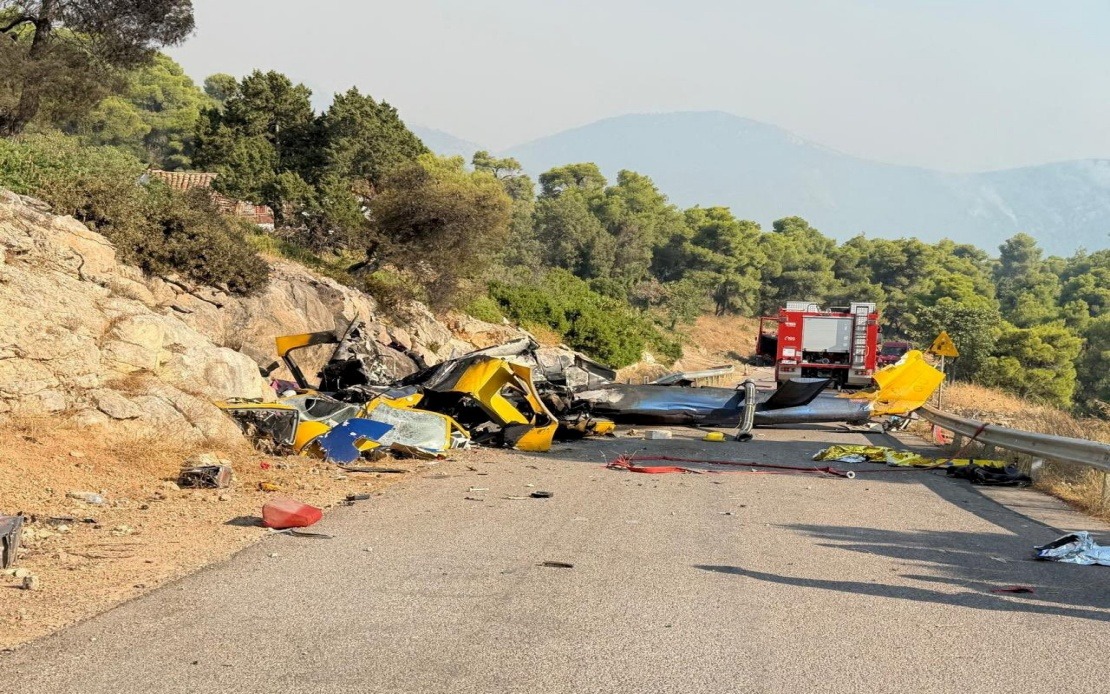
A tragic mid-air collision between two firefighting helicopters has claimed the lives of two crew members as Greece battles intense wildfires across multiple regions. The accident occurred on Sunday in western Attica as the aircraft were engaged in aerial firefighting operations against a major wildfire spreading across the Attica and Boeotia regions. Fire Service spokesperson Vassilis Vathrakogiannis confirmed at a press briefing that a Danish pilot and a Greek firefighting coordinator perished in the crash, while a British pilot and a second Greek firefighting coordinator survived the incident, with one of the survivors sustaining injuries.
Both aircraft involved in the collision were Bell helicopters that had been leased to support the extensive firefighting campaign across the fire-ravaged regions. Each helicopter was crewed by two personnel when they crashed near the coastal settlement of Psatha following the mid-air impact. The immediate aftermath of the accident triggered a comprehensive search and rescue operation as emergency services rushed to the scene to assist survivors and recover the deceased. The incident underscores the inherent dangers faced by aviation crews operating in challenging conditions while attempting to contain rapidly spreading wildfires.
Greek authorities have launched an investigation to determine the precise cause and circumstances surrounding the collision. Initial findings remain under wraps as investigators examine factors such as weather conditions, visibility, radio communications between the two aircraft, and any potential technical malfunctions that may have contributed to the tragedy. The collision represents a significant operational setback for Greece's firefighting efforts at a critical juncture when the country's emergency response capacity is already stretched to its limits.
The disaster comes as Greece faces an escalating wildfire crisis fueled by the combination of extreme heat, persistent drought conditions, and strong winds that have created ideal circumstances for rapid fire spread. Multiple large wildfires are simultaneously burning across different parts of the country, forcing authorities to deploy available resources—including aircraft, ground crews, and personnel from neighbouring regions—to multiple fronts simultaneously. The loss of two trained crew members and temporary disruption to aerial operations inevitably affects Greece's capacity to respond to the ongoing emergency.
The fatality of a Danish pilot highlights the international dimension of Mediterranean wildfire response operations. Many European nations maintain standby agreements to provide mutual assistance during major environmental disasters, and firefighting crews from various countries regularly coordinate efforts during peak fire seasons. The presence of a British pilot among the survivors further demonstrates how these cross-border operations pool expertise and resources to combat shared challenges across the region.
For Southeast Asian observers monitoring European crisis management, this incident illustrates vulnerabilities in coordinating complex aerial operations during high-stress emergencies. While Malaysia and other regional nations face different fire challenges—primarily peatland and forest fires during haze seasons—the operational principles remain relevant. Air traffic coordination in congested airspace, pilot fatigue in prolonged emergency operations, and equipment limitations under extreme conditions present universal safety concerns that transcend geography.
The collision also raises questions about whether current regulatory frameworks adequately address safety protocols when multiple aircraft operate in close proximity during emergency response missions. Civilian firefighting aviation operates under different rules than commercial air traffic, often involving lower altitudes, unpredictable flight patterns, and reduced separation standards that can increase collision risks. Greece will likely conduct a thorough safety review following this incident, potentially influencing how other nations structure their aerial firefighting programs.
As investigation proceeds, the immediate focus remains on supporting the injured survivor and processing the loss of two dedicated emergency responders. The families of the Danish pilot and Greek coordinator will receive official notifications, and their contributions to the ongoing firefighting mission will be recognized. Their deaths represent a sobering reminder of the human cost associated with managing natural disasters and the risks willingly undertaken by emergency personnel worldwide.
The incident occurs amid intensifying climate change impacts across the Mediterranean region, where rising temperatures and altered precipitation patterns have extended fire seasons and increased wildfire intensity. Greece, along with other Southern European nations including Spain, Portugal, and Italy, has experienced record-breaking fire seasons in recent years, pushing emergency response systems to breaking point. The helicopter collision during a major wildfire operation exemplifies how cascading crises can emerge when natural hazards overwhelm preparedness and response capacity.
International aviation safety bodies will likely examine the accident details when complete investigation findings are released, particularly regarding how emergency operations can be conducted more safely when multiple aircraft operate in the same airspace. Recommendations emerging from this incident could influence protocols adopted by other nations managing large-scale aerial firefighting campaigns. Meanwhile, Greece continues its battle against the spreading wildfires, operating with reduced aerial capacity while authorities work to prevent further tragedies during what remains an active fire season.

