Two members of France's firefighting services have perished while battling a fire that erupted near Bordeaux Airport in the country's southwest, French Interior Minister Laurent Nuñez confirmed to parliament in Paris on Tuesday. The tragic incident marks a sobering reminder of the dangers faced by emergency personnel responding to large-scale fires during periods of elevated fire risk across the region.
The fatal blaze engulfed two separate structures located on land adjacent to the airport's long-term parking facilities, according to reports from regional newspaper Sud Ouest. The fire's proximity to one of France's major transportation hubs created immediate operational challenges for both emergency responders and airport management, who were forced to implement contingency measures to maintain critical operations while simultaneously containing the threat.
The Gironde region, of which Bordeaux serves as the regional capital, currently operates under France's highest alert status—the red-level wildfire warning—due to the exceptionally dangerous conditions for forest fires prevailing across the area. This critical alert level reflects the extreme meteorological circumstances and dry conditions that have created a volatile environment for fire spread and intensity, making the work of emergency personnel particularly hazardous during this period.
Immediate impacts on airport operations necessitated swift decision-making by aviation authorities. Departing flights were temporarily halted as a precautionary measure, though the facility maintained its capacity to receive incoming aircraft. This asymmetrical approach to traffic management allowed the airport to continue receiving flights while eliminating the risk of additional aircraft departing into airspace affected by heavy smoke and emergency operations. An evening service scheduled for Munich was anticipated to proceed according to schedule, suggesting that containment efforts progressed sufficiently to restore partial normalcy relatively quickly.
The scale of the emergency response reflected the severity of the situation. Beyond the primary fire service personnel responding from the local authority, the airport's dedicated firefighting unit was mobilised to bolster response capabilities. Additionally, specialised firefighting aircraft were deployed to provide aerial assistance in suppressing the flames, a tactical decision indicating that ground-based resources alone proved insufficient for rapid containment.
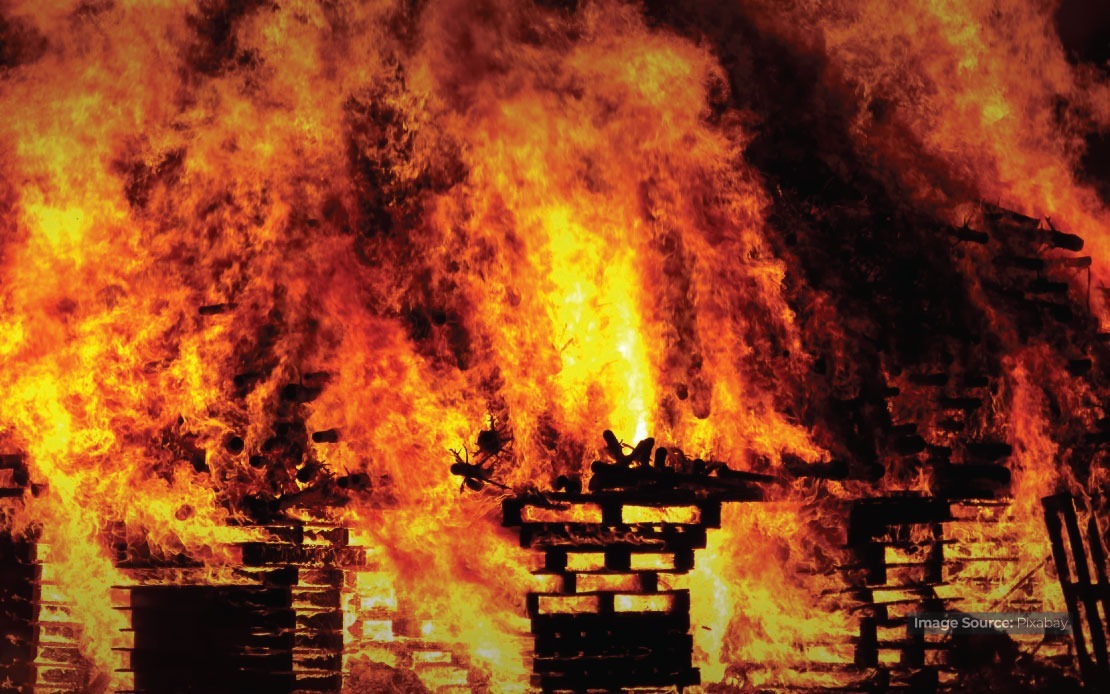
Visual evidence of the fire's intensity and scope extended across considerable distances. Massive plumes of smoke rose dramatically into the sky, remaining visible from Bordeaux city centre itself several kilometres away. This phenomenon underscored both the scale of the conflagration and the substantial quantities of combustible material involved in the blaze, while also highlighting the atmospheric dispersion challenges faced by residents across the broader metropolitan area.
For Malaysian and Southeast Asian observers, this incident carries particular relevance given the recurring transboundary haze and wildfire challenges that periodically afflict countries throughout this region. The deployment of specialised firefighting resources and the coordination between civilian emergency services and airport-based personnel demonstrates institutional preparedness frameworks that regional airports might examine for their own contingency planning. Many Southeast Asian airports operate in similarly vulnerable geographical locations where fire risk, compounded by climate variables, poses genuine operational and safety challenges.
The circumstances surrounding this tragedy also raise questions about occupational safety protocols during extreme weather emergencies. The deaths of two trained professionals executing their responsibilities during code-red alert conditions suggest that even comprehensive preparation and professional expertise cannot entirely mitigate the inherent dangers of fighting large-scale fires under conditions of maximal risk. This reality carries implications for how emergency services across all regions calibrate their risk assessment and personnel deployment strategies.
The incident at Bordeaux Airport represents not merely a localised disruption but reflects the broader European heat and drought situation that has intensified wildfire pressures across multiple countries this summer. As climate patterns continue shifting toward conditions favouring larger and more intense fire events, the experiences of French emergency services provide instructive lessons regarding resource allocation, inter-agency coordination, and the human costs associated with increasingly frequent extreme fire events that modern societies must confront.

