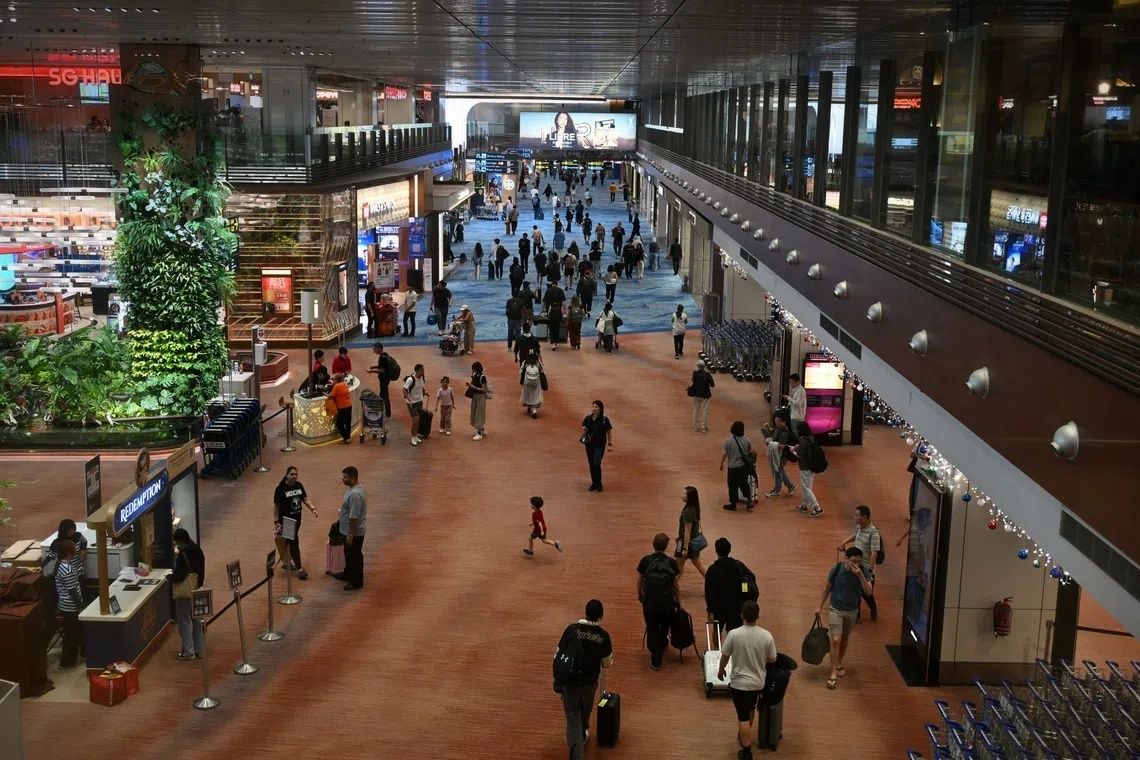
Singapore authorities have moved to prosecute two foreign nationals—a 37-year-old Australian and a 50-year-old American—for allegedly stealing perfumes from retail outlets at Changi Airport in distinct cases. Both men are scheduled to appear in court on August 17, according to a police statement issued on August 16, with charges relating to theft offences that carry potential sentences of up to seven years imprisonment, substantial fines, or both penalties combined.
The Australian suspect's alleged crime came to light in mid-November when a retail assistant working at a perfume counter in Terminal 2's transit zone discovered two boxes of branded perfume missing from a display shelf. Security camera footage subsequently revealed that the man had removed the items—valued at approximately $430—around 4:50pm before departing the store without payment. Despite the swift discovery of the theft, the suspect managed to leave Singapore before police could formally identify him from the recorded evidence.
What distinguishes this case is the remarkable delay in apprehension. The Australian man was not detained until August 4, more than eight months after the initial incident, when he returned to Changi Airport while in transit to another destination. This extended gap underscores the persistence of airport security operations and the capacity of law enforcement to track suspects across international borders, even when considerable time has elapsed since the alleged offence.
The second case unfolded more rapidly and involved the American national. Police received notification on August 5 at approximately 1:25am that a single box of perfume had vanished from a retail display in Terminal 1's transit area. CCTV analysis showed the man had taken the item—priced at over $310—around 12:40am and left without completing a transaction. However, unlike the Australian incident, airport police successfully intercepted the American suspect before he could board his departing flight, preventing his immediate escape from Singapore.
Subsequent investigation into the American's activities revealed a more extensive pattern of theft. Further examination of security footage across multiple retail locations in the transit zone established that he had stolen additional items from two other stores: a second box of perfume valued at approximately $170 and a perfume tester bottle worth more than $230. The combined value of all three stolen items exceeded $717, and authorities were able to recover the merchandise before it left the airport premises.
The contrast between these two cases illustrates different operational challenges faced by airport security personnel. The Australian situation demonstrates how retail theft can occur in transit areas where passengers move through quickly and may evade initial detection. The American case, meanwhile, shows how coordinated security response can prevent a suspected offender from completing their journey, though it also reveals how a single individual may commit multiple thefts across different outlets within the same facility.
For Malaysian readers and regional business operators, these incidents carry particular significance given that Changi Airport functions as a major regional transit hub connecting Southeast Asia to global markets. Perfume and luxury goods theft represents a persistent challenge at international airports, where high-value merchandise, transient populations, and complex security environments create conditions that certain individuals exploit. The incidents at Changi are not isolated occurrences but reflect broader trends in organised retail theft affecting major regional transportation infrastructure.
Assistant Commissioner of Police M. Malathi issued a statement emphasizing the seriousness with which Singapore law enforcement treats shop theft, particularly at critical infrastructure sites. He highlighted that contemporary CCTV technology, now ubiquitous across retail establishments, has substantially improved detection capabilities and serves as a powerful deterrent against such crimes. Critically, he underscored that even where suspects initially evade immediate capture, investigative persistence ultimately leads to identification and prosecution, a message clearly supported by the eight-month gap between the Australian man's theft and his arrest.
The commissioner's remarks point to a broader strategic approach where law enforcement agencies across the region increasingly leverage surveillance infrastructure, data sharing, and international cooperation protocols to pursue suspects who flee across borders. For legitimate retailers operating in Changi and similar regional facilities, this sends a reassuring signal about security investment returns. For potential offenders, the message is equally clear: the window for avoiding accountability has expanded but never closed entirely.
The airport police unit responsible for Changi has committed to intensifying collaboration with retail stakeholders, airport operators, and security partners to prevent further theft incidents. This multi-stakeholder approach recognises that security at major transit hubs requires coordination beyond traditional policing, incorporating private security, retail management, technology providers, and airport administration in comprehensive loss prevention strategies.
For Malaysian travellers and businesses, these cases underscore the importance of vigilance and proper security protocols when conducting retail operations at major regional airports. The incidents also highlight why robust CCTV systems, staff training in loss prevention, and rapid incident reporting remain essential investments. As Southeast Asia's aviation sector continues recovering and expanding post-pandemic, security excellence at facilities like Changi directly influences regional confidence in safe, secure travel and commerce.
The scheduled court appearance on August 17 will determine the precise charges and potential sentencing outcomes for both men. Regardless of the specific judicial determinations, these cases will likely feature prominently in regional aviation security discussions and may prompt renewed emphasis on collaborative loss prevention initiatives across Southeast Asian airports competing for the region's rapidly growing passenger and cargo markets.

