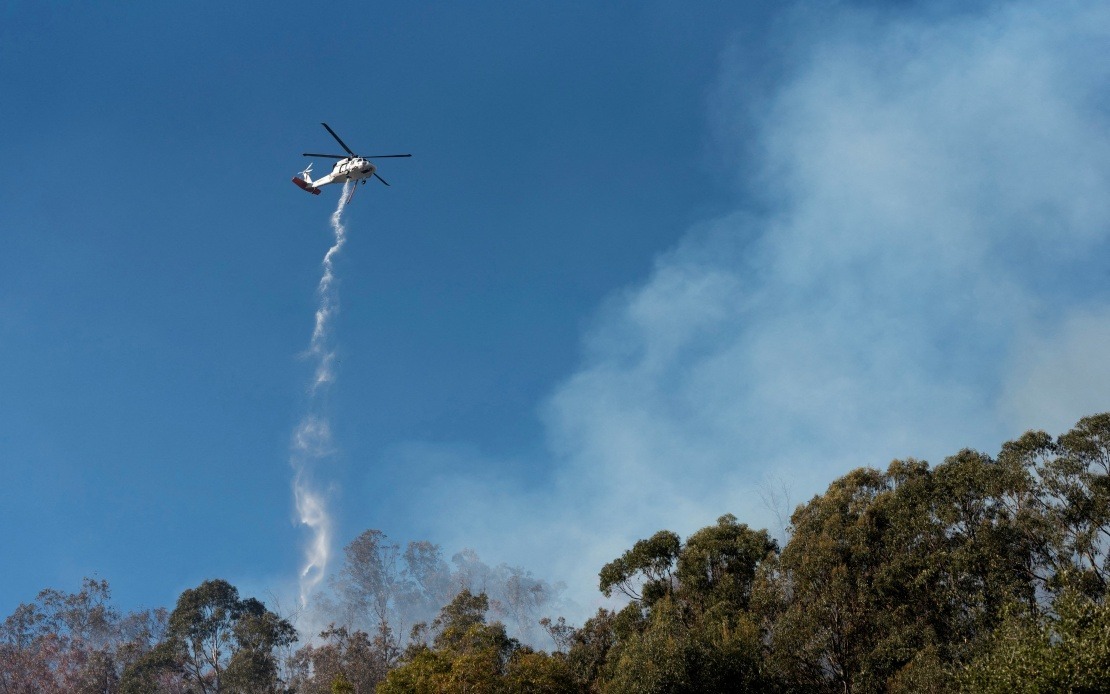
A tragedy struck firefighting operations in central Utah when a helicopter supporting wildfire suppression efforts crashed, claiming the lives of two crew members including the pilot. Authorities confirmed the fatal accident occurred Friday morning near Richfield as personnel worked to contain one of the state's most destructive wildfires this year. The incident marks a sobering reminder of the hazards that aerial firefighting teams face regularly across the western United States, where wildfire seasons have grown increasingly severe and prolonged in recent years.
The National Interagency Fire Centre identified the aircraft as a Sikorsky S-64 operating under contract with the US Forest Service. The crash occurred approximately 10 am local time on Friday while the helicopter was engaged in active firefighting operations supporting the Widemouth 2 Fire. The Federal Aviation Administration confirmed the incident, though the identities of the deceased pilot and crew member have not yet been released as authorities continue their notification process.
Investigation into the circumstances surrounding the crash has fallen to the National Transportation Safety Board, which is treating the incident as a priority inquiry. Preliminary findings indicate the helicopter encountered unknown conditions while operating in remote mountainous terrain during active suppression work. The investigation will focus on potential contributing factors including weather patterns, mechanical systems, operational conditions, and the specific firefighting procedures being conducted at the moment of the accident.
Emergency responders faced substantial obstacles in accessing the wreckage due to the challenging landscape and ongoing fire activity in the region. The inaccessible nature of the crash site, combined with rugged topography and active flames spreading across the area, created a complex rescue scenario that prevented immediate recovery operations. Complicating matters further, the helicopter impact itself sparked additional fires in surrounding vegetation, expanding the overall burn perimeter and creating fresh safety hazards for ground and aerial crews attempting to reach the crash location.
Utah Governor Spencer Cox released a statement acknowledging the grave risks inherent in wildland firefighting operations. He emphasized that personnel engaging in such work occupy one of the world's most perilous professions, accepting extraordinary personal danger to protect communities and natural resources. Cox called for residents and media to provide investigators and emergency responders the necessary time and operational space to conduct their work effectively during this ongoing response phase.
The Widemouth 2 Fire originated on July 27 when lightning ignited vegetation across the Fishlake National Forest in the Kanosh area of central Utah. The fire emerged during particularly challenging weather conditions characterized by elevated temperatures, sustained drought stress, and unpredictable wind patterns. These meteorological factors enabled rapid expansion of the fire's perimeter across dry timber, brush, and grassland, ultimately forcing evacuation of nearby residential areas and destroying at least six structures.
As of the latest reporting, the Widemouth 2 Fire had consumed more than 114,000 acres, equivalent to approximately 461 square kilometres, with containment efforts reaching only 24 percent completion. Utah Fire Info, the interagency public information system coordinating wildfire data across the state, tracks ongoing suppression progress and resource allocation. The scale and intensity of this fire position it among Utah's most significant wildfire incidents for the current year, reflecting the broader trend of increasingly destructive and expansive fires throughout the western United States.
The crash underscores the critical role that specialized aviation resources play in modern wildfire suppression. Helicopter-based operations, including water and fire retardant drops, provide tactical advantages in reaching inaccessible terrain and delivering resources where ground-based equipment cannot operate effectively. However, these operations carry inherent risks that operators and crews understand but accept as part of their professional commitment to protecting lives and property.
For Malaysia and Southeast Asian observers, the Utah incident reflects a growing global phenomenon as climate patterns shift and environmental conditions intensify fire seasons across multiple continents. While Southeast Asia's tropical climate differs substantially from Utah's arid landscape, the region faces increasing wildfire challenges, particularly during dry seasons when agricultural burning, drought conditions, and land-use practices converge to create hazardous situations. The professionalism and sacrifice demonstrated by Utah's firefighting community offer valuable perspectives on comprehensive wildfire management approaches that integrated risk assessment, resource deployment, and personnel safety protocols.
The coming weeks will determine whether investigators identify specific mechanical, environmental, or operational factors that contributed to the helicopter's loss. Regardless of investigation findings, the incident will likely influence future aerial firefighting operations, potentially leading to enhanced safety procedures, equipment modifications, or operational constraints designed to protect the brave personnel upon whom western states depend for wildfire suppression during increasingly challenging fire seasons.

