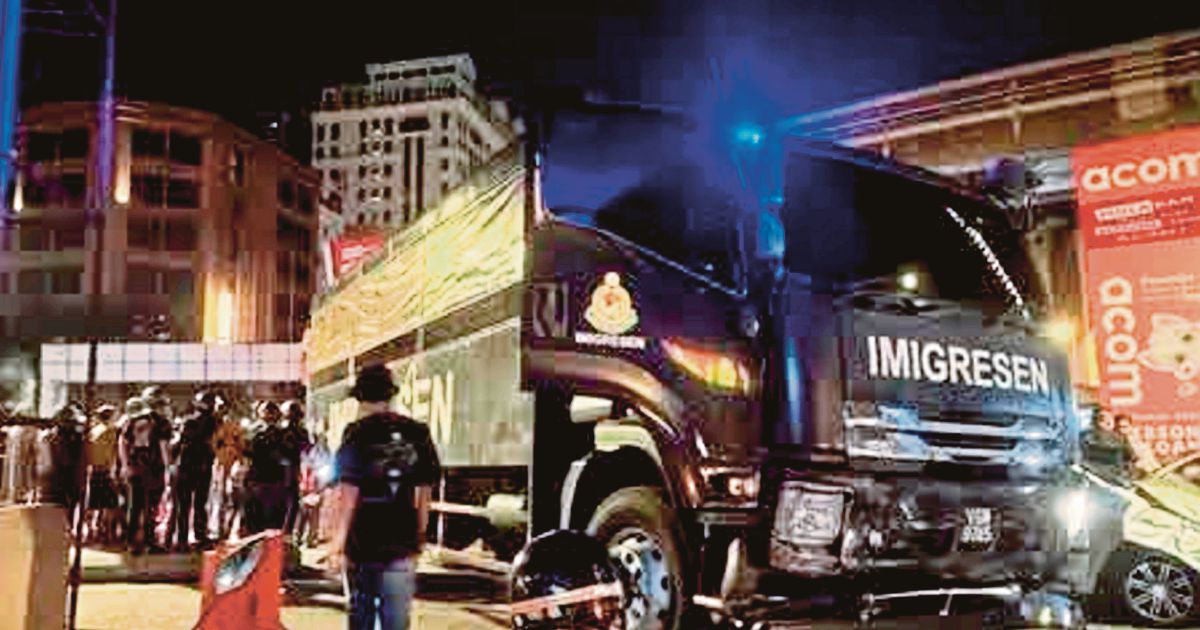
Kuala Lumpur police have taken two drivers into remand custody as investigations continue into a catastrophic road collision that claimed three lives in the early hours of this morning. The accident, which unfolded along Jalan Sultan Ismail, involved a lorry operated by the Immigration Department and resulted in the deaths of a father and his two daughters—a tragedy that has prompted immediate police action and a formal investigation into the circumstances surrounding the incident.
The remand of both drivers signals the police's commitment to determining the exact sequence of events that led to the fatal crash. Malaysian authorities typically employ remand procedures in serious traffic fatalities to allow sufficient time for comprehensive investigations, including witness interviews, vehicle inspections, and forensic analysis. This investigative period is crucial in establishing whether traffic violations, mechanical failures, or other contributory factors played a role in the collision.
Investigations of this magnitude typically involve multiple police divisions and specialist units. The Traffic Investigation and Enforcement Department, in conjunction with local district police, would have been mobilized to the scene. Preliminary examination of both vehicles, skid marks, road conditions, and any available CCTV footage from surrounding businesses forms the backbone of the initial phase. Vehicle speed, driver awareness, and adherence to traffic regulations are standard areas of scrutiny in such cases.
The involvement of a government vehicle—specifically one operated by the Immigration Department—adds another dimension to the investigation. Official vehicles are subject to specific maintenance and safety standards, and inquiries would naturally extend to whether the lorry had undergone recent servicing, whether mechanical issues were documented, and whether the driver held appropriate qualifications for operating such a vehicle.
The location of the incident on Jalan Sultan Ismail, a major thoroughfare in Kuala Lumpur's business district, raises questions about traffic density and visibility at the time of the collision. Early morning traffic patterns differ significantly from peak hours, and investigators would need to assess whether reduced congestion inadvertently contributed to higher vehicle speeds. Road design, street lighting, and signage at the collision point would all form part of the comprehensive scene analysis.
Fatalities involving parents and children represent some of the most traumatic incidents Malaysian emergency services encounter. The death of a father alongside his two daughters underscores the human cost of road accidents and typically galvanizes public discussion around vehicle safety, driver conduct, and road infrastructure standards. Such tragedies frequently prompt calls for enhanced enforcement of traffic laws and improved road safety measures across the nation.
Police remand procedures in Malaysia are governed by established procedures that typically allow for extensions subject to court approval. During this period, both drivers will be questioned regarding their actions immediately preceding the collision, their driving histories, any medical or vision-related issues that might have contributed to the incident, and their familiarity with the route. Drug and alcohol screening would routinely be conducted as well.
The public and emergency response in Kuala Lumpur was activated swiftly, with medical personnel dispatched to provide assistance to survivors and remove casualties. The police's rapid detention of both drivers reflects standard protocol for serious traffic incidents and demonstrates the severity with which authorities treat fatal road collisions. Public interest in such cases remains high, particularly when government vehicles and multiple fatalities are involved.
Road safety remains a persistent concern across Malaysia and Southeast Asia more broadly. Official statistics consistently identify human factors—including speeding, fatigue, and inattention—as leading contributors to fatal accidents. The incident on Jalan Sultan Ismail serves as another stark reminder of the consequences when preventable errors occur on busy urban roads where vehicles traveling at speed can interact unpredictably with civilian populations.
The investigation's outcomes will likely influence ongoing discussions within the Immigration Department regarding vehicle safety protocols and driver training requirements. Government agencies, like private operators, face increasing pressure to demonstrate that they maintain vehicles to the highest standards and that their drivers receive comprehensive safety instruction appropriate to the vehicles they operate and the roads they travel.
As the remand continues and investigators piece together evidence from the scene, families affected by the collision face an unimaginable loss. The broader Malaysian community watches closely for conclusions about how this tragedy occurred and what preventive measures might ensure such incidents become less frequent. The coming days will likely reveal additional details about the circumstances, mechanical condition of both vehicles involved, and driver factors that contributed to this fatal collision on one of Kuala Lumpur's principal streets.

