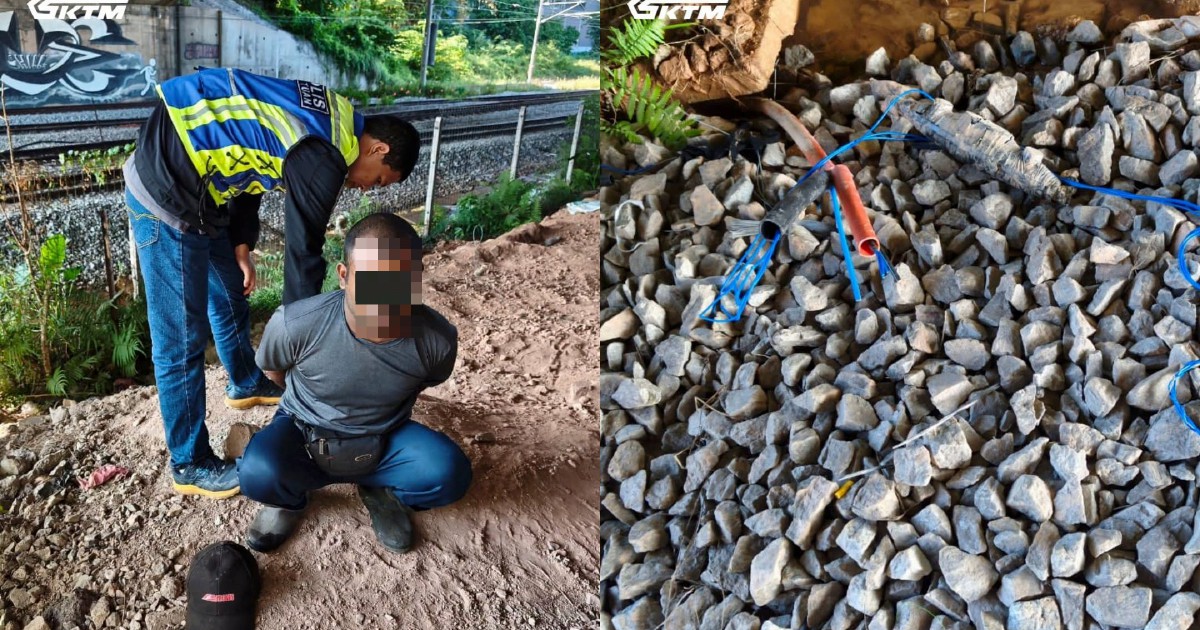
Two individuals were apprehended in Shah Alam yesterday after KTMB auxiliary policemen caught them in the act of stealing railway cables, marking the latest incident in a troubling pattern of infrastructure theft affecting Keretapi Tanah Melayu Bhd operations across the Klang Valley.
The arrests reflect the persistent challenge facing Malaysia's primary railway operator, which has increasingly become the target of organised cable theft rings seeking to profit from the scrap metal market. Railway cables, particularly copper-based conductors used in signalling and power distribution systems, command premium prices in the secondary metal trade, making them attractive targets for opportunistic and organised criminal groups alike.
Theft of railway infrastructure poses significant operational risks to KTMB's network, potentially disrupting service schedules and compromising passenger safety. Signal cable theft can degrade communication between train control centres and moving trains, while power supply cable theft affects lighting, climate control, and other essential passenger amenities. Beyond immediate service disruptions, such thefts necessitate expensive repairs and replacement, diverting resources from maintenance and infrastructure improvement programmes.
The incident in Shah Alam is particularly significant given the area's proximity to major KTMB routes, including the Seremban Line and other key corridors serving the greater Kuala Lumpur metropolitan area. Shah Alam's location along crucial commuter railway infrastructure makes it a recurring hotspot for such criminal activity, with multiple theft incidents recorded in recent years along accessible sections of the rail network.
KTMB's auxiliary police force has been tasked with addressing this growing menace through increased patrols and surveillance along vulnerable sections of the network. The auxiliary police unit, comprising both uniformed and plainclothes officers, works alongside civil authorities to deter theft and apprehend suspects. However, the continued incidence of such crimes suggests that current deterrence measures require enhancement, possibly through additional manpower, enhanced surveillance technology, and better coordination with local police units.
The scrap metal trade has become an enabling factor in cable theft operations across Southeast Asia. Recycling centres and metal dealers, whether operating knowingly or through negligence regarding the provenance of materials, have inadvertently created a market for stolen railway infrastructure. Malaysia's regulatory framework governing metal recycling businesses has gradually tightened, though enforcement remains uneven across different states, creating opportunities for criminals to offload stolen materials in lower-enforcement jurisdictions.
Investigations by KTMB and relevant authorities typically focus on establishing whether such thefts are committed by opportunistic individuals or organised syndicates with wider distribution networks. The timing and location of thefts, along with the sophistication of removal methods, often indicate the involvement of coordinated criminal groups with established relationships at recycling facilities and possession of necessary cutting equipment.
For commuters relying on KTMB services, cable theft creates unpredictability in train schedules and potential service disruptions. The operator has sought to manage this through improved maintenance scheduling and investment in more secure installations at high-risk locations. Some sections of the network have been fitted with additional protective measures, though comprehensively securing the entire KTMB network against determined theft remains technically challenging and resource-intensive.
The broader context of infrastructure theft in Malaysia extends beyond railways. Copper cable theft affects telecommunications networks, electrical grids, and water utility systems, representing a significant hidden cost to the national economy. When aggregated across sectors, the annual financial impact of metal infrastructure theft runs into millions of ringgit, ultimately borne by utility consumers through tariff structures.
Regional coordination with neighbouring countries may offer additional avenues for combating this problem. Thailand and Singapore have implemented more stringent metal dealing regulations and enhanced enforcement mechanisms that have demonstrably reduced cable theft rates. Malaysia's law enforcement agencies have been studying such approaches, though implementation requires legislative changes and sustained commitment to enforcement.
The arrests in Shah Alam demonstrate that KTMB's auxiliary police remain active in responding to such crimes. However, sustained reduction in infrastructure theft requires a multi-pronged approach encompassing enhanced security measures, stricter regulation of metal recycling businesses, public awareness campaigns, and tougher penalties for offenders. Community engagement programmes encouraging residents to report suspicious activity along railway corridors have also shown promise in selected areas.
Longer-term solutions involve examining the economic incentives driving individuals toward cable theft. High scrap metal prices, unemployment, and limited economic opportunities in certain communities have historically driven participation in such activities. Addressing root causes through targeted economic development and skills training programmes in high-risk areas could complement law enforcement responses.
KTMB continues to appeal to the public for vigilance and encourages reporting of suspicious activities along railway corridors. Authorities emphasise that cable theft not only harms railway operations but endangers the safety of both perpetrators and innocent bystanders, as removing live electrical cables creates electrocution hazards and can trigger uncontrolled electrical discharges.

