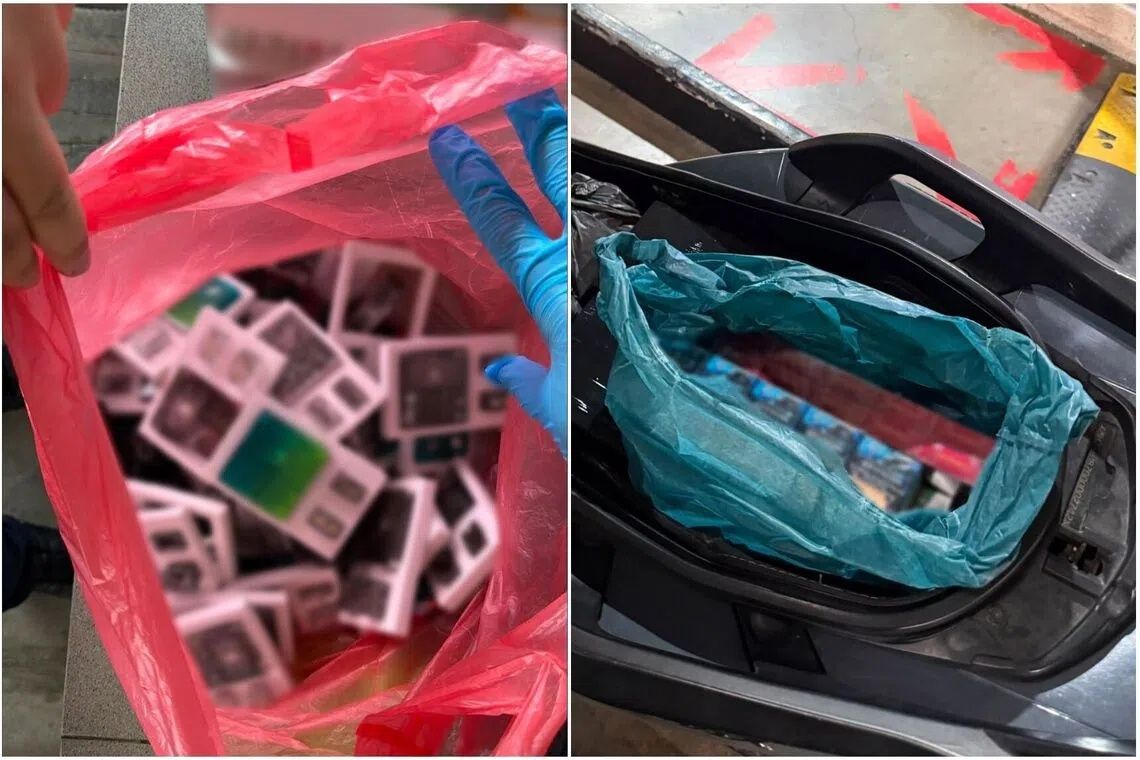
Enforcement officers at Singapore's Woodlands Checkpoint have arrested two men in connection with separate smuggling operations targeting duty-unpaid cigarettes and vaping devices, highlighting ongoing challenges at one of Southeast Asia's busiest land borders. The Immigration and Checkpoints Authority disclosed the arrests following incidents on August 3 and 4, when enhanced screening procedures uncovered contraband concealed within motorcycle storage compartments and beneath seats.
The first incident, occurring on August 3, involved a Malaysia-registered motorcycle that underwent enhanced inspection at the checkpoint. Officers discovered more than 30 packets of cigarettes on which excise duties had not been paid, alongside over 60 vaping devices and associated components methodically hidden within the motorcycle's storage box. The sophisticated concealment approach suggests deliberate planning to evade detection, with smugglers distributing contraband across multiple compartments to reduce the likelihood of discovery during routine checks.
A subsequent operation the following day yielded an even larger haul. When officers searched a Singapore-registered motorcycle, they uncovered 25 cartons and an additional 30 packets of duty-unpaid cigarettes, along with over 60 vaping devices. Similar to the previous case, smugglers had concealed the prohibited items beneath the vehicle's seat and within storage boxes, employing comparable tactics to move contraband across the international boundary.
Authorities identified a 46-year-old Malaysian national and a 51-year-old Singapore citizen as the individuals responsible for the smuggling attempts. The diversity of the accused—spanning both nationalities and age groups—underscores the cross-border nature of illicit tobacco and vaping product trafficking in the region. Such operations frequently involve coordinated efforts between individuals on opposite sides of the Malaysia-Singapore border, facilitating the movement of contraband from regions with lower tax regimes into higher-taxed jurisdictions.
Following their apprehension, both suspects and the seized materials were transferred to Singapore Customs and the Health Sciences Authority for comprehensive investigation. This multi-agency approach reflects the complexity of such cases, requiring coordination between border security, tax authorities, and health regulators to establish the full scope of the smuggling network and identify potential supply chains.
Singapore's legal framework imposes severe penalties designed to deter such activities. Individuals found culpable of purchasing, selling, conveying, delivering, storing, keeping, possessing, or engaging in trade involving duty-unpaid cigarettes face financial penalties reaching 40 times the evaded duty and tax amount, imprisonment for up to six years, or both sanctions combined. The severity reflects the substantial revenue loss generated by large-scale cigarette smuggling operations.
The vehicles utilised in executing these offences represent additional targets for government action, as Singapore law permits forfeiture of motorcycles and other transportation used in perpetrating duty-related crimes. This provision removes the financial incentive for smugglers who might otherwise consider vehicles expendable operational costs, fundamentally altering the risk-benefit calculation underlying smuggling enterprises.
Vaping products occupy a distinct regulatory category in Singapore, where they are prohibited outright rather than merely subject to taxation. Consumers apprehended possessing vaping devices face fines reaching $10,000, establishing a steep financial disincentive for personal use. Individuals engaged in commercial sale of vapes confront substantially harsher consequences, including fines extending to $200,000 alongside imprisonment for up to six years, effectively treating vape distribution as a serious commercial crime.
For individuals specifically involved in smuggling vaping products across borders, penalties escalate further. Smugglers convicted of importing vapes can incur fines up to $300,000 and face imprisonment not exceeding nine years. The heightened penalties for smuggling compared to distribution reflect authorities' recognition that cross-border smuggling operations represent the primary threat vector for illicit vaping products entering the jurisdiction.
Foreigners apprehended for vaping-related offences face additional jeopardy beyond standard criminal penalties. Repeat offenders may experience revocation of their Singapore entry passes and receipt of permanent re-entry bans, effectively severing their legal ability to work, reside, or conduct business in the country. This immigration-based enforcement mechanism targets non-citizen participation in vaping-related violations with particular vigour, recognising that foreign nationals often constitute significant portions of smuggling networks.
The Woodlands Checkpoint arrests underscore the persistent tension between Malaysia's more permissive regulatory environment regarding tobacco and vaping products and Singapore's stricter prohibition regime. Price differentials between the two nations create powerful incentives for smuggling, particularly given the relatively modest penalties offenders face in Malaysia compared to Singapore's deterrent framework. Cross-border enforcement cooperation remains essential to disrupting these supply chains.
For Malaysian readers, these arrests illustrate how involvement in international smuggling operations—even as suppliers or facilitators—exposes individuals to severe Singaporean penalties. The 46-year-old Malaysian arrested exemplifies how cross-border crime can ensnare nationals on both sides of the frontier. As vaping regulation tightens across Southeast Asia and governments increase excise taxation on tobacco products, smuggling operations are likely to intensify, making border security operations increasingly vital to maintaining customs revenue and public health objectives across the region.

