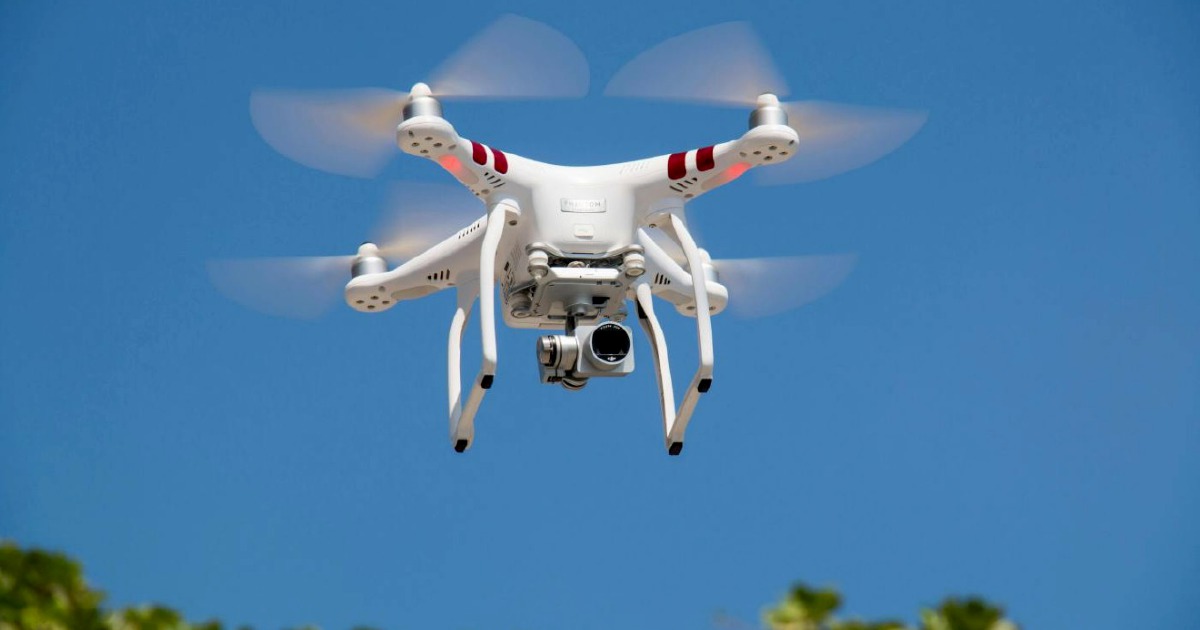
Authorities in Melaka have taken two people into custody following a coordinated enforcement action that uncovered an audacious scheme to deliver prohibited tobacco products into a correctional facility using unmanned aerial technology. The suspects were apprehended during a residential raid conducted on Wednesday at a dwelling in Taman Kris Satria, Sungai Udang, after investigators connected them to an attempted delivery operation targeting Sungai Udang Prison.
The use of drones to circumvent prison security represents a troubling escalation in smuggling methodologies within Malaysia's detention system. What was once the domain of visitors concealing contraband in clothing or mail has evolved into a technically coordinated operation utilising aircraft that can traverse perimeter barriers with relative ease. This incident underscores the evolving challenge facing correctional authorities nationwide as organised networks exploit technological advancement to penetrate institutional security measures designed for a pre-digital age.
Tobacco and nicotine products remain among the most sought-after contraband items within Malaysian prisons, commanding significant markups in the informal economy operating within cell blocks. The addictive nature of these substances, combined with their prohibition under standard prison regulations, creates powerful demand from incarcerated individuals. Organised smuggling operations have consequently become increasingly lucrative, attracting entrepreneurial criminals willing to coordinate external supply chains with internal distribution networks.
The sophistication evident in this operation—utilising precision delivery technology rather than relying on corrupt personnel or casual visitor trafficking—indicates that criminal syndicates have moved beyond opportunistic approaches. The deliberate selection of drone technology suggests planning and reconnaissance, with operatives likely having conducted preliminary surveillance to identify optimal delivery coordinates and timing gaps in security protocols. Such methodical preparation indicates that those arrested may form part of a larger apparatus rather than isolated individuals acting on impulse.
Drone smuggling into correctional facilities has emerged as a regional concern across Southeast Asia, with reported incidents in Thailand, the Philippines, and Indonesia demonstrating that this is not a uniquely Malaysian problem. However, each instance provides law enforcement with intelligence regarding operational patterns, preferred delivery methods, and timing preferences. The Sungai Udang case adds Malaysian data to this evolving security picture, potentially alerting authorities to watch for similar attempts at other institutions.
The economic implications of this smuggling ecosystem warrant consideration. Resources devoted to intercepting contraband and investigating smuggling operations represent significant operational costs for the Prisons Department. Beyond direct enforcement expenses, the proliferation of prohibited items within facilities creates downstream complications: increased disciplinary incidents, gang activity, deteriorating institutional order, and compromised rehabilitation efforts. The illicit prison economy fundamentally undermines the stated correctional mission of these institutions.
From a security standpoint, the incident raises pertinent questions about perimeter vulnerability assessment and airspace monitoring capabilities at Malaysian correctional facilities. Most prisons were constructed or substantially developed decades ago, when airborne delivery mechanisms were science fiction rather than pressing practical concerns. Retrofitting facilities with detection systems capable of identifying small, low-flying drones presents technological and financial challenges that facilities across the region are only beginning to address systematically.
The investigation into the Taman Kris Satria operation will likely reveal whether this represented a one-off entrepreneurial venture or evidence of systematic smuggling operations. Investigators will seek to establish the identity of recipients within the prison, the frequency of prior delivery attempts, and the financial arrangements underpinning the operation. Such intelligence becomes crucial for assessing the scale of contraband infiltration and whether institutional personnel facilitated access—a possibility that cannot be discounted in systems where correctional staff face considerable pressure from incarcerated individuals and external criminal networks.
For the broader Malaysian criminal justice system, this case demonstrates that suppressing smuggling requires multi-layered responses extending beyond operational security at individual facilities. Effective intervention demands intelligence sharing between police and correctional authorities, technological investment in detection and monitoring systems, and targeted investigation of supply chains operating outside prison walls. The manufacturers and distributors of drones used in such operations, along with those providing intelligence on prison layouts and routines, represent crucial investigative targets that may escape immediate notice but whose identification could dismantle entire smuggling networks.
The detention of these two suspects opens investigative pathways that may illuminate broader criminal networks operating in Melaka and potentially across the peninsula. Interrogation regarding funding sources, communication methods, and distribution contacts within the prison system could yield intelligence valuable far beyond this single incident. As drone technology becomes increasingly affordable and accessible, correctional authorities across Malaysia must anticipate that this will not represent an isolated occurrence but rather the beginning of a troubling trend requiring sustained institutional and technological response.

